
Herculaneum voters will be asked in April to approve a 1/2-cent capital improvement sales tax extension. Revenue from the sales tax would be used to improve the city’s sewer plant, as well as to fund other capital improvement projects.
If voters do not approve the extension, the 1/2-cent sales tax would end in September 2024, Herculaneum City Administrator Jim Kasten said.
The extension requires a simple majority vote to pass.
If approved, the sales tax would have a 20-year sunset and would end at that time, unless it were extended again.
Herculaneum Board of Aldermen voted unanimously in October to place the measure on the ballot.
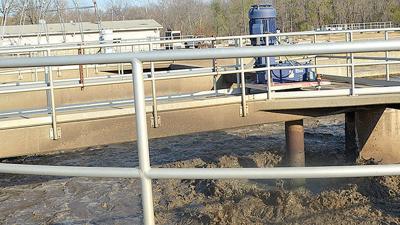
Kasten said voters originally approved the 1/2-cent sales tax two decades ago to pay for the city sewer plant, which is approaching 20 years of service.
He said the plant needs major improvements, which will cost hundreds of thousands of dollars. Some of the necessary improvements include back-up pumps and motors for aging equipment; a new UV light system; upgrades to the lift station; and new fencing around the plant, Kasten said.
“There are some major things that are coming due,” he said.
Kasten also said more funds are needed to remain in compliance with federal Environmental Protection Agency and Missouri Department of Natural Resources regulations, like the requirement to reduce the levels of phosphorus and nitrogen in the water.
He said the costs to operate the sewer plant have increased as well, noting higher insurance rates; employee wages and benefits; and energy costs.
Kasten said the April 2, 2024, ballot language for the sales tax extension also will allow the city to use the tax for other purposes, such as installing solar panels to reduce utility costs and completing stormwater projects.
“Right now we have no funding for stormwater, so everything that happens, like if a storm drain goes bad or if there’s some erosion somewhere, then we’re paying off our hip without any funding source to come through it,” he said. “So this will help with stormwater as well.”
Currently stormwater improvements are covered with general funds, Kasten said.
While the city would be allowed to use revenue from the capital improvement sales tax funds for stormwater projects, Kasten believes for the first few years the taxes mainly would be used for sewer plant improvements.
Kasten said the capital improvement sales tax currently brings in between $300,000 and $350,000 per year, but that number can fluctuate based on the economy.
“We’re getting a lot of sales tax right now, but if the economy starts to slow, then that total amount will go down,” he said.
Kasten said if voters don’t approve the tax extension, the plant improvements still need to be completed and paid for, so the city would have to raise sewer rates. The current residential sewer rate is a flat fee of $38.40 per month, which has not increased in the past four years.
“These items have to be paid for with something. If we can’t pass this sales tax and let sales tax generated from businesses out on the highway of people passing through town, then we’re going to have to raise the sewer rates,” he said. “To generate that same amount of money, sewer rates would have to go up about $17 a month per household. This is an either-or situation. Either let the sales tax pay for it, or we raise the rates to pay for those items.
“The board is giving them this option to help defray these ongoing and future costs.”