


All it takes is one hug, and you’re hooked.
At least that’s what Tom Guseman of High Ridge says.
Guseman, who coaches Special Olympics for Pony Bird, said he won’t forget the first hug he got from an elated Special Olympics athlete while attending a competition with his son, Brock Guseman, a Special Olympics Hall of Fame inductee.
“This young man with Down syndrome came across the (50-meter finish) line, and I just happened to be there. That’s when I got my first Special Olympics hug,” a tearful Tom Guseman said.
That story is similar to ones veteran coaches who work with Special Olympics repeat over and over.
Pony Bird, a local organization that serves people with developmental disabilities, offers community living, community services, employment and family support programs. It also helps train a lot of Special Olympics athletes.
“(In) the leisure services program, we train athletes in seven different sports, soon-to-be nine,” Pony Bird leisure services program manager Terri Dallas said. “Part of our training is doing the practices … and then we also go on to compete at Special Olympics competitions.”
Dallas, who has worked and coached with the program for 38 years, said Pony Bird needs more coaches who are 21 or older and can help with the wide variety of sports played over three seasons.
The winter season includes basketball and bowling, while the spring showcases track and swimming. Dallas said the summer season is the busiest with flag football, softball and bocce, a sport aimed at rolling a bocce ball closest to a target ball.
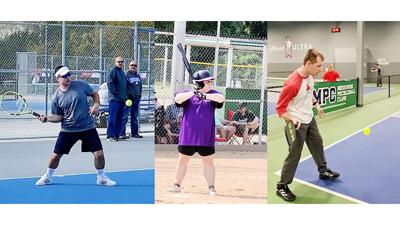
Pony Bird plans to add tennis and pickleball to its list of summer sports next year, contributing to the need for more coaches. As of right now, Dallas said the organization has about 20 volunteer coaches and approximately 150 athletes.
“Ideally, I’d like to have 10 to 15 more volunteers, but I don’t want to put a cap on it because we can always utilize a volunteer at any time,” Dallas said.
“Once (a coach) gets on with Pony Bird, they’ll start out enjoying the practices with us, getting to understand the sports we offer and the training we offer, and also getting to know our athletes … before we ask them to go onto the next level.”
The next level, according to Dallas, is becoming a Special Olympics coach, who also gets to follow athletes to competitions. The shift to coach requires a slightly larger time commitment and an additional training program, but coaches say the rewards are well worth it.
“The athletes I have coached have taught me patience, pride, consistency, and they have taught me how to teach,” said 20-year coach Kathy Witmeyer of High Ridge, whose daughter, Becca Tincknell, also is in the Special Olympics Hall of Fame.
“I used to say, ‘I think I get more out of it than the athletes do,’” said Bob Souders of Herculaneum, a 22-year coach. “We just need (coaches) who are going to show up, who care.”
Souders said coaches do not need experience in a given sport, but rather a desire to help the athletes.
Dallas said coaches get to select which sport or sports they’d like to help with, allowing them to determine their schedule. “I’m looking for someone who has the heart and the commitment to work with these athletes,” Dallas said. “They’re a very special group of athletes and … we want it to be the most positive and rewarding experience for everyone involved.”
Dallas said it’s not uncommon for Pony Bird coaches to become Special Olympics coaches after the first few practices, as coaches want to complete the season with the athletes. Each season consists of 10-to-12-week practice sessions, with one practice a week.
Pony Bird practices range from one and a half hours to two hours a week, while area, regional and state competitions for Special Olympics differ. Area and regional events are generally eight-to-10 hours, while state competitions often last an entire weekend long.
“The key is that first step,” Souders said. “Those athletes, it’s almost like this is their bread and butter, knowing practice is Wednesday night and knowing you’re going to be there. They’ll all come up to you walking in and they all want to hug you right there.”
Coaches may begin anytime of the year, including right now, Dallas said.
Softball athletes began practicing on June 7 and will continue from 6:30-8 p.m. every Wednesday at Sunset Park in Festus.
Bocce begins on Monday, July 10, at the Pony Bird Bocce Courts in Herculaneum, and flag football will follow on Wednesday, July 19, at Sunset Park.
Pony Bird also offers people the chance to compete alongside Special Olympics athletes as unified partners.
Witmeyer, who has competed with her daughter as a unified partner, said that experience also is meaningful.
“The whole experience is fun and nerve-wracking because I don’t want to let (my daughter) down,” Witmeyer said. “But she just tells me, ‘It’s OK; just do your best,’ ... it’s fun and rewarding.”
People who don’t want to coach but want to help with the Special Olympics program may volunteer or assist at events, Dallas said.
She said she’d be happy to speak with anyone about the program, and she encourages people to come out and watch a practice if they’re interested or watch the new “Champions” movie featuring Woody Harrelson as a Special Olympics coach.
“After the first practice, (Harrelson) was hooked,” Dallas said. “He had to learn what their habits were, what made them weary, and he really worked hard to make the whole team come together. That’s exactly what happens when you get hooked into coaching with Special Olympic athletes.”
Those interested in coaching or volunteering in other ways may contact Dallas at tmdallas@ponybird.org or 636-282-1419. Pony Bird also has a Facebook page titled Pony Bird Inc. and a website that has more information at ponybird.org.