


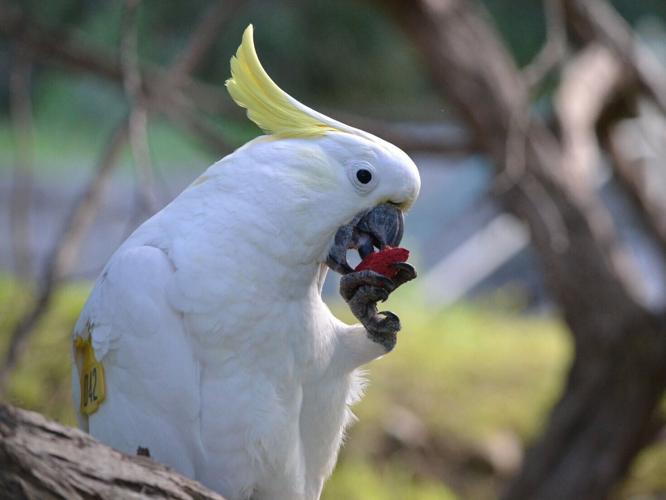
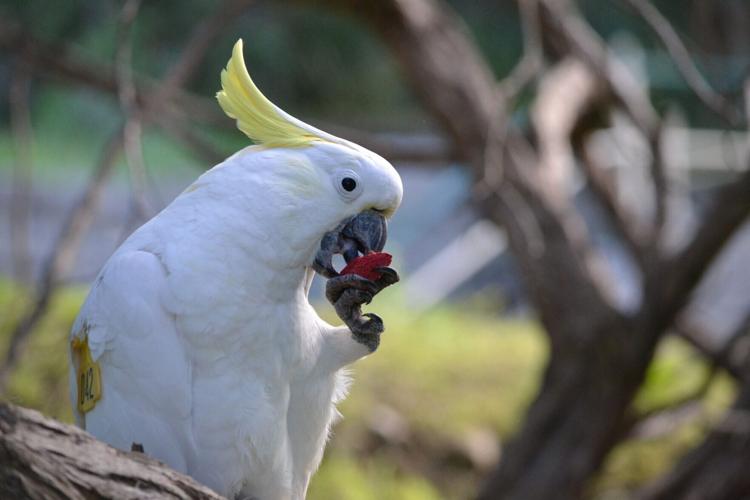
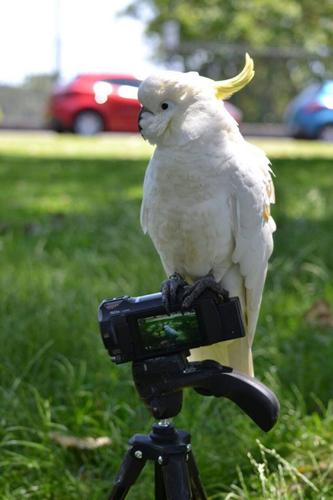
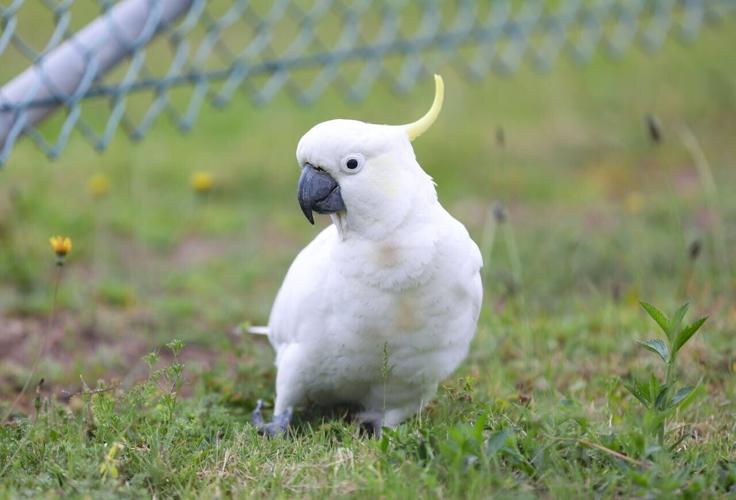
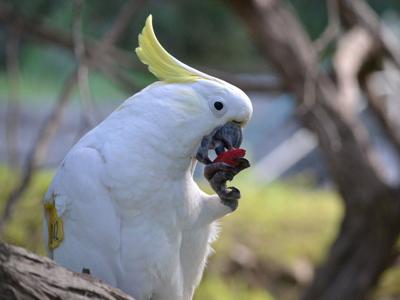

A sulphur-crested cockatoo. (Julia Penndorf via SWNS)
By Stephen Beech
Wild parrots quickly learn to eat new foods by copying their feathered friends, reveals new research.
They grasp whether different types of food are safe to eat by observing other members of their social group, according to the findings published in the journal PLOS Biology.
The learning skill allows dietary knowledge to spread rapidly through the community, say scientists.
Researchers also found that juvenile parrots were more picky in their food choices than adults, mirroring humans where youngsters tend to be choosier.
Study lead author Julia Penndorf explained that when an animal encounters a new food, it faces a dilemma — eat it and risk poisoning, or leave it and miss out on a useful resource.
She said one solution to the dilemma is to observe and imitate the behavior of other individuals in the group — known as "social learning."

A sulphur-crested cockatoo. (Julia Penndorf via SWNS)
Penndorf, of the Australian National University, said: "Social learning about novel food has been documented in laboratory studies, but little is known about if and how this phenomenon occurs in wild animals."
To investigate, she and her colleagues studied the behavior of more than 700 wild sulfur-crested cockatoos in central Sydney.
First, the team trained four of the birds to eat unshelled almonds that had been painted either blue or red — a food that they were unlikely to have encountered before.
The researchers then placed feeders near five roosting sites and recorded which birds ate the painted nuts.
Penndorf said: "Untrained birds initially avoided them, but in roosts where a trained bird was present, other birds quickly learned the painted almonds were safe.
"After 10 days, 349 birds had learned to eat the novel food.

(Photo by Nandeesh Gowda A via Pexels)
"Statistical analysis confirmed that this new dietary knowledge spread through the community almost entirely by social learning."
But there were differences in social learning between age groups and sexes.
For instance, male birds were more influenced by the behavior of other males, and adults were more likely to learn from roost mates, compared to juveniles.
Juveniles were also more conformist, preferring the most popular almond color.
The birds adopted several different strategies to remove the almond shells.
The researchers found that close associates were more likely to use the same method.