


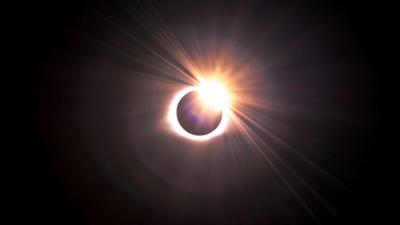

Solar eclipse - Photo credit: Unsplash+ License
Europe's first solar eclipse in 27 years is expected on Wednesday, August 12, and travelers are eager to book the best viewing spots.
The total eclipse will cross parts of Greenland, Iceland, northern Spain, the Balearic Islands and a small area of northern Portugal. Still, spectators do not necessarily need to join the biggest crowds to experience the event.
Inghams Walking, a U.K.-based walking holiday specialist, worked with Jim N.R. Dale, founder and senior meteorologist at British Weather Services, to analyze 12 European destinations falling outside the total solar eclipse.
The ranking looks at how much of the sun will be covered and how likely skies are to be clear in August, based on historic cloud cover data from the past 25 years.
Where Will The August Solar Eclipse Be Visible In Europe?
According to NASA, the total solar eclipse will mostly take place over the Atlantic Ocean, but the path of totality will cross parts of Europe on land.
Greenland, Iceland, northern Spain, including the Balearic Islands, and a small area of northern Portugal are among the places where viewers can see the moon fully covering the sun.
Outside that narrow path, many destinations across Europe will instead see a partial eclipse.
NASA specifically lists Valencia, Zaragoza, and León as larger Spanish cities in the path of the total eclipse.
Eclipse Travel Is Already Driving Bookings To Europe
According to Amadeus Travel Intelligence, flight bookings to airports along the eclipse path for arrivals between August 7 and 12, 2026, are up 25% compared with the same period in 2025.
The largest increases in bookings are in Spain. Bilbao is up 366%, Asturias is up 292% and Valencia is up 137%.
Hotel demand is also rising. Across Spain and Iceland combined, occupancy for the week of August 9 to 16, 2026, is up 16% from 2025, while average daily rates are up 36%.
Short stays of one to five days are up 57%. While solo travel is up to 48% compared to 2025 numbers, couples make up 40% of travelers heading to destinations along the eclipse route.
"With eclipse holiday searches on the rise in the past year, it's clear that travellers are gearing up to combine their love of the outdoors with this once-in-a-lifetime event," says Laura Mason, head of destinations at Inghams Walking, in an official statement.
Alternative European Cities Outside The Totality Path
Lisbon ranks first on the list that Inghams Walking and Jim N.R. Dale put together. The Portuguese capital has the highest overall score, as it is likely to have 94.5% obscuration (meaning 94.5% of the sun is expected to be covered) and only 21% average estimated cloud cover.
Mason highlights spots such as Miradouro da Senhora do Monte, Castelo de São Jorge, and Cristo Rei, across the river, as places where visitors can watch the event.
Andorra La Vella ranks second on the list and offers the highest obscuration among the 12 alternative destinations studied, with 99% of the sun expected to be covered.
However, in Andorra La Valle, the historic August cloud cover is 44%, meaning travelers may have a lower chance of clear skies than in Lisbon.
For walkers, Mason recommends Arinsal, which is less than 20 miles from Andorra La Vella and has an extensive network of trails. Dale notes that its proximity to the capital means eclipse conditions should be almost identical.
Bordeaux ranks third, while Lyon ranks fourth. Both French cities are expected to see most of the sun covered (around 95%), but clouds could be a problem (above 50% coverage).
Even if clouds move through, Dale says the high level of obscuration means that a brief break in cloud cover could still create a memorable viewing moment.
In Lyon, Fourvière Hill is one of the city's key advantages, says Mason. It is the highest point in Lyon, offering panoramic views across the city and a prime spot to watch the western sky during the eclipse.
Zurich ranks fifth, with 90.7% obscuration and 58% historic August cloud cover. While clear skies cannot be guaranteed, Dale noted that conditions can shift during the day.
Mason highlights Üetliberg, Zurich's local mountain, as one of the city's best viewing options. It can be reached by tram or train in less than 20 minutes and offers a viewing platform with 360-degree views over the city.
Meteorologist's Tips To Plan An Eclipse Trip
Dale says in an official statement that travelers should also consider weather, mobility, direction and eye safety when choosing a location.
His first tip is to have a backup location. If clouds move into the planned viewing spot, travelers who can move may have a better chance of finding clear skies.
Dale also recommends monitoring weather forecasts on the day of the eclipse and checking visible satellite images to see where cloud cover is moving.
Travelers should also avoid north-facing mountains, coastal areas with cliffs behind them, or north-facing gardens where the view may be blocked, since the sun will be in the west-southwest or west during the eclipse.
Most importantly, eclipse viewers should never look directly at the sun. Ordinary sunglasses are not safe for eclipse watching. Dale recommends using special eclipse glasses that meet the ISO 12312-2 international safety standard.