


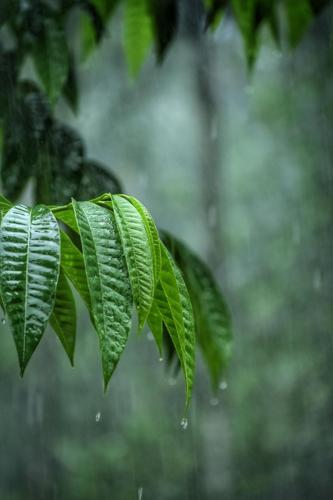
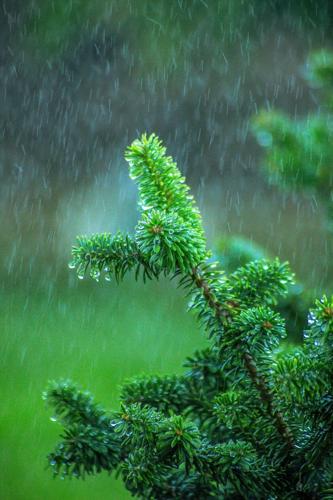
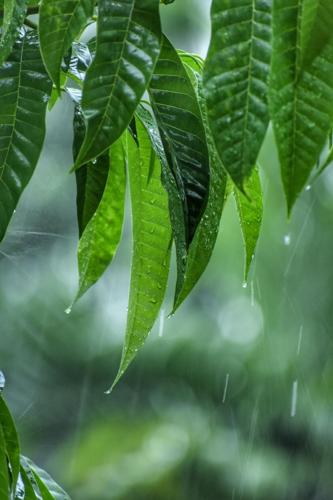

(Photo by Bibhukalyan Acharya via Pexels)
By Stephen Beech
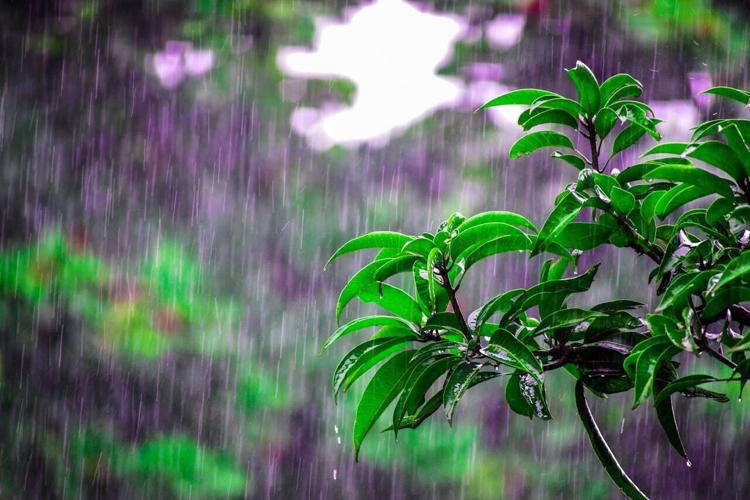
Plants can sense the sound of rain, suggests a new study.
Rice seeds sprouted faster to the sound of rainfall in a series of experiments by American scientists.
They found that the sound of falling droplets effectively shook the seeds out of a dormant state, stimulating them to germinate at a faster rate compared with seeds that were not exposed to the same sound vibrations.
The findings, published in the journal Scientific Reports, are the first direct evidence that plant seeds and seedlings can sense sounds in nature.
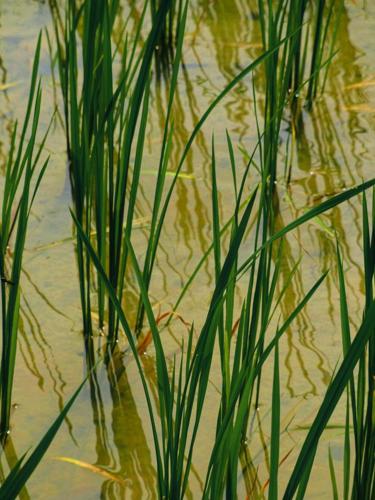
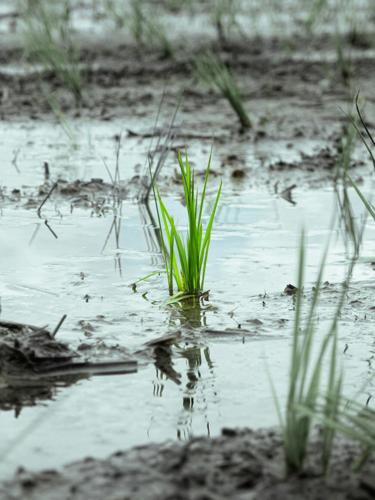
The experiments involved rice seeds that were submerged in shallow water.
Rice can germinate in both soil and shallow water.
The researchers suspect that many similar seed types may also respond to the sound of rain.
The team from Massachusetts Institute of Technology (MIT) worked out a hypothesis to explain how the seeds might be behaving.

(Photo by Srijit Mudi via Pexels)
They found that when a raindrop hits the surface of a puddle or the ground, it generates a sound wave that makes the surroundings vibrate, including any shallowly submerged seeds.
The vibrations can be strong enough to dislodge a seed's "statoliths" — tiny gravity-sensing organelles within certain cells of a seed.
When the statoliths are jostled, their movement is a signal for seeds and seedlings to grow and sprout.
Study author Nicholas Makris said: "What this study is saying is that seeds can sense sound in ways that can help them survive.
"The energy of the rain sound is enough to accelerate a seed's growth."
Makris and his co-author, Cadine Navarro, a former MIT graduate, suspect that the sound of rain is similar to the vibrations generated by other natural phenomena such as wind.
Plants have evolved to sense and respond to stimuli in their surroundings to help them survive.
Some plants snap shut when touched, while others curl inward when exposed to toxic smells.

(Photo by Will Chen via Pexels)
Most plants also respond to light, reaching toward the sun to help them grow.
Makris says plants can also sense gravity. A plant's roots grow down, while its shoots push up against gravity's pull.
He says one way that plants sense and respond to gravity is through their statoliths.
Statoliths are denser than a cell's cytoplasm and can drift and sink through the cell, like sand in a jar of water.
Makris explained that when a statolith finally settles to the bottom, its resting place on the cell's membrane is a reflection of gravity's direction and a signal for where a seed's root or shoot should grow.
If the statolith is dislodged, scientists have found that this can also trigger the seed to grow more.
Makris became curious when Navarro asked him about seeds and sound.
They wondered if sound could be enough to jostle the statoliths and stimulate a seed to grow.
Makris said: "I went back to look at work done by colleagues in the 1980s, who measured the sound of rain underwater.
"If you check, you'll see it's much greater than in the air.
"It has to do with the fact that water is denser than air, so the same drop makes larger pressure waves underwater.
"So if you're a seed that's within a few centimeters of a raindrop's impact, the kind of sound pressures that you would experience in water or in the ground are equivalent to what you'd be subject to within a few meters of a jet engine in the air."

(Photo by Alice Castro via Pexels)
The researchers suspected that such rain-induced soundwaves might be enough to jostle statoliths and subsequently stimulate a seed's growth.
To test the idea, the team conducted experiments with rice seeds, which naturally grow in shallow watery fields.
They submerged around 8,000 individual seeds of rice in shallow tubs of water and exposed sections of them to dripping water.
The researchers varied the size and height of each water droplet to mimic raindrops during light, moderate, and heavy storms.
They also used a hydrophone to measure the acoustic vibrations created underwater by the water droplets.
The team compared the measurements to recordings they took in the field — such as in puddles, ponds, wetlands, and soils during rainstorms.
Comparisons confirmed that their water droplets in the lab were generating rain-induced acoustic vibrations as in nature.
As they observed the rice seeds, the researchers found that the groups of seeds that were exposed to the sound of water were able to germinate 30% to 40% faster than the seed groups that were not exposed to rain sounds but were otherwise in identical conditions.

(Photo by Shilpesh Patil via Pexels)
The team also found that seeds that were closer to the surface could better sense the droplets' sounds and grow faster, compared to more submerged or more distant seeds.
The experiments confirmed a connection between the sound of a water droplet and a seed's ability to grow.
The researchers believe that there may be a biological advantage to seeds that can sense rain.
They say if seeds are close enough to the surface to respond to the sound of rain, they are likely at an optimal depth to soak up moisture and safely grow to the surface.
The team then worked out calculations to see whether the physical vibrations of the droplets would be enough to jostle the seeds' microscopic statoliths.
They found that the experiments they performed on rice seeds were consistent with their calculations: the sound of rain can dislodge and jostle a seed's statoliths.
The researchers say the mechanism is likely at the root of a plant's ability to "sense" the sound of rain and grow in response.
Makris added: "Brilliant research has been done around the world to reveal the mechanisms behind the ability of plants to sense gravity.
"Our study has shown that these same mechanisms seem to be providing plant seeds a means of perceiving submergence depths in the soil or water that are beneficial to their survival by sensing the sound of rain.
"It gives new meaning to the fourth Japanese microseason, entitled 'Falling rain awakens the soil.'"
The team plan to investigate other natural vibrations and sounds plants may perceive.