
Long before the Revolutionary War, numerous traditions of Indigenous music flourished in places later incorporated into the United States. European music was heard in the New World from the earliest days of exploration and settlement. Disgruntled colonists in taverns and town squares borrowed British melodies to support new lyrics expressive of a developing national consciousness. After the U.S. became a nation in its own right, Francis Scott Key also pulled from British songs to pen the national anthem.
Over the ensuing decades, the young nation incorporated the musical repertoires, instruments and expressions of immigrants from various European and African groups. While the restless spirit of musical reinvention continues today, it is a challenge to comprehend the full scope of how American music has evolved.
Musicians throughout the nation’s history have been fearless documentarians of American life and experience. As a historian of American music, I believe that Americans can increase their understanding of their national legacy by listening to and learning from the nation’s music. Music can help Americans see their shared story of a national identity forged through an often fraught coexistence with people of different ethnicities and backgrounds.
‘The Folk Box’
Those seeking to better understand the evolution of American music might seek out and listen to “The Folk Box,” a landmark but overlooked piece of audio history. Compiled in 1964 by Elektra Records founder Jac Holzman, this four-LP, 83-track box set was intended as an accessible survey of the roots and branches of American vernacular music.
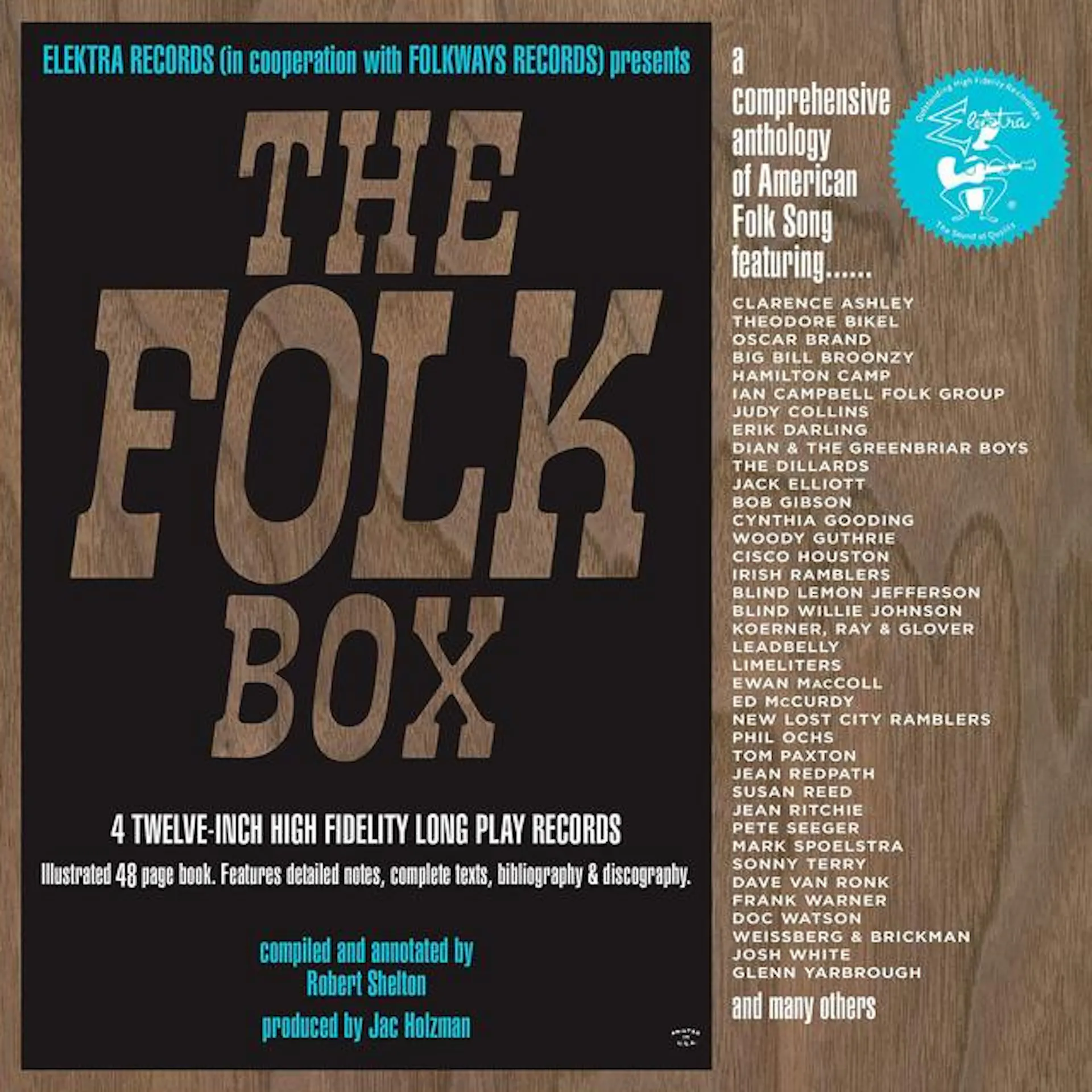
“The Folk Box” combined recordings from the Elektra Records stable of artists, with significant contributions from the Folkways Records catalog. It featured a 48-page booklet written by Bob Dylan biographer Robert Shelton, who outlined the narrative arc of the set.
“The Folk Box” portrayed the nation’s music heritage as a dynamic and diverse soundscape that had consistently absorbed new influences, reinventing itself by reflecting the shifting demographics of a nation constantly changing. This modest documentary album illustrates how American music has always contributed significantly to the telling of America’s story.
Transplants from the British Isles
In 1776, as the nation’s founding generation proclaimed democratic ideals, music in the emerging United States consisted largely of British ballads, fiddle tunes, sea chanteys and hymns. These traditions had been transported across the Atlantic but were adapted to reflect new realities. “The Folk Box” explores this transitional era by featuring songs like “Good Old Colony Times,” performed by Ed McCurdy, and “Jefferson and Liberty,” as sung by Oscar Brand.
During the Revolutionary Era, music mobilized political action and helped forge community bonds. Broadsides – sheets of paper containing lyrics to be sung to familiar, traditional melodies – were a common medium for disseminating songs. The early American songs and tunes were characterized by their simplicity and portability. Most everyone could sing or play them anywhere.
The music soon began to diverge from its European origins. Isolation in many American settlements required a self-reliant approach to performing music. In Appalachia, a regional style of song emerged that transformed the narrative focus of British ballads into shorter lyric folk songs suitable for presentation on commercial recordings. These songs were less detailed than the ballads but conveyed intense emotion gleaned from an often hardscrabble existence. “The Coo-Coo Bird,” performed by Clarence Ashley and Doc Watson on “The Folk Box,” illustrates this process of transformation, with references to a log cabin and the Fourth of July.
African musical foundation
Throughout the 19th century, as the nation expanded its borders and people from around the world immigrated to the United States, the American musical landscape diversified. Much of this cultural change was inextricably tied to systemic oppression. Forced migration and enslavement of millions of African people brought a new sonic DNA to the United States – one that would fundamentally transform global culture.
“The Folk Box” represents this cultural shift by highlighting such classic recordings as Huddie “Lead Belly” Ledbetter’s “Pick a Bale of Cotton and Blind Willie Johnson’s ”Dark was the Night, Cold was the Ground“ – songs associated with forced labor, spiritual devotion and the post-emancipation struggle.
African musical traditions were characterized by polyrhythms, call-and-response structures and the expressive vocal bending that created ”blue notes.“ These musical techniques merged with European harmonic structures, yielding spirituals, which masked coded messages of escape and resistance beneath religious imagery.
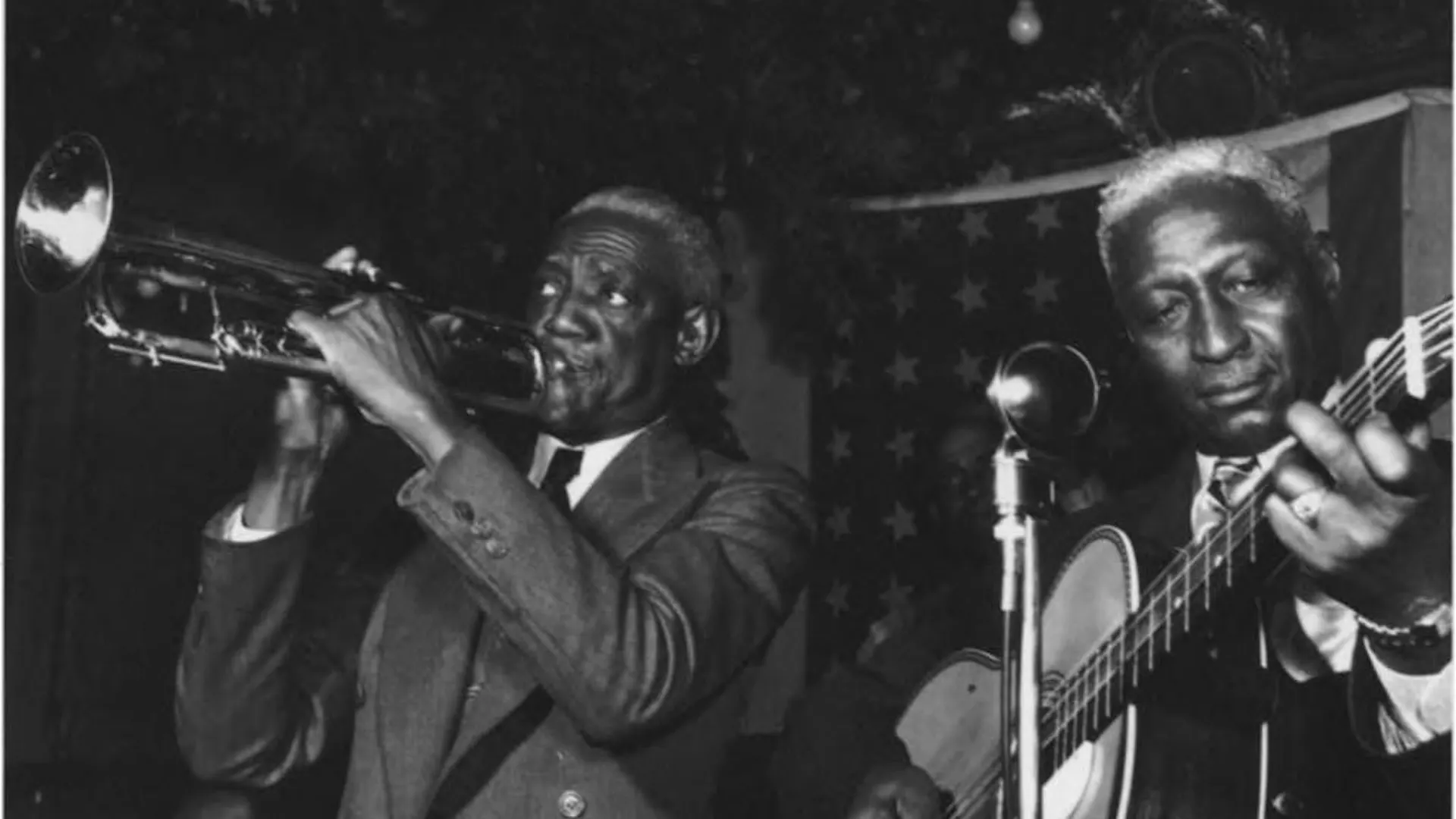
By the end of the 19th century, this melding of musical elements yielded the blues. A secular music, the blues encapsulated hardship, resilience and a longing for freedom. When introduced to cities, the blues – represented on "The Folk Box” by artists like Josh White and Big Bill Broonzy – formed the bedrock for subsequent music genres, including jazz, rhythm and blues, and rock and roll.
The threads that formed country music
The American West generated its own mythologies. Irish and Scottish laborers moved to the West to work on railroads, while Mexican vaqueros herded cattle on the open range. Westward migration and cowboy culture are traced on “The Folk Box” in songs like Harry Jackson’s “I Ride an Old Paint” and Cisco Houston’s “Zebra Dun.” These cowboy songs were meant to soothe restless cattle during the night or break the monotony of isolation.
Cowboy music employed a strong sense of place by blending European storytelling traditions with images from a regionally specific way of life. This combination would go on to influence commercial country and bluegrass music.
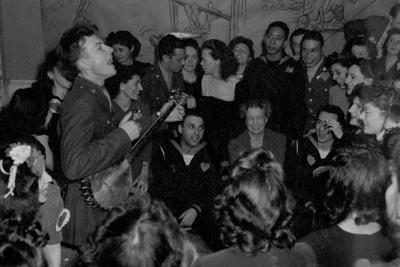
By the early 20th century, the nation’s regional sounds were being preserved in songbooks and on commercial and documentary recordings. New technologies such as the phonograph and the radio spread this regional music, introducing various traditions to new communities. These technological leaps coincided with the national crises of the Great Depression and the Dust Bowl. American music transformed localized entertainment into a powerful vehicle for social critique and political protest.
“The Folk Box” represents this historical moment with tracks such as “This Land is Your Land” and “Talking Dust Bowl” from Woody Guthrie and “Which Side are You On” from The Almanac Singers. These songs spoke truth to power and demonstrated how people can wield traditional music to spotlight the economic anxieties of the working class.
Folk revival and counterculture
When “The Folk Box” was released in 1964, the United States was experiencing another cultural revolution. The urban folk music revival had peaked in New York City’s Greenwich Village, and music was embracing the counterculture. The set’s final sides chronicle this moment of metamorphosis. It features recordings of new songs in the folk vein, composed by contemporaneous songwriters, like “The Thresher” by Phil Ochs and “High Sheriff of Hazard” by Tom Paxton. The set represents the emergence of Dylan by including his protest song “Masters of War” in a recording by Judy Collins.
Young artists of the 1960s were no longer simply collecting and reinterpreting old songs. They were using traditional music as a framework to create topical songs about the Civil Rights Movement, the Vietnam War and the threat of nuclear war.
Shortly after the release of “The Folk Box,” Dylan famously plugged in an electric guitar at the Newport Folk Festival. As a result of Holzman’s advocacy and Dylan’s example, the singer-songwriter movement was born, once again proving that American music is defined not by its adherence to the past, but by its capacity for reinvention.
In 2014, I worked with Holzman to produce a 50th anniversary edition of “The Folk Box,” released by Rhino Records in that album’s original packaging and vinyl format. I contributed new liner notes and a separate essay, and compiled a Spotify playlist to illustrate the album’s long shadow on subsequent American music.
This new edition featured a bonus 45 rpm single that highlighted a true American classic from 1964: Tom Paxton’s Elektra recording of his song “The Last Thing on My Mind,” later covered on record and in live settings by Peter, Paul & Mary, Dolly Parton, Neil Diamond and countless others.
Diversity and reinvention
Just as American culture is continuously mutating, American music is constantly being reinvented. The rural storytelling and fiddle music on the frontier inspired the emergence and growth of commercial country music and bluegrass music, while echoes of acoustic blues and protest songs can be heard in modern R&B and hip-hop.
The ongoing diversification of the American populace ensures that Latin American rhythms, jazz subgenres and electronic innovations will continue to redefine what the nation will sound like moving forward. “The Folk Box” memorably demonstrates that American music can best be defined by its contradictions. It is at once sorrowful and celebratory, rooted in tradition yet restlessly seeking new sounds and new audiences.
This article is republished from The Conversation, a nonprofit, independent news organization bringing you facts and trustworthy analysis to help you make sense of our complex world. It was written by: Ted Olson, East Tennessee State University
Read more:
- ‘Which Side Are You On?’: American protest songs have emboldened social movements for generations, from coal country to Minneapolis
- With Beyoncé’s foray into country music, the genre may finally break free from the stereotypes that have long dogged it
- Doc Watson at 100: The virtuoso guitarist brought Appalachian music to a worldwide audience and influenced generations of musicians
Olson was a scholarly advisor in the production of "The Folk Box: 50th Anniversary Edition," but did not benefit financially from the release of the album.
