


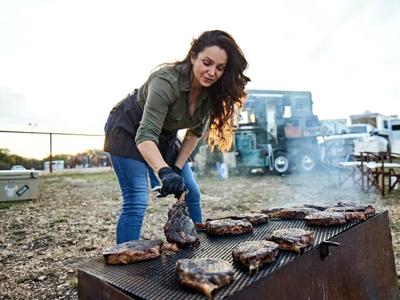


Photo Credit: Scott Slusher
Summer grilling is becoming about more than perfectly cooked burgers and steaks. New research released this month found that Americans increasingly view grilling as a way to connect with family and friends, unwind after a busy day, and create meaningful experiences outdoors.
The survey of more than 1,100 grillers identified a shift away from perfectionism, with many Americans treating grilling as a source of relaxation and community rather than simply a culinary skill. Nearly one in five grillers said they primarily grill to bring people together, while another group views time at the grill as a chance to slow down and recharge. Among those “Zen Grillers,” 78% fire up the grill at least once a week during grilling season.
The backyard grill has become a place to experiment. Home cooks are testing out new marinades, trying different cuts of meat and gaining confidence with seafood.
From choosing the right cut of steak to grilling seafood with confidence, celebrated chefs and grilling experts Robert Irvine, Jess Pryles and Andrew Zimmern shared their top summer grilling tips.
Start With the Right Cut
According to Pryles, choosing a quality piece of meat is one of the most important steps in the grilling process.
“The best steak for summer grilling is not always the most expensive cut in the case,” says Pryles, founder of the Hardcore CaBeyond Burgers: Top Chefs Share Their Best Summer Grilling Advicernivore BBQ line, author of the upcoming cookbook Prime Cuts and judge on the new Food Network series Pitmasters, premiering July 13.
While ribeye remains a favorite because of its balance of flavor, tenderness and richness, Pryles says lesser-known cuts often deliver exceptional results.
“I think sirloin cap is super underrated,” she says. “It’s leaner but packed with beefy flavor and it’s got a great texture.”
She also recommends skirt steak, bavette and flap steak for tacos and fajitas, as well as tri-tip for larger gatherings.
When shopping, Pryles advises looking for steaks that are evenly cut, consistently shaped and at least 1 to 1½ inches thick. She also encourages consumers to pay attention to marbling, the white streaks of fat distributed throughout the meat.
“Fat equals flavor and tenderness,” she says.
Why Marinades Matter
While selecting quality ingredients is important, Irvine believes marinades are one of the easiest ways for home cooks to improve their grilling results.
“Marinades don’t just add flavor; they improve texture,” Irvine says.
Ingredients such as citrus juice, vinegar and wine act as mild tenderizers, helping flavors penetrate the outer layers of meat while improving tenderness.
Different proteins benefit from different flavor combinations. Irvine recommends bold ingredients like soy sauce, garlic and ginger for beef and pork, while lighter combinations featuring citrus and fresh herbs complement chicken and seafood.
For those who want to create their own marinades, Irvine follows a simple formula: one cup of oil, one-half cup of acid, one-quarter cup of a salty ingredient, one-quarter cup of sweetener and two to four tablespoons of aromatics.
The framework allows cooks to customize flavors while maintaining balance.
“Let your imagination run wild,” Irvine says.
Master Heat Management
Ask any grilling expert what the most important skill is to learn, and the answer is often the same: controlling heat.
Both Irvine and Pryles emphasize the value of two-zone cooking, which creates separate areas for direct and indirect heat.
“Ideally, you want two-zone cooking on your grill,” Irvine says. “One side that is very, very hot for searing, and a medium-heat side for finishing.”
The technique allows cooks to build a flavorful crust without overcooking the interior.
Pryles also relies heavily on two-zone cooking for steak.
“Control is what makes you a better griller,” she says.
On charcoal grills, that means piling coals on one side. On gas grills, it means turning on only part of the burners.
The setup becomes particularly valuable during flare-ups.
“Move the steak away from the flames until they settle,” Pryles advises.
Stop Guessing
One of the most common mistakes grillers make is relying on instinct instead of temperature.
“The biggest mistake is guessing,” Pryles says.
She encourages every home cook to invest in a reliable meat thermometer.
“A thermometer is not cheating. It’s how you guarantee proper doneness for the steak you just paid good money for.”
For medium-rare steak, Pryles recommends an internal temperature between 130 and 135 degrees Fahrenheit.
She also suggests removing meat from the refrigerator about 20 minutes before cooking and patting it dry before it hits the grill.
“Moisture on the surface has to evaporate before browning can happen,” she says.
Robert Irvine’s Favorite Steakhouse Marinade
Irvine recommends a simple steakhouse-style marinade that adds flavor while helping tenderize the meat.
Beef Steakhouse Marinade
Marinate for 4 to 12 hours
Marinate for 4 to 12 hours
- 1 cup grapeseed oil
- ½ cup Worcestershire sauce
- ¼ cup soy sauce
- 3 tablespoons minced garlic
- 8 sprigs fresh rosemary, left whole
- 1 tablespoon black pepper
Irvine says the combination of Worcestershire sauce, soy sauce, garlic and rosemary creates a rich, savory flavor profile that pairs particularly well with grilled beef. The marinade follows his preferred formula of combining fat, acid, salt and aromatics to maximize flavor and tenderness.
Why Seafood Deserves a Place on the Grill
While beef often dominates backyard barbecues, Zimmern believes seafood may be summer’s most underrated grilling ingredient.
“For most home cooks, seafood remains the final frontier of grilling,” Zimmern says. “But it is the most desirable way of eating fish and shellfish.”
According to Zimmern, many home cooks hesitate to grill fish because they’re worried it will stick, fall apart or overcook. In reality, he says success starts with choosing the right species.
For beginners, Zimmern recommends firm, fatty fish that can withstand high heat. Salmon remains a favorite because its natural oils help prevent it from drying out, while Arctic char, black cod, swordfish, whole snapper, striped bass and trout also perform well on the grill.
“I spend a great deal of time encouraging people to broaden their seafood horizons,” he says. “The biggest obstacle is not technique or a great recipe. It’s confidence.”
Zimmern also encourages consumers to explore lesser-known species such as barramundi, cobia, kampachi and red drum, many of which are raised through innovative aquaculture operations that help reduce pressure on wild fish populations.
One of the biggest mistakes grillers make, he says, is treating fish like beef.
“Most people overcook fish because they’re waiting for it to behave like a steak,” Zimmern says.
Instead, fish should be removed from the grill when it begins to flake and still retains a slight translucency. Shrimp and scallops require even more attention because they can quickly become tough if heated for too long.
For fish fillets, Zimmern recommends starting with a clean, well-oiled grill grate and placing the presentation side down first. Most importantly, resist the urge to move the fish.
“Fish releases naturally when properly seared,” he says. “If it sticks, it’s usually not ready to flip.”
Zimmern is also a strong advocate for grilling whole fish, which he calls one of America’s most overlooked outdoor cooking techniques. The skin protects the flesh from direct heat while the bones help regulate cooking, producing moist, flavorful results. Stuffing the cavity with citrus, herbs or onions adds another layer of flavor.
Shellfish can be equally approachable. Oysters can be grilled in their shells until they open, while clams and mussels thrive in cast-iron pans over live fire. Split lobster brushed with butter and grilled over charcoal may be one of summer’s simplest luxuries.
Beyond flavor, Zimmern points to seafood’s nutritional benefits and versatility.
“A grilled salmon fillet can be adorned with Mediterranean herbs one night, Japanese miso the next and Mexican adobo the day after,” he says.
With Americans increasingly focused on protein-rich foods, Zimmern believes seafood deserves more attention. Many species provide high-quality protein, omega-3 fatty acids and important vitamins and minerals while offering a lower environmental impact than many other animal proteins.
Don't Forget the Finishing Touches
While seasoning and cooking techniques receive most of the attention, Irvine says the final steps often separate good grilling from great grilling.
One of the biggest mistakes home cooks make is slicing into meat immediately after it comes off the grill.
“The final ingredient is patience,” Irvine says.
Allowing proteins to rest for three to five minutes helps juices redistribute throughout the meat.
“If you cut into it too quickly, you’ll lose a lot of the juices,” he says.
Whether grilling a premium ribeye, marinated pork chops, fresh seafood or classic backyard favorites, all three experts agree that great results come from understanding a few key fundamentals.
Choose quality ingredients. Build a two-zone fire. Use marinades strategically. Cook to temperature, not time. And don’t be afraid to experiment.
As Americans increasingly use grilling to relax, connect, and create memories with family and friends, mastering those fundamentals can help turn an ordinary backyard cookout into a memorable summer experience. For those willing to venture beyond their usual rotation of burgers and steaks, the grill may offer an opportunity to discover entirely new flavors this season.