


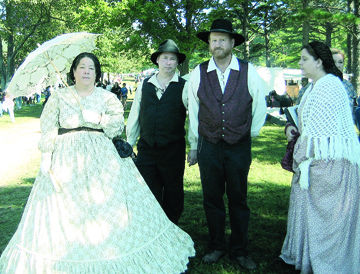

The characters
In South Carolina
Aaron Proctor, born 1820
Annie Proctor, born 1847
Hattie (Henrietta), born 1850
Harriet, born 1830 (Annie’s stepmother)
Meg, born 1852
Aaron Jr., born 1862
Dilcy, a Proctor slave
Rufus, Joel and Sam Jr. (Dilcy’s sons)
In Illinois
Sarah Barnes, born 1847
Charlie Kleinschmidt, (Sarah’s husband)
Lucy Kleinschmidt, born 1857 (Sarah’s sister-in-law)
Professor Joshua Barnes, (Sarah’s older brother)
Charlotte Barnes (Josh’s wife)
Introduction: The Civil War began in April 1861. For the next two years, the South would win many victories. In desperation, Abraham Lincoln’s administration would replace one general after another.
Finally, in 1863, the tide would begin to turn. On Jan. 1, 1863, President Abraham Lincoln would issue the Emancipation Proclamation. The promised emancipation of the slaves was dependent on defeating the South.
The Union victory at the end of the Siege of Vicksburg (May 8 to July 4, 1863) freed the shipping lanes all along the Mississippi River, from Iowa to New Orleans, and encouraged the war-weary citizens of the North. Shortly afterward, in July 1863, Gen. Robert E. Lee’s invasion of Pennsylvania during the Battle of Gettysburg was repulsed, giving the Northern states another reason to continue fighting. Next came the defeat of Southern forces at Chattanooga during November. Confederate forces were slowly being squeezed back into the original states that had seceded.
During 1864-65, war maps changed almost daily. Defeats followed victories on both sides but the South continued losing ground.
During those tragic years, both Sarah Barnes, safe in her Illinois home, and Annie Proctor in South Carolina would have to pay a high price for living through a war they had not started.
Chapter 1 – A wedding and an argument
September 1863
In Tioga, Ill., Sarah Barnes twirled around excitedly in her wedding dress. Her mother frowned.
“Are you sure you want to marry Charlie?” she asked. “You are 16 now, daughter, old enough to decide, I suppose.”
But then the older woman broke down crying.
“Marriage is much more difficult than young people realize,” she said.
“Don’t cry, Momma. I’ll be OK. I can’t wait to decorate that nice farmhouse Charlie owns and his little sister Lucy and I get along just fine.
“Charlie says that he’ll probably make more money than usual this year selling our crops to the army. If he does, he promises that I can have the extra money to buy drapes and rugs and fix our home up real pretty.”
“I wish it were that simple, daughter,” her mother said as she gave her a quick hug.
“I only wish Josh could be here today,” Sarah said. “I don’t know why he wanted to gallivant off to fight in this war. I miss him so much and so does Charlotte. And he’s never even seen his new daughter.”
Mrs. Barnes kissed her daughter on both cheeks and then abruptly said, “The organ music is starting now. I’ll pray for you.”
Feb. 7, 1864
In Little Rock, S.C., on Annie Proctor’s 17th birthday, she listened in distress as her father and stepmother quarreled.
“How can you leave me when I’m in a family way?” Harriet demanded. “You are 44 years old now, Aaron. Too old for war. Let the young men do the fighting.”
“My dear wife, you know that many of the young men have already died. Others are too maimed to fight.”
“Husband, do you really think an army of older men can beat the Yankees? Don’t you see that they have more factories for manufacturing arms and replacing railroad engines and blown-up tracks? They have more people, too.”
“But we have more honor, wife,” Aaron insisted.
“Honor doesn’t feed the bulldog, husband. You men must have your pride but a woman needs food for her children. The Confederacy seeks our gold. I even donated my good gold chain. In return they make us use paper money that’s worth less and less each day.”
“We show our faith in our leaders by such gifts, wife.”
“Aaron, I’m hearing rumors that these two new generals of Lincoln’s are no gentlemen. They are set on starving the South into submission. Your place is here, protecting us.”
“You’ll be safe enough, Harriet. Who is going to bother coming this far into the countryside to attack small farms?”
“An army that needs food, husband.”
“The Home Guard will protect you.”
“Who is going to protect us from the Home Guard?”
“This discussion is ended,” Aaron insisted.
“Aaron, I don’t think you are aware that Northern men can be just as stubborn as you gentlemen are. You said the Yankees would quit fighting in less than a year. But three years later, they are still at war.”
“We have hope, Harriet. If Mr. Lincoln loses the election in November, we may be able to make an honorable peace with his successor and keep our slaves.”
LOOK IT UP
Northern generals U.S. Grant and William Tecumseh Sherman were appointed later in the war. Citizens in the North were becoming tired of a conflict that was nearly a stalemate. They looked to Lincoln’s administration to make short work of ending the war in victory. Grant and Sherman made every effort to oblige them.
The freedom promised slaves by the Emancipation Proclamation did not immediately set anyone free. It applied only to the states that had seceded from the Union. At that time, it did not include the border states or the areas of the Confederacy that had already come under federal control.
Lincoln’s determination to end slavery did have a positive psychological effect on the citizens of the North, giving them a moral cause for fighting. More importantly, because black men would soon be accepted into the Union Army and Navy, nearly 200,000 additional fighting men would suddenly become available. These new soldiers would be highly motivated. Their freedom would depend upon a Union victory.
Chapter 2 – .Is Aaron dead?
August 1864
“Come quickly,” their elderly neighbor, Mr. James, ordered Harriet one hot summer morning. “And bring Annie.”
“Why?” Harriet shouted. But Mr. James was already out of the gate and limping down the dusty road between their farms at top speed.
“Grab your bonnet and come with me,” Harriet shouted to Annie, who was in the kitchen scrambling eggs.
“Here Hattie, finish these up and feed the girls,” Annie ordered.
“What’s the big hurry?” Hattie asked.
“I don’t know. But I’m afraid it’s about Pa.”
Silently, Harriet and 17-year-old Annie scurried down the road.
Mrs. James greeted them at the door. Her eyes were red and so was the large stain on her apron.
“Come in,” she invited in a trembling voice. “Our boy Jeff has come home.”
She ushered them into the kitchen. Jeff lay on a pallet on the floor in front of the fireplace. Water boiled over a small fire. By his pallor, they could tell that Jeff had been badly wounded.
“They cut off his leg,” Mrs. James said. “Guess he won’t be doing any more soldiering. And he won’t have to be deserting to get home, either.”
Annie tried not to stare at the depression in the sheet that covered Jeff; the dip where his leg should have been.
Jeff tried to prop himself up, groaned and laid his head back down on a pillow.
“Miz Proctor,” he began. “I want to tell you what happened.”
“You’d both better sit down,” Mrs. James suggested, offering chairs.
Harriet pulled her chair close to Jeff and bent down to better hear his soft voice that was so full of pain. Annie tried to push down the lump that was forming in her throat. Jeff was a friend, only three years older.
“You’ve heard there was a big battle up at Petersburg?” he asked.
“Yes, and I haven’t heard anything from Aaron since then,” Harriet told him.
“You know the Yankees have been trying hard to take Petersburg for nigh onto two months now. With all those railroad lines crossing there, they figured they could just about shut us down from getting supplies if they could get control.”’
Harriet nodded. Annie wanted to scream, “Get to the point.”
“Well, those Yankees figured to finally take the city by tunneling under our main position and blowing it up. Got a bunch of miners from Pennsylvania who knew how to tunnel and set explosives. Seems like they’d been planning the attack for months. They finally set the explosives the last day of July.”
“But I heard they didn’t win,” Annie said.
“Depends on what you call winning,” Jeff replied. “They set off enough explosives to blow up a big crater. They were supposed to climb up from the crater and attack us. But they blew it too deep. Suppose they didn’t want to dig up any higher. Wanted to surprise us. We might have heard them digging if they had. Instead they surprised themselves.
“They started out 50 feet below and set the charge in a T formation about 20 feet under where we were. After the explosion, which I’m sorry to say killed a lot of our good men, they tried to attack. But they couldn’t get out of that crater. We started shooting them like fish in a barrel. They finally had to retreat. But the town is still surrounded and under siege.
“Miz Proctor, guess no one has gotten around to telling you yet, Mr. Aaron was camped in the part that got exploded. No one has seen him since. At least no one that I asked at the hospital.”
Harriet moaned and slowly sank to the floor. Annie tried to catch her stepmother but failed and found herself on the floor with Harriet’s arms around her as they quietly wept together.
“He might not be dead,” Mrs. James said, trying to console them. “Jeff says no one has found his body anyhow.”
“He is dead,” Harriet stated with a chilling calm. “I saw him in a dream on the last morning in July. He told me goodbye. I didn’t want to believe it.”
“Is Jeff going to make it?” Annie whispered to Mrs. James as she and her stepmother were leaving.
“We’ve got our hopes,” Mrs. James whispered back. “They took good care of him at the biggest field hospital in Virginia. But what kind of world will it be for him if he does?”
LOOK IT UP
The Battle of the Crater took place on June 30th, 1864. It was one day in a nine-month long siege of Petersburg. The intersecting rail lines seemed a worthwhile target to the Northern generals, who hoped to stop military supplies from getting through to Lee’s troops. Although many Confederate troops were killed or wounded that day, they regrouped and drove the federal troops back into the countryside. Confederate generals claimed a victory. However, the encirclement of the town continued for another seven months. With both military and civilians starving because of all supplies were cut off, the suffering residents of Petersburg finally surrendered.
Deserters: By 1864, many Confederate soldiers were deserting. Few of them were cowards. Many saw that the war was already lost. They feared for what was happening or would happen to their families at home.
So many Confederate soldiers had deserted by the middle of 1864 that pardons were being offered to those who would willingly return. Desertion became a crime punishable by death.
Even very old and very young men were being forced to join the army of the South or be considered deserters. In just one small area of South Carolina, 57 “deserters” and men who had ignored conscription or whose furloughs had recently expired were arrested.
In some places, women were also being arrested and held as hostages to bring out relatives who were suspected of being deserters. The situation was indeed desperate.
Chapter 3 – The cost of duty
August 1864
“Maybe he really isn’t dead and you just had a bad dream,” Annie consoled her stepmother as the women walked back to their farmhouse.
“If they didn’t find his body, maybe he was captured and then maybe he escaped. Jeff didn’t actually see him get killed.”
“I hope so, Annie. But Jeff did sound pretty sure. Either way, what are we supposed to do now? Dilcy and Sam Jr. are all we have left since her other two boys ran off after your father went to war. I think Sam would have run off too if he wasn’t so worried about what would happen to his mother.
“Two months, Annie. Your father was only in the military for two months. Now he’s dead. And we’re alone.
“Isn’t it enough that I’ve spent three years making bandages and quilts with the Ladies Aid for our soldiers and making pretty things for auctions and donating my best jewelry ‘for the cause’? Why did I have to give my husband, too?
“Now folks are saying that Yankee Gen. Sherman is bound and determined to get to Atlanta and burn everyone out along the way.
“Look at us. Our clothes are getting ragged. We can barely keep the vegetable garden weeded. The boll weevils are attacking the cotton and we don’t have enough help to get rid of those pesky insects.”
“Should we tell the children about Father?” Annie asked.
“I guess you had better tell Hattie. At 14, she’s no child. But I’d rather not tell Meg yet and Little Aaron is too young to understand.”
Annie bent over and picked up some wildflowers growing along the edge of the road.
“I’ll make a pretty bouquet and try to be cheerful for the sake of the children,” she promised.
September 1864
On her farm outside Tioga, Ill., Sarah Barnes Kleinschmidt looked out her kitchen window as she peeled potatoes.
She thought that the corn was about ready for harvesting. Outside, she spotted her tall husband and his three farmhands coming in from the field.
I’m still glad I married Charlie, she mused.
Her brother, Josh, had been opposed to her marriage at the age of 16.
“Too young,” he insisted in a letter. But her mother had approved.
Sarah had married the farmer next door. Since her father had died, he was working both his farm and her mother’s, so her mother felt more secure.
Where is Josh? Sarah wondered.
He had enlisted with the federal forces the previous year, leaving his wife, Charlotte, with a son and a baby daughter. The last time Sarah had received a letter, he was in Tennessee.
Why couldn’t he have been like Charlie? she wondered. Her husband had gladly paid the $3,000 to outfit another man in town instead of enlisting himself.
Brave, idealistic Joshua. “Dear God, I pray he is safe,” she whispered.
Her thoughts shifted to wondering about Annie, her pen pal from years before. How is her family doing? What has the war done to their lives? I would so like to hear from her.
The Quincy newspaper is reporting that Gen. Sherman has taken Atlanta and is threatening Savannah. That’s a couple of hundred miles from where Annie lives. I hope nothing too bad is happening in rural South Carolina.
One article says that the women in the South are having to go back to spinning their own cloth, since they can’t get cotton fabric from England anymore. How sad. And many are going hungry, too.
Why do the rebels keep fighting? Can’t they see by now there is no hope?
“Time to set the table,” she called to 7-year-old Lucy, who had just come in from checking for eggs in the chicken coop. Lucy was Charlie’s younger sister. Sarah wondered again if Charlie would have married her so soon if his mother had not died and left him to raise his sister.
Lucy frowned.
“Tell me again why we have to set the knives, forks and spoons in order instead of just dropping them on top of the plate.”
Sarah smiled.
“Because unless you separate the fork from the spoon, the fork will stab the spoon and the knife goes next to the spoon to protect it.”
“That’s a silly story,” Lucy said.
“Maybe so, but it does make it easier to remember the correct order.” Sarah responded.
LOOK IT UP
Southern morale: After defeating Confederate forces in the area around Chattanooga, Tenn., late in 1863, Maj. Gen. William T. Sherman set his sights on Atlanta. After many months of cutting a swath through Georgia, he took charge of the town on Sept. 2, 1864. Atlanta was important as an industrial center and railroad hub. It had munitions factories, foundries and warehouses that held food, weapons and supplies that could be shipped out where needed.
Sherman realized that the war could not be won so long as Confederate troops could obtain food from sympathetic civilians. More important than food was the moral support and encouragement that most Southern women gave their men. He decided that by making conditions in Georgia unbearable, the federal troops could break the morale of both the men and women of the South and shorten the war, saving lives in the long run.
Retreating before Sherman, fleeing Confederate forces also ravaged the land. They wrecked bridges and burned barns filled with provisions to keep the food from falling into the hands of the Yankees.
Because of the war efforts on both sides, the civilian population in these areas faced danger from starvation and exposure to the oncoming winter.
Chapter 4 – The threat comes closer
September 1864
“Atlanta’s fallen,” Mrs. James shouted as she pounded on the door of the Proctor home. Hattie invited her in.
“Can’t stay long, but this war gets closer all the time. Think it is time to follow the lead of folks closer to the battle lines? If you have anything of value, better bury it somewhere.”
“But Atlanta is more than 300 miles from here,” Annie said. “And our brave Joe Johnston will keep them from coming closer.”
“I don’t know, girls. I hear tell that Sherman has been telling his boys that the only way to stop the South is to keep us from supplying our fighting men with food and clothes. He’s been sending out bummers whose job is to round up all the food and supplies they can; give the food to his regular army and burn any unharvested crops so we can’t have them to eat come winter. Sherman’s men have burned out families rich and poor in a wide swath across Georgia. Some say 40 miles wide.”
“That’s awful,” Annie exclaimed. “How could anyone be so cruel?”
The next day Harriet was startled when she heard the pounding of many horses coming toward the farmhouse.
“Are those our boys coming down the road?” Harriet shouted out the window to Hattie, who was gathering late produce from the garden into her apron.
Hattie strode out to the main road and scanned in the direction of the clattering of horses’ hooves and the clouds of dust.
“Looks like ours,” Hattie shouted back. At least the man in the lead is. He’s the only one that’s got on a real nice uniform.”
Harriet picked up Little Aaron and walked to the road.
“May I help you?” she asked the tall young man who led the patrol.
“Sorry to bother you Ma’am, but we are looking for deserters. We need a place to camp for the night. Noticed an uncultivated field just up the road. Is it yours?
“Yes.”
“Would you permit us to set up camp?”
“Yes, of course. You are welcome to do so. If you can assure me that you will keep an eye on your men, I’d be pleased to have you stay.”
“We’re all regular army, Ma’am, not Home Guard. You have my personal assurance that you and your family will be treated with respect. Do let me know if anyone troubles you.
“We are also collecting cattle to feed some nearby regiments but don’t worry, we are paying for them and for the food supplies I purchase for my men from local farmers.”
Harriet look up into the honest blue eyes of the soldier and felt a sense of relief.
“My name is Gus Vogel,” he introduced himself. “I’ve been in the Confederate Army for the last three years. Served in the cavalry under that great gentleman Gen. Wade Hampton.
“I was raised on a farm outside of Greenville on the western side of this state. It is about the same kind of farm as this one. I trust you will feel safe with us around.”
“I’m Harriet Proctor, sir,” she replied. “My husband recently died at Petersburg. We are only women and children here, so we will appreciate your protection.
“By the way, we read the Bible each night just before dark. If you would like to join us, you are welcome.”
Gus ordered his search party to turn back toward an open field. Soon the men were busily setting up camp in sight of the Proctor farmhouse.
“You should have seen him,” Hattie told Annie later that afternoon. “He is so handsome.”
“Hattie, there’s a war going on,” Annie replied. “We’ve no time to worry about such things.”
Still, after Hattie left the kitchen, Annie studied her face in the reflection of the one silver tray they had not yet buried.
“What do they do with deserters?” 12-year-old Meg asked, during a supper of cornbread, squash, onions and lima beans.
Harriet’s eyes looked troubled. “Let’s talk about something else,” she insisted. “Annie, it’s your turn to read the Bible tonight.”
As the last rays of sunshine were retreating under the western horizon, Gus Vogel appeared at their doorstep, military cap in hand.
“I hope that invitation to Bible reading is still open,” he said.
Harriet smiled and gestured that he enter.
“He really is handsome,” Annie thought as she picked up the family’s worn Bible, her hands trembling slightly.
LOOK IT UP
Home Guard: Those men, who were generally unable (or sometimes unwilling) to take up arms in the Confederate military, organized themselves into regional militias to protect women and children. In most cases, order was kept in small towns and rural communities. In a few cases, Home Guard members actually victimized such families.
Bummers: This term was applied to Gen. Sherman’s foragers during the March to the Sea and later in the Carolinas campaign. As Sherman’s columns divided and left their supply bases far behind, they were allowed to forage for food.
The official version is that the bummers’ activities were limited to foraging for food to feed the troops and also for taking horses, mules and wagons to transport the food.
No soldier was supposed to trespass on any private dwelling or to threaten inhabitants with abusive language. They were supposed to leave each family a reasonable supply of provisions.
However, if soldiers or bummers were impeded by bushwhackers or guerillas, their corps commanders were allowed to enforce devastation according to the measure of the enemy’s hostility. Some bummers took such decisions upon their own authority.
Northern morale: By 1864, the war-weary Northern states needed the encouragement of a decisive victory like Atlanta. Jefferson Davis’s administration had hoped that a spectacular Southern victory somewhere would discourage Northerners from again electing Abraham Lincoln. The South’s rout at Gettysburg and subsequent defeat at Atlanta encouraged Northerners to re-elect Lincoln.
In November 1864, Lincoln was re-elected. The following month, Sherman’s troops arrived in Savannah. There was no real opposition because, trying to avoid losing more men, Gen. Hardee had pulled back his forces, leaving Savannah undefended.
On Dec. 21, 1864, about three weeks after they had left Atlanta, Sherman took charge and presented control of the city to President Lincoln “as a Christmas present.”
The beautiful city of Savannah was not badly damaged during the occupation.
Chapter 5 – New love and a death remembered
[The following letter is authentic, written by a distant relative of the author, William Lark, complete with his spelling and punctuation. The words are terribly touching, knowing that this man really died two days later.]
Camp near Chattanooga, Tenn.
Oct. 27, 1863
My Dear Wife and Children.
I am getting in my rifle Pit. Am in a close and dangerous condition on account of the enemies shells which are flying over my head constantly all day. They commenced this morning at daylight with a heavy skirmish on our left wing or lines. Our Brigade has been under marching orders for the past two days. We got orders to march last night. We marched about half a mile and the order was countermanded and we went back to camp; and just as I went to bed we got orders to get up and go on picket at 10 o’clock in the night.
Such is the life of a soldier. I will also say that I received the letters which you sent by Capt. Newel, of which I was glad to receive them. I also thank you for the chew of tobacco and the lock of hair. The chew arrived in mighty good time for I am plum without at present.
It is now 10 o’clock in the morning and I am still alive and sure thank God. My cold is a great deal better as it has been.
Now I will close for today, so good-night to you all.
I will let you hear from me again tomorrow if I live and the Lord will permit and I have an opportunity to write.
Your loving husband and father
Gus and his fellow soldiers stayed for three weeks. The Proctor women never questioned what Gus and his men did during the day. They only knew that townspeople said Gus was being fair.
Neighbors reported that he refrained from rounding up young boys, even though everyone knew that the army was desperate for anyone who could hold a rifle. Gus spoke sternly to those who had deserted, warning them that he still had to do his duty. But afterward, he let them know he understood it was because their wives and children were in terrible need.
Most soldiers chose to go back into service without protest, so no punishment was administered. There was, however, word of rough treatment given to those of conscription age who had been injured, recovered and had delayed returning to duty.
His party did capture two Confederate deserters who had been suspected of killing a mother and her two children a few miles away, then burning down the house to cover their crime. The men were found carrying the woman’s one piece of valuable jewelry, a unique broach that had been in her family for a hundred years. Neighbors identified it and the two men were hanged.
After Gus had ridden off with the search party one day, Annie went to her room. There she took out pen and paper and wrote a letter she knew she could not send. With all the adults around her grieving, she wrote to the only friend she knew who might share her joy.
Dear Sarah,
Oh, how I wish you could receive this letter. In spite of all our hardships, something wonderful has happened.
A party of soldiers came into our area looking for deserters. One of them is a handsome man of 20 named Augustus. Doesn’t that sound fine? He and my mother and Hattie read the Bible together almost every night.
He doesn’t say much about what they do when they go out on patrol, but we all feel safer when they come back at night.
The soldiers try not to scare us, but I overheard one tell another that so many Confederate men have deserted that most of the army’s units are undermanned.
I guess you will be happy to hear this, since you live in the North. And even I will be glad if this war stops, even if we lose. I want to be able to sleep at night without worrying who is outside hiding in the bushes.
Anyhow, Gus seems to like me. He hangs around the house when he has time. He told me that he wanted to go to college and be a lawyer. But the war came on just before he finished his general schooling. He enlisted the moment he turned 18. He definitely has better manners than some of the other men he is with.
I may hate what the Yankee soldiers are doing to my world, but I still pray that you and Josh are safe.
Annie
Annie’s thoughts turned to her late Uncle William. From a small chest under her bed, she drew out a copy she had made of three letters written in 1863.
First was a note he had written as shells were being fired at him by the Yankees. Along with other Confederate soldiers, he was trying to defend Lookout Mountain Creek near Chattanooga, Tenn.
The second was written by her uncle’s captain saying that William Vogel had been wounded in the shoulder in an attack on Oct. 29. The captain wrote that he had sent another soldier back with her uncle to find medical attention but in the heat of fire, they were separated. Her uncle had been taken prisoner.
Tears began to flow from Annie’s eyes as she continued reading.
The third note, dated Nov. 10, was written by a Yankee captain from New York state. He gently informed Annie’s aunt that her that her husband, William Vogel, had died. Another Yankee soldier had found the letter in his pocket and turned it in. The captain offered Will’s wife what comfort he could.
Annie pondered: I don’t know whether to hate that Yankee or be grateful to him. At least he noticed we are human beings.
Despair filled Annie’s heart. This cruel war had killed Uncle Will and then her father.
“Dear God,” she prayed, “please don’t let Gus die too.”
Chapter 6 – Sharpen the knives
October 1864
At the Proctor farm, Gus had faithfully attended Bible readings nearly every evening for three weeks. Then one morning he came early to the farmhouse.
“We’re leaving tomorrow morning. Heading for the coast near Wilmington, N.C.,” he told Harriet. “We are to defend Fort Fisher.”
“Fort Fisher?” Harriet asked. “Are the Yankees really coming that close?”
“They may be if we don’t stop them.”
On his last evening, Annie walked Gus to the main road. They smiled at each other in the light of a full moon.
“I hope you will accept this little testament,” Annie whispered. “I wrote my name in it in hope that you might remember me.”
“Thank you,” Gus replied. Taking the small book from her hands, he brushed his large hand against her tiny, work-worn one and smiled. Then he put the testament in his breast pocket.
“I hope that you will not think unkindly of me, dear Annie,” he whispered. “My treatment of these deserters did not arise out of a desire to shed blood, but from a sense of duty which I felt I owed to my country and its suffering citizens. I will always remember you, your noble mother and your sweet sisters as I go on my way. And perhaps if God is willing, I will survive this war. Perhaps then we will meet again.”
Late January 1865
“What are you doing, Sam?” Annie asked as she walked into the kitchen late one evening.
“Miz Proctor tole me to sharpen these butchering knives.”
“Do you know why?”
“No ma’am.”
In the morning, Annie asked her stepmother.
“We may need to defend ourselves, Annie. The distance between us and our enemies is shrinking quickly. I fear... I fear that they might someday threaten this very farmhouse.”
“But why would they bother us? We’ve harmed no one.”
“No, we have not. But we did give aid and comfort to our fellow Southerners, and that is crime enough. Annie, you know how little food we have. The Yankee newspapers are full of descriptions of how badly their captured soldiers are being treated. Those in the North have little sympathy for our plight and much for the plight of their Union soldiers. They have no idea that we give up some food so the captives can be fed a little, too. The guards at Florence get no more to eat than the prisoners.
“We’ve already heard what awful things Sherman’s soldiers have done in Georgia. Now it appears they are marching toward South Carolina.”
“Florence is just 30 miles from here. The military has been keeping Union soldiers in a stockade there since September. Moved them in from Andersonville, Ga., when Sherman’s men seemed headed in that direction to liberate them.”
“But, Mother Harriet, we take good care of prisoners and if someone gets sick, we let them go home, right? That’s what Mrs. James says.”
Harriet frowned. “With so many men penned in together, it’s hard to take care of them. One man gets sick and then 20 more do, too. Disease spreads fast in such close quarters. Then they aren’t fit to travel.
“The camp wasn’t finished when they moved the prisoners in. Lots of them had to stay out in the cold and rain. Not a good place for man nor beast.
“In fact, I just heard that there was a woman soldier in with them, too, at Florence. She pretended to be a man so she could stay in the army with her husband. He was killed. She was captured. She helped nurse the Union soldiers until she got sick and died, too.”
“Oh,” Annie said as her face turned pale. “I hate war!”
“We have to do what we can, Annie. I’m going to hide one of these knives in each room downstairs. Walk with me so you can see where they are.”
“But I wouldn’t even know how to use a knife,” Annie protested.
“Yes, you would. You use it just the same way you would to butcher a hog!”
“I’ve never heard your voice sound so harsh,” Annie protested.
“Cheer up, Annie. There is some good news, too. Our boys at Fort Fisher are still holding out.”
“I’m so glad to hear that,” Annie responded. “I hope Gus is safe.”
LOOK IT UP
Prison camp at Florence, S.C.: In late fall 1864, Sherman’s forces drew closer to the notorious prison camp at Andersonville, Ga. Fearful that the camp would be attacked and its inmates freed, Confederates began constructing a new prison camp at Florence.
The stockade was still being built when the first prisoners were delivered. By October 1865, approximately 12,000 Union prisoners of war had been relocated. Supplies were scarce. Men whose uniforms were worn and ragged were forced to sleep outdoors in the cold and rain without shelter or blankets. Sanitation was totally inadequate. Each morning, a mule-drawn cart would haul the dead bodies off to a burial pit.
The prisoners subsisted on small portions of cornbread, molasses and rice. As many as 30 prisoners were dying each day.
Eventually, the problems grew so extreme that Confederate leaders allowed Northerners from the U.S. Sanitary Commission to bring in desperately needed supplies.
The commission supplied clothing, bedding and some rations in tins. Slowly barracks were built to serve as a makeshift hospital.
Ultimately, at least 2,802 Union soldiers died there and were buried in unmarked tranches.
Among those buried was Florena Budwin, a woman who disguised herself in a Union uniform so that she could serve in battle alongside her husband, Capt. Budwin. He was killed; she was captured. She served as a nurse in the prison camp until she also became ill and died.
In 1865, the Florence National Cemetery was established to honor these unnamed Union soldiers.
Chapter 7 -- Amending the past
Feb. 2, 1865
In Illinois, Charlie smiled in satisfaction as he read the headlines to Sarah.
“Says here Congress has approved the 13th Amendment to the Constitution. That’ll show those rebs who’s boss.
“Thank God,” Sarah replied. “I’d hate to think that Josh had spent all that time fighting for nothing. Wish I could hear word from him, though. It’s been a long time.”
Then Charlie frowned.
“President Lincoln made a speech about it and said he’d be nice to those Secesh. Talks about binding up everyone’s wounds, including the widows and orphans in the South. I say, let ’em suffer. They deserve it.”
Sarah bit her lip.
Lincoln sounds like Josh, she thought. An idealist in spite of all the blood and pain.
Not long after Christmas 1864, word began to spread around Little Rock, S.C., that Gen. Sherman had once again split his forces and that the columns were marching north from Savannah.
At first it was assumed that they were heading for Charleston. In response to the danger, many towns along the way sent their important papers to the state capital at Columbia for safekeeping. But a short time later, people began to realize that Sherman’s forces had not turned toward Charleston but instead were headed in their direction.
Feb. 19, 1865
The churchyard at Little Rock, S.C., was so crowded that many people from nearby farms were already standing outside. At the appointed time, a ragged-looking stranger wearing a military jacket stepped to the front of the church and began to speak.
“Perhaps you have heard from others that our state capitol building has been set on fire and so has most of the city of Columbia.”
A few people gasped. A loud murmur of voices could be heard asking questions of their neighbors.
“That’s just 40 miles away,” someone shouted.
“Be quiet and let him talk,” someone else growled. “Then we’d better figure out how to protect ourselves.”
The soldier continued: “I’m from the 9th Kentucky Cavalry, but I was recently attached to Gen. Hampton’s forces. I was one of the last of the Confederate soldiers to leave Columbia. When my detachment left, we saw no bales of cotton on fire; no buildings burning.
“Now we’ve learned that much of Columbia is in ashes. I was sent to warn you that Sherman’s soldiers might come this way next.
“I also want to dispel some misinformation. Gen. Sherman is telling a black lie. He says that we Confederates set fire to our own city even before his troops entered. There is no truth to that, I assure you.”
Many in the audience booed and muttered threats against Sherman.
“That’s ridiculous,” someone hooted.
When quiet was restored, the soldier continued. “We entered the city two days ago with orders to bring out any straggling Confederate soldiers and to see that no cotton was set fire. We arrived just ahead of Sherman’s skirmish line. We could see the soldiers marching toward the city.
“In the suburbs, we passed Mayor Goodwyn and some other city fathers. He was carrying a white flag of surrender.
“As they negotiated with the Yankee commanding officer, we carried out our search but found no deserters. We kept just ahead of Sherman’s infantry and headed for the higher ground north of Columbia. From there, we could see massive fires burning in the city, even though the citizens of that city had already surrendered.”
“No!” someone shouted.
“What are we going to do?” Harriet whispered to Annie, clutching little Aaron to her. Others echoed that question.
“Any man who can carry a rifle or a sword had better join us,” the Kentuckian replied.
“I wish Gus were still here,” Annie whispered.
The walk back to the farmhouse was a grim one as the women discussed what they had heard from the soldier: Most of Columbia had been burned to the ground. Drunken soldiers had looted private homes. Many old men, women and children had been killed.
“Why would Sherman let them kill civilians?” Annie questioned.
“Because he hates us. It’s personal,” Harriet replied.
LOOK IT UP
After capturing Savannah, Sherman turned his army north in January 1865, dividing his 60,000 soldiers into three independent wings. By doing so, he succeeded in confusing his foes as to his real plans.
He had been secretly ordered to join Gen. Grant’s forces near Goldsboro, N.C., around March 15th. In just 50 days from early February until late March, Sherman’s troops marched 425 miles with little resistance.
On Jan. 31, 1865, the 13th Amendment to the U.S. Constitution passed Congress. (It was not ratified until Dec. 6 of the same year.) This amendment abolished slavery in all of the United States stating: “Neither slavery nor involuntary servitude, except as a punishment for crime whereof the party shall have been duly convicted, shall exist within the United States, or any place subject to their jurisdiction.”
At that time, President Lincoln tried to reassure the South that those who had revolted against the U.S. government not be punished unduly when the war ended. He spoke these now-famous words:
“With malice toward none, with charity for all, with firmness in the right as God gives us to see the right, let us strive on to finish the work we are in, to bind up the nation’s wounds, to care for him who shall have borne the battle and for his widow and his orphan, to do all which may achieve and cherish a just and lasting peace among ourselves and with all nations.”
It was a message many Union supporters and Confederate loyalists were not yet ready to hear. Gen. Sherman’s attitude toward South Carolina was particularly harsh toward the end of the war. He felt that because South Carolina had been the first state to secede from the Union, it was also the most likely target for breaking the morale of Southerners.
Meeting only modest resistance, Sherman entered Columbia on Feb. 16. He would later report officially that parts of the city had already been set on fire by the retreating Confederates, disgruntled residents and criminals. While some of his troops may have been drunk and disorderly and set fires, records show that others joined with the locals in trying to fight the fires, fanned by high winds.
By Feb. 18, nearly one-third of the town had burned. But contrary to what Southerners were being told, history records that none of the residents of Columbia were killed.
Some looting took place. But when it was discovered by superior officers, the jewelry, silverware and gold was taken away from the soldiers. Rather than being returned, it was sometimes given to former slaves.
“Wages for their wageless years.” the federal officers explained.
Chapter 8 – A very real threat
February 1865
“Lucy!” Sarah shouted. “Get in here! Why have you dressed this baby pig in the clothes for my new baby?”
Lucy’s mouth turned into a pout. “I want a baby, too,” she explained.
“You’ll get one soon enough. Right now you get those clothes off that piglet and help me wash them.”
“The idea!” she muttered to Charlie who was reading a week-old newspaper.
“Hey Sarah! Says here good old Sherman has taken Columbia, S.C.. Serves those rebs right. Those South Carolina boys are the ones that started this fight in the first place. We need to kick ’em down good.”
“Does it say anything about where he’s headed next?” Sarah asked. “I hope he’s not marching by where Annie lives.”
“Why would you care about some rebel gal?” Charlie growled. “Why she’d probably as soon shoot you as look at you about now.
“Anyhow, this story says some Southerners are accusing Sherman of ordering his men to burn the city and kill its citizens. He says he didn’t do it. Says part of the town was on fire already when his soldiers got there and the wind whipped it up and spread it around. Says it was probably started by some lowlifes in the town.
“Did any of the townspeople get killed, Charlie?”
“Says here they didn’t.”
“I’m glad of that. I just wish we knew where Joshua is. Last letter I got from him, his unit had joined up with Sherman.”
“Your brother’s a fool.”
“No, Charlie, he’s just idealistic.”
“Today is my 18th birthday,” Sarah muttered to herself. “And nobody even remembers.”
Back at the Proctor farm, Annie was helping to cook breakfast.
“You’ve been awfully quiet, Dilcy,” Annie said. “Is something bothering you?”
“No, Mizz Annie. I got not a care in the world.”
“Good news,” their neighbor, Mrs. James, interrupted as she entered the Proctors’ kitchen. “The Yankees have passed us by. They are halfway to Cheraw.
Although Dilcy had denied it, Annie could see that something was bothering her. After supper, when Annie noticed Dilcy putting some cornbread into her apron, she became even more curious.
The following morning, while Dilcy was helping with breakfast, Annie excused herself to search for eggs.
She hadn’t been inside Dilcy’s slave cabin since she was a little girl. It was dark inside, she found, and cold and smelled of mold.
Annie closed the door, then waited for her eyes to adjust. What looked like a body lay on a straw mattress.
That better not be Dilcy’s son, Rufus, Annie thought.
“What are you doing here?” she demanded.
Annie swung the door back open, now more curious than worried if Dilcy would see what she was up to. With the help bright of sunlight, she could make out a man with a bandage wrapped around his head. His features looked vaguely familiar.
His beard was long. A blanket covered most of his body. The face turned toward her.
“Annie, is that you?” a familiar voice asked.
“Professor Barnes?”
“Yes.”
“What are you doing here?”
“My scouting patrol was attacked by some local men. Everyone else was killed. I was shot in the head. Must have passed out. Guess I lost a lot of blood. The Home Guard must have thought I was dead, too. Thank God it was Sam Jr. who found me.
“Well, you can’t stay here. This cabin is no place to get well.”
“Annie, you can’t tell anyone I’m here. That would put all of you at risk.”
“Professor, you said you were on a scouting patrol. You aren’t a Yankee soldier now, are you?”
“Yes, I am, Annie. I was marching toward Fort Fisher when we were attacked.”
“How could you?” Annie gasped. “I thought we were your friends.”
“I was a friend to Dilcy, too, Annie. Would you want her to live here all her life? You just said this cabin is no place to be.”
Annie looked around at the tiny cabin with few furnishings.
“I’d never really thought of that before.”
“I’ll leave as soon as I’m able, Annie.”
“Dilcy is taking a risk, isn’t she, Professor?”
“Dilcy knows the risk she’s taking,” Josh replied, “just as she and Sam knew the risk they were taking by helping other slaves escape north for so many years.”
Annie could not hide her shock.
LOOK IT UP
By 1865, food was in short supply in most of the Old South. In February 1865, Gen. Lee put his army on short rations because of the scarcity of food.
“My small force is melting away like snow before the sun.” Gen. Johnston told President Davis in January 1865. He later explained why so little resistance was possible against Sherman by 1865: “Because soldiers and civilians in the Carolinas felt whipped and were tired of fighting with so few men and resources left.”
Ultimately, at least 220,000 Southern soldiers became prisoners of war. An estimated 210,000 Northern troops were held in prison camps at one time or another. Thousands were paroled and sent home after swearing an oath to refrain from further service. Thousands more were exchanged for enemy prisoners. Those who remained captive underwent unbelievable hardships. Captured troops were often imprisoned in hastily constructed prison camps. Dysentery, starvation, exposure to harsh weather and mistreatment killed an estimated 56,000 prisoners; approximately 30,000 Northerners and 26,000 Southerners.
Even at the beginning of the war there were many Southerners who sympathized with the Union, but quietly, in fear of their more militant neighbors. They sometimes collaborated with slaves in helping other slaves to escape.
Toward the end of the war, these Union supporters began organizing. Because they knew the identity of members of the Home Guard, they were able to identify them to federal troops as they captured more and more regions.
Chapter 9 – Where is all that gold?
April 1865
Do you think it is safe for the professor to travel already? Annie whispered to Dilcy one morning in early April.
“That man’s gotta get back to the war or someone might think he deserted,” Dilcy explained. “I got some friends up toward Fort Fisher. That’s where he tol’ me his general is headed. They’re gonna guide him to where he can talk to some Yankee soldier in charge.”
“Oh, no, that’s where Gus was headed, too,” Annie cried. “I don’t think I could stand it if one of them hurt the other in a battle.”
“Well, that’s chance peoples take. Otherwise he be a deserter. And if he stay here, some local men gonna find him out yet.”
A week later, the bell of the local church was ringing again. Its slow, doleful sound, so different from the alarms, could be heard all the way to the Proctor farm.
“Wonder what’s going on,” Harriet grumbled. “Hattie, run to town and see about the news.”
Hattie returned breathless two hours later. “Gen. Lee surrendered in Virginia four days ago. Some people are saying that’s the end of the war. Others say that Joe Johnston will keep on fighting. Women are crying. Men are trying not to.”
“Well, if it means we won’t be seeing any more of Gen. Sherman, that’s fine with me,” Harriet said.
There was more encouraging news when Mrs. James stopped by the following day.
“I can’t believe it,” she began. “Everyone was afraid Lincoln’s generals would execute all our important officers as soon as they caught ’em. But Gen. Grant is releasing them to come home and letting them keep their side arms, horses and personal things as long as they promise not to fight anymore.
“On top of that, Gen. Sherman has ordered that our regular soldiers who want to get on home will be provided with 10 days worth of rations each to keep up their strength along the way.”
“So they are trying to help us bind up our wounds,” Hattie exclaimed.
“Seems so, but who can trust a Yankee?” Mrs. James said with a frown.
“What everyone wants to know is what has happened to all the Confederate gold.”
“What do you mean?” Annie asked.
“Some of the gold, the jewelry, bullion and coins the Confederate government collected for the war effort hasn’t been spent. Seems most of it has disappeared from the bank vaults where it was being kept. Folks are telling all kinds of stories about where it has disappeared to.
“Some people think that Jeff Davis’s advisors have given bags of gold to trustworthy Confederates throughout the Southern states so it can be hidden and later used to plot new uprisings. They just don’t want the Yankees can get hold of it.
“I’ve heard other folks tell that the gold has been shipped to Mexico. Then Jeff Davis and his officials can escape there and work on having another war.”
“Well, I’m plum tired of war,” Harriet interrupted.
Mrs. James continued: “One man told us that two wagon trains filled with gold left Virginia and then up and disappeared.”
“Well that’s all just silly talk,” Harriet replied. “I would think the Confederacy is nearly bankrupt by this time. At least it should be. Any money should have been spent on our boys. They never had enough guns or powder or boots.”
Hattie chimed in: “I heard Jefferson Davis ordered one of his officers to take a bag of gold to Augusta, Ga., to pay back wages to some wounded soldiers there.
“I’d rather believe that,” Annie said.
Mrs. James grunted: “I’ll bet some shady bankers are getting rich with all that money disappearing. Never did trust a banker anyhow.”
“Makes me so angry,” Harriet cried. “To think that while we sit here with stacks of useless war bonds and worthless paper money, someone has gold that won’t lose its value. I sure do wish I had some of that gold. Wish someone would just up and drop it on our doorstep.”
A few days later, the church bell rang again. The news that President Abraham Lincoln had been assassinated spread like wildfire.
Some neighbors rejoiced that their great enemy had been murdered by a Southerner. But one man shuddered. “He spoke of ‘with malice toward none and charity toward all,” but now I’m afraid others will make sure we pay for his death.”
LOOK IT UP
The gold: It has been suggested that some of the unrecovered gold probably ended up in a Bank in Charleston in the hands of a mysterious Rhett Butler-type figure. The man became unexpectedly rich after the Civil War after becoming president of a bank in Charleston.
Surrender: The dramatic events of April and early May 1865 unfolded very quickly. On April 9, General Robert E. Lee surrendered his Army of Northern Virginia to Gen. Ulysses S. Grant at Appomattox Courthouse in Virginia. Grant gave prominent southern officers much more generous terms of surrender and treatment than they had expected.
Further south, Gen. Joseph Johnston continued fighting.
Less than a week later on the night of April 14, Abraham Lincoln was shot and badly wounded. The following day, Lincoln died of his wounds and Vice President Andrew Johnson became president of the United States.
Realizing that there was no hope, Johnston finally surrendered on April 26.
On May 10, Jefferson Davis was captured near Irwinville, Ga. Legend says he was dressed in his wife’s dress and shawl. He spent two years in federal custody before being released.
The last battle of the war ended when a Confederate general named Stand Watie surrendered on June 23.
Chapter 10 – Free at last
Near the banks of the Little Pee Dee River, a buggy driven by a slave stopped near the front door of the Proctor farmhouse. Fifteen-year-old Hattie stared at the passenger, a well-dressed stranger, as the slave helped him down from the buggy. It had been a long time since she had seen anyone so clean and well-groomed.
Realizing that she was about to drop the four precious eggs that she had cradled in her apron, Hattie ran into the house, calling to her older sister, “Annie, Annie, there's a stranger at the door.”
“Is it a soldier?” Annie shouted back.
“Don’'t think so. He’s too clean.”
Annie stopped washing dishes, changed to a clean apron and walked to the door.
“Sorry, but we don't have any food to spare,” she told the man.
“I’m not here to ask for food,” he reassured her.
“I’m glad, because most everyone who has stopped by does.”
The man started to smile, but then began to cough. The rasping cough wracked his body. When it finally did stop, the man examined Annie carefully.
“Are you a Christian, young lady?” he asked.
“Course I am,” she replied.
“Do you believe it is better to share than to keep things to yourself?”
“Depends on what’s to be shared,” Annie said with suspicion in her voice.
“I’m dying,” the stranger explained. “There are those who think that the gold of the Confederacy should be taken to Mexico, but if so, none of it will ever return to help rebuild the South.
“Take this bag, young lady. Hide it. Tell no one you have received it. Wait a few years and then perhaps you and your neighbors may use it to make the South bloom again.”
Annie looked more carefully at the man. In spite of his elegant clothing, she could see the dark circles under his eyes and how tightly the skin was drawn against his skull.
“I’m sorry for you,” she said. “I’ll pray for you.” And then she accepted from him a heavy bag.
“For your own safety, don’t even look inside,” he instructed. “That way, if someone asks you questions, you can say you’ve never seen such a thing. Just take it out in the swamp somewhere and hide it quick. Whatever you do, don't let the Union soldiers take it from you.”
“What’s in the bag?” Hattie asked as the man returned to his buggy and the driver urged the horse into action.
“Don’t know,” she replied. “But it sure is heavy.” The bag jingled as she moved it.
“Think we should show it to Mother Harriet?”
“Maybe not. If anyone would come looking, our stepmother wouldn't have to lie, so better not tell her about it. Let's run up to that wooded area by the swamp. I know where there’s a hollow tree.”
“You sure you can find that bag again?” Hattie asked as they walked back toward the farm. “Think so,” Annie answered.
“I’m scared,” Hattie told her sister. “I wish we could go back in time to when we felt safe, before Ma died and Father was killed. Wish Gus would come back here.”
“I’m scared, too.” Annie replied, thinking of how life had once seemed safe long ago.
One morning shortly thereafter, Dilcy came in late to the Proctor kitchen. She was wearing her church dress and carrying a small satchel.
“I be leaving now, Miz Proctor,” Dilcy said. “Sam Jr. and I are goin’ north.”
“But you can stay, Auntie Dilcy,” Harriet answered with tears in her eyes. “As soon as we get some income from our crops, I can pay you wages.”
Dilcy looked sadly at the woman who had been her mistress. “Maybe I’ll find life in the north is no different,” Dilcy said. “Maybe I’ll come back later. But right now I want to find out what freedom is like.”
As she said the words, tears rolled down her dusky cheeks.
“My husband died trying to set other slaves free. I’d dishonor his name if I didn’t take my freedom.
“You’ve been kind to me, Miz Proctor. Annie, I love you and Hattie like my own.”
She hugged each of the girls. Then she smiled at Annie and reaching into her pocked, cupped her hand around a small handkerchief filled with shiny golden bits. Reluctantly, she turned and walked toward the door.
“I thank God and those who have died for me, because now I have a choice.”
LOOK IT UP
It is thought that approximately one out of every 14 military men in South Carolina had been killed, mortally wounded or died from disease during the war. However, slavery was ended and as many as 400,000 slaves living in South Carolina were emancipated.
At the end of the war it was determined that approximately 56,000 soldiers had died in federal or Confederate prison camps. Only the commandant at the Andersonville prison camp, Henry Wirz, was hanged. No one else was ever punished for the terrible abuses that happened.
It is estimated that at least half a million soldiers and probably as many more civilians died during the war from wounds, disease or starvation.
Chapter 11 – Golden peace
September 1865
“Someone left the gate open and the pigs have got out,” Sarah shouted as she ran outdoors and started shooing them out of the orchard. The smaller pigs had been feasting quietly on windfall apples. They started snorting and oinking in protest as she tried to sweep them back toward the pigpen with her broom.
Lucy came out with a second broom and attempted to corner an old sow. Just as Sarah finally closed the gate on the pen, she looked up to see a gaunt old man walking toward the house. His clothes were ragged and he looked more like a scarecrow than anything.
“Another returning soldier,” she sighed. “Better offer him some food.”
As he walked closer, Sarah suddenly noticed that the man looked a great deal like her dead father and then with a gasp she realized who he was.
“Josh,” she yelled and ran to him. He was so weak that she nearly knocked him down as she threw her arms around him. Even the rank smell of his unwashed body didn’t deter her from hugging and kissing him a dozen times.
Seeing the scar on his once smooth forehead, she began to guess what had happened.
“Let’s get you inside and cleaned up, she said. “I don’t want Charlotte to see you as you are. You’ll scare her and your children to death.”
June 1866
Dear Annie,
I just heard that postal service has been restored to your area. I want to thank you with all my heart for helping my brother get back home to us. His strength is returning and he has gained enough weight so that he looks more like a man than a skeleton. There’s so much I want to tell you about my life now. But more than that, I want to hear about yours.
Your friend,
Sarah
What can I tell Sarah? Annie wondered after finishing the short letter. How could she possibly understand how terrible conditions are here? Almost everyone, including my father, invested in Confederate bonds and used Confederate currency. Now both are worthless.
We have so few able men to labor in the fields and yet we have to raise a crop or we will starve next winter. Men and women who have never before used a plow or a harrow are now dragging them like beasts of burden because so many of our mules and horses have been led away or slaughtered.
Should I tell her about the carpetbagging strangers who have come from the North to take advantage of our plight? Does she know how they raise our taxes so that we lose our land when we can’t pay and some other Yankee or homegrown scalawag buys our homes for a song?
No, I don’t think I will. The past is past. We have to look to the future now.
But in her heart, Annie knew that things were just a little better around Little Rock.
Mysteriously, gold bits of coins had began to show up just in time for farmers to keep their homes and land.
If anyone knows how the gold is being distributed, Annie thought, no one has ever told, even though some recipients have been roughly questioned by the Yankees.
She shuddered. And I hope no one ever finds out.
So instead, she told Sarah about Gus, adding: If only I knew that Gus was safe somewhere and thinking of me.
A year after the end of the war, a very special letter did arrive. It brought a smile to Annie’s face and a warmth to her heart that she had not felt for a very long time.
(This letter was written by the author’s great-grandfather.)
Pickens District, S.C., July 9, 1866
Miss Annie Proctor
Dear Friend,
You may, on the reception of this, be at a loss to know who it is in Greenville District has presumed to write to you but when you observe my signature you will hardly fail to recollect me – I was perusing through my books this morning and found a little testament – with your name inscribed on one of its pages – which I will remember you giving me sometime when I was at your house – and it brought to my mind the deeds of friendship – that were bestowed upon me by you and your noble mother during the time I stayed in Marion – and I thought it so little as I could do to sit down and write you a few lines, to let you know how that I had not forgotten you – I still always remember you with gratitude – for the kindness shown me while I was with you – I felt like I was at home when I was at your house.
Miss Mary, you may now be married. I cannot tell what has taken place since I saw you last but if such is the case I hope you will not think hard of me for writing to you – however, I have reasons to hope that you are still single – Miss Mary I dare say you have a bad opinion of me from the way I acted while I stayed in Marion – no doubt you think I am a barbarous man, from the cruel manner in which I treated a few of my fellow instates: but allow me, in vindication of my nature, to say that this treatment did not arise from a desire to shed blood, but from a duty which I felt I owed to my country and her suffering citizens and I feel that I have done nothing more than my duty.
Times are very hard in this part of the country – there are a great many people suffering for bread and if corn crops should fail there will be a famine here this year. But I hope that God will smile upon us and crown our efforts with plenty – I went to school all last year after I got home – and this year I am working in the farm – we have a very fine crop of corn on hand – which promises an abundant yield if we are blessed with a sufficient amount of rain—but we are now in great need of rain and if we don’t get it soon, corn crops will be very much injured—wheat crops have not been anything extra this year—and last year there was none made worth remembering.
I hope, Miss Mary that you will be kind enough to given an answer to this as I should be very much pleased to hear from you, and know how you are all getting. Please write me all the news and tell me if there has been any weddings in your neighborhood since I was there – weddings are almost an everyday occurrence in this section. There was one here at home on the third day of this month – my oldest sister was married to a gentleman by the name of Jacob Miller – but none of the girls have succeeded in captivating me yet. I shall hold on a while till times get better and when I do take a notion to marry I think I shall seek me a companion among the daughters of Marion – those who treated me so kindly while I was down there – that is, if I should be worthy of any of them.
I expect to be in Marion about the first of October and I want you to have me a sweetheart picked out by that time – I hope you will not be angry with me for my boldness in writing to you nor for anything I said – please present my love and best respects to your mother, aunt and sister and receive a full portion for yourself.
Your ever sincere friend.
Augustus Vogel
P.S. Please excuse bad writing and other imperfection.
Yours truly, Gus Vogel, Greenville, S.C.
Annie and Gus were married in 1867. They lived in South Carolina during the difficult reconstruction days.
South Carolina was the last Southern state to be released from the control of federal troops. In that year, 1877, the Vogel family moved west to another state and raised 14 children.