


While not on that level, the evolution in camera technology, just in my lifetime, has amazed me. The earliest pictures of me and my sisters are black and white. Not because Mom and Dad liked the shading or contrast; that film was the only kind readily available and affordable.
Instamatic color pictures were a big hit later in my childhood. You used single-shot flash bulbs and shipped the film off for processing or dropped it off at a kiosk in the shopping center parking lot. A few days later you could return for your prints or wait by the mailbox.
I remember being amazed by a contraption that one of my uncles or aunts brought to a Christmas gathering. They took a picture and the camera immediately spit out a square paper that right before your eyes developed into a color photograph.
In high school and college I took classes that required mixing chemicals and exposing images in a darkroom to produce pictures for the newspaper and yearbook. One-hour commercial photo processing began replacing the mail-in option.
At our wedding, we handed out little cardboard disposable cameras that guests could use to snap candid shots throughout the night, getting different perspectives of the evening from other people and angles.
As our kids grew, photography went digital, and film slowly became obsolete. You could see the images you took immediately and edit or retake them before getting prints. Now nearly everyone carries a camera and video recorder as tools in their cell phones.
I remember, from my black-and-white days, Dick Tracy and other comic-strip or cartoon characters using amazing spy technology in their wristwatches. How could that stuff be possible?
Now spy-type equipment enables people to see folks who ring their doorbell and talk to them from remote locations. That technology also has become a big part of hunters’ scouting strategy, which is triggering debates about what constitutes fair chase. But we’ll leave that for a future discussion.
My first trail camera had an electronic white-light flash. I still use it, and it captures high-quality images. The nighttime photos are better than the new infrared flash pictures, but the camera gives away its location with every after-dark snap. It also uses up its batteries pretty quickly.
In one of my new cameras, the batteries lasted 18 months, through two winters. This camera can record still images or video and store them on a removable memory card that can hold thousands of pictures. I can transfer them to my computer for editing and organization. The camera records the time of day, moon phase and temperature.
And those are only the inexpensive, off-the-rack models. High-end trail cameras can instantly transmit images and information to your cell phone or computer via satellite. That’s where the fair-chase questions start. Could you sit at home waiting for a deer to show up on your camera and then go out to hunt it down?
I’ll stick to my simple single shots. Throughout the year, I can track individual deer and compare them as their antlers grow and develop. It’s exciting to know they are in the vicinity where I will be hunting. The misfortune comes when a deer shows up and I’m not in the stand. Such was the case at the end of archery season.
I was working on the farm where I hunt on the last day of the season. The day started with snow, and we were busy early enough that I decided to forgo a morning hunt. If there was enough daylight when we finished, I would try my luck one more time in the afternoon.
The project was going well, and we kept busy. With more than an hour before sunset, I could have taken a walk into the woods for a quick ladder-climb. Instead, I opted to head for the showers and rest.
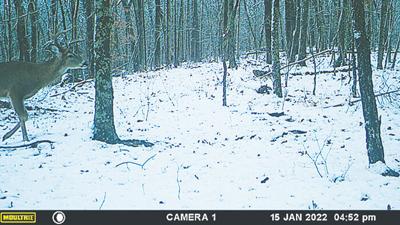
The next day, I went to retrieve the camera card and check the snow for tracks and trails (an old-fashioned and less reliable form of scouting). Sure enough, a few minutes before sunset, the camera had caught a nice buck standing less than 20 yards from my stand. He stayed around long enough to get his picture taken three times.
Hopefully he’ll show up on the camera again this spring and through next summer, and grow even bigger antlers. And then, with a different bit of luck, I can be in my stand at the right time.
John Winkelman is Marketing Director for Liguori Publications near Barnhart, Mo., and Associate Editor for Outdoor Guide Magazine. If you have story ideas to share for the Leader outdoor news page, e-mail ogmjohnw@aol.com, and you can find more outdoor news and updates at johnjwink.com.