


I love this line from Braiding Sweetgrass, by Robin Wall Kimmerer. I feel like it strikes close to home.
“Raised by a river: I suppose both meanings are true – you can hardly have one without the other.”
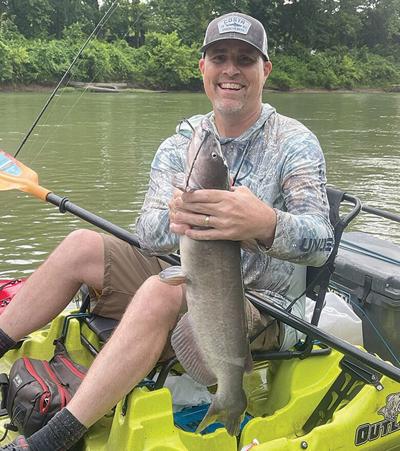
My childhood included five-minute bike rides to the Mississippi River, weekends and summer vacations swimming and fishing in the Gasconade and Missouri rivers, and then in my teens and 20s, I was obsessed with floating as many Ozarks streams as I could access.
Geographically in Crystal City, I am still “by” the biggest waterway in North America, and all the years I have spent wading in, walking along, and submerged in streams contributed considerably to my upbringing. It’s a cliché to say rivers are part of my DNA, but I guarantee I have absorbed and ingested more free-flowing water than is healthy or recommended for human consumption.
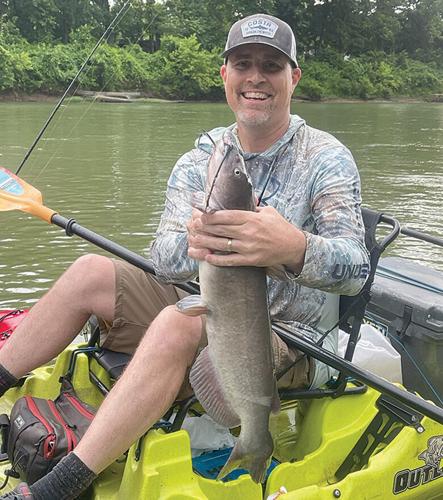
In all those decades I have encountered an incredible number of aquatic creatures. I’ve collected freshwater mussels, and caught common carp and crazy looking fish like quillbacks. I’ve handled exotics like eels, spoonbills, and river sturgeons, and reeled in gars, turtles, four kinds of catfish, all three black bass species, many of Missouri’s sunfishes, walleye and sauger, and plenty of doldrums drum, which the state Department of Conservation reports as the “most common fish caught by anglers” while fishing in the Mississippi River.
It is that variety of angling opportunities that makes river fishing so eventful. The 2026 Missouri Fishing Prospects discusses a dozen different fish for catching in the Middle Mississippi River, which is the portion that flows past Jefferson County, and includes the area from Alton, Illinois, to Cape Girardeau.
The highlight species in that stretch of stream are the blue and flathead catfish, which this year are rated as good again. The report says that fish in the 20 to 30-inch range are common, and biologists’ surveys “noted an abundance of young catfish and quite a few trophy-sized fish, with several over 70 pounds.”
The three major catfish species prefer different habitats and different food offerings, according to the publication. Blue catfish prefer swift current areas downstream from the ends of dikes and along reinforced stream banks. They also like deep holes near structure.
“Flathead catfish are found in moderate current around dikes, along revetted shorelines and cut banks, especially if woody cover is present,” the Prospects states. “Flathead catfish prefer live bait, such as sunfish and goldfish.”
When most people think of Mr. Whiskers, it’s the channel catfish they are considering. They are the species that are stocked regularly in ponds and lakes. When fishing for them in the river, think about the areas that seem the most lake-like with slower moving water and side channels. The best bait bets for channel catfish may be more diverse than fish species in the river. Most commonly they are caught on nightcrawlers, chicken livers, and stinkbaits.
The other featured trio in the report are shovelnose, pallid and lake sturgeon, which also grow big, but come with a caveat. Only the shovelnose is legal to keep. The pallid and lake sturgeon are protected species and must be released immediately if caught.
“In recent years anglers have reported catching greater numbers of lake sturgeon. The increased catch is due to a state/federal effort to recover this endangered species,” the report states. “Lake sturgeon are a charismatic species – with a lifespan over 100 years and an adult size of 4 to 8 feet. If you are lucky enough to hook one of these large, powerful fish enjoy the fight, but be sure to release the fish promptly and unharmed.”
Other fish mentioned in the report about fishing in the Mississippi are walleyes, one of the country’s most popular game fish, and their close cousin the sauger, which are most frequently found in the Mississippi and Missouri rivers and suitable tributaries. Minnow-tipped jigs near dikes and rocky shorelines are the main target areas.
Dikes and riprap banks are also recommended in the fall for a chance to catch white bass and stripers. The report suggests using spinners, jigs and crankbaits around those rocky areas. It specifically mentions the Chain of Rocks area in north St. Louis County, which is one of the places my bicycle took me for fishing in my early teens.
John Winkelman has been writing about outdoors news and issues in Jefferson County for more than 30 years and was the Associate Editor for Outdoor Guide Magazine. If you have story ideas for the Leader outdoor news page, e-mail ogmjohnw@aol.com, and you can find more outdoor news and updates at johnjwink.com.