





(Photo by Vitaly Gariev via Unsplash)
“Can pets see ghosts?” “Do dogs know they are dogs?” and “Is my pet jealous?” are among the strange questions pet owners admit they’ve asked artificial intelligence, according to new research.
Nearly half of respondents (47%) say they’ve turned to AI with unusual or offbeat questions about their pets — a reflection of how deeply these tools are becoming embedded in everyday pet ownership.
A new survey of 2,000 pet owners conducted by Talker Research on behalf of Darwin’s pet food found that 43% have used AI tools like ChatGPT to get information about their pet’s health or nutrition, with respondents turning to these tools an average of seven times per week.
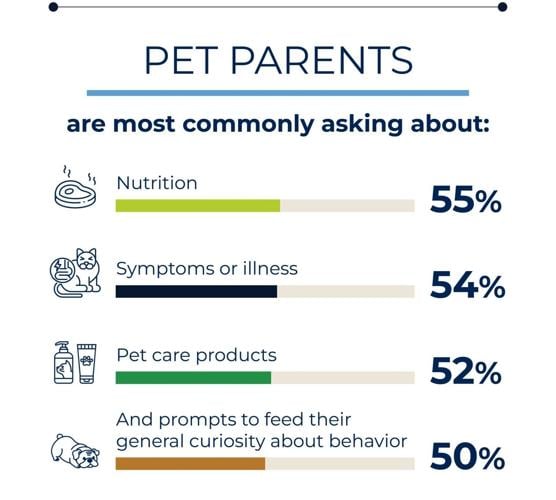
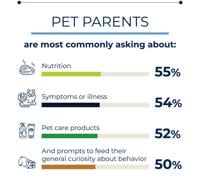
Pet parents are most commonly asking about nutrition (55%) and symptoms or illness (54%), along with pet care products (52%) and prompts to feed their general curiosity about behavior (50%).
Nearly six in 10 (59%) say they’ve changed how they care for their pet based on AI recommendations.
Still, traditional expertise hasn’t been replaced. Seventy-one percent of pet owners say veterinarians remain their most trusted source for health and nutrition advice, compared to just 14% who rely primarily on AI tools. When advice conflicts, 64% say they follow their vet, while only 12% side with AI.
“As digital tools reshape how people search for answers, many pet owners are navigating a growing disconnect between convenience and confidence in the information they’re finding,” said Paul Hagenson, a spokesperson for Darwin’s pet food. “With AI-powered tools, social media and online forums all offering guidance with often conflicting recommendations, even well-intentioned research can leave people second-guessing what’s actually right for their pet.”
That tension reflects a broader push and pull in the modern information landscape. While 90% of pet owners say AI and online resources have made them feel more informed, nearly half (50%) admit they at least sometimes feel unsure about their pet care decisions after researching online.

(Talker Research)
For some, that uncertainty turns into anxiety: 30% say using AI has made them more worried about their pet’s health.
In fact, health (47%) and nutrition (33%) are the top triggers of second-guessing, followed by concerns around longevity, vaccinations and behavior.
To navigate the noise, pet owners are prioritizing professional credentials (57%), ranked as the most trusted signal, followed by personal experience (34%) and scientific studies (31%). Just 11% say the accuracy of AI-generated responses is a top trust factor.
Only 27% say they trust AI advice as much as human experts, and 89% believe AI can’t replace a pet owner’s intuition.
Despite the rise of AI, many pet parents say their final decisions still come down to instinct and observation over algorithms.
And with 52% believing AI will become a normal part of pet care within the next five years, the challenge moving forward may not be access to information, but knowing what to trust.
“AI is changing how people gather information, but it doesn’t change the responsibility that comes with caring for an animal,” added Hagenson. “The most confident decisions tend to come from balancing expert advice with firsthand understanding of your pet, rather than relying on any single source. At Darwin’s, we believe that includes making sure pet owners have real people they can call when they have questions about feeding, nutrition, or what’s best for their individual pet.”
Research methodology:
Talker Research surveyed 2,000 pet owners who have access to the internet; the survey was commissioned by Darwin’s pet food and administered and conducted online by Talker Research between April 22 - April 28, 2026. A link to the questionnaire can be found here.
To view the complete methodology as part of AAPOR’s Transparency Initiative, please visit the Talker Research Process and Methodology page.