

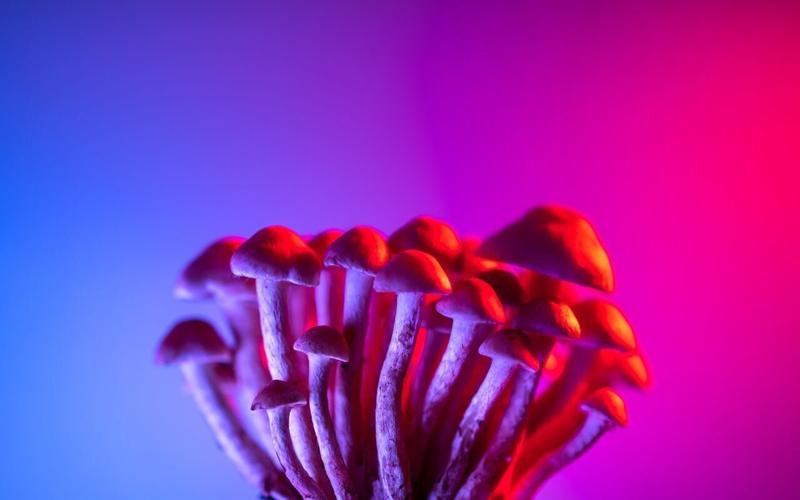

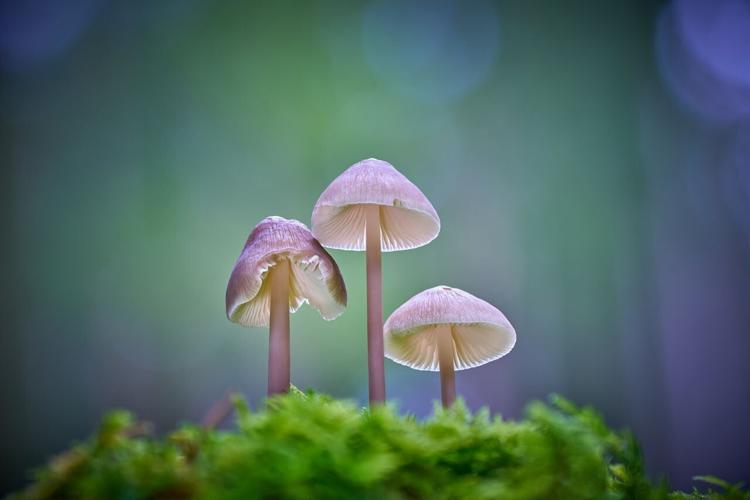

Photo by Marek Piwnicki via Pexels
By Lauren Wilkin
A mom takes magic mushrooms to help with the pressure of parenting — and says it gives her more patience and a stronger connection with her daughter.
Amanda Wilde, 37, took magic mushrooms as a teen, but didn't give them much thought until she gave birth to her daughter, Hazel, now 4.
Like many new parents, being a mom made her feel anxious — especially because Hazel was born prematurely at 28 weeks and spent three weeks in the NICU.
She started to notice how at times being a mom felt the same as tripping on psilocybin — the psychedelic ingredient found in magic mushrooms; a mix of awe and wonder, a new appreciation of the world around you, while also feeling between identities, she said.
So she decided to try taking mushrooms to see if it would help her cope with her parental anxiety, trauma and "reconnect with the experience of motherhood."
It worked, and now, Amanda sees the psychedelic as part of her self-care routine, alongside yoga, long walks and seeing friends.
"Mothers get wrapped up in what their child is allowed and not allowed to do," she said.
"Don't jump on the couch. Don't draw on the walls. Say please. Say thank you. It's a lot of pressure.

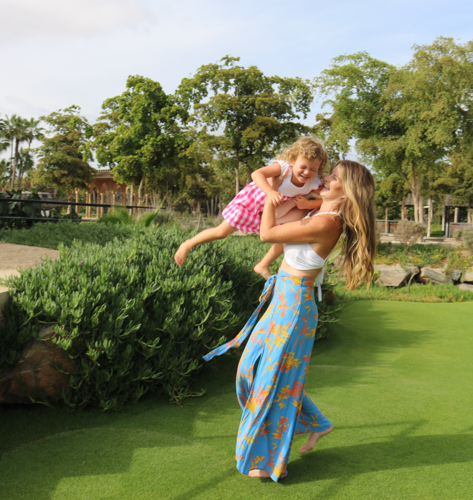
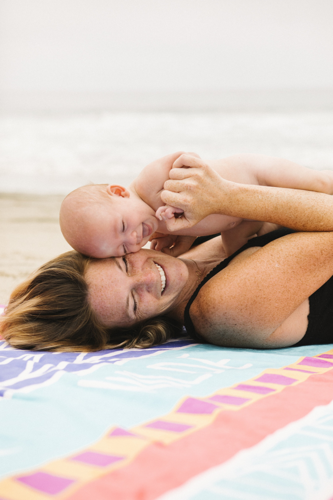
Amanda Wilde and her daughter Hazel. (Kim Utley via SWNS)
"But magic mushrooms help break out of that. You ask yourself what's really important. Because of that, I have so much more patience, and the connection is stronger.
"I felt connected to this perfect little new human who is still so connected to her own consciousness without the layers of shame and expectation we all carry."
Growing up, Amanda used to take magic mushrooms with her friends.
"I'm from Charleston, magic mushrooms grow naturally," she said, although she's since moved from South Carolina to Laguna Beach, California, and is now exploring Europe as a potential place to live.
"And growing up, we'd always be picking them and tripping on them. At 16th birthdays, Saturday nights, it was all recreational."
Amanda stopped taking mushrooms recreationally when she was 20.
But as a mother, she saw a different potential for using magic mushrooms: a form of therapy.
"It all just felt like a lot, my head was very noisy, and I had a lot of death anxiety," she said, speaking of before she took mushrooms again.
"I'm a single mother, so when she was really little and wouldn't be able to feed herself, I just kept thinking if I died, how long would it take before someone noticed? How long would she be on her own for?"
When she took some, she noticed a huge improvement in her anxiety and mindset around motherhood after having a psychedelic experience.
Amanda takes around 2 grams of mushrooms when she needs to — sometimes as infrequently as annually — rather than microdosing, to ensure she has the full experience.

(Kim Utley via SWNS)
As more time passes from the trip, she can feel the same buildup of anxious thoughts.
Amanda ensures whenever she uses magic mushrooms, she organizes for her daughter Hazel to be looked after by another responsible, trusted adult.
"It's a big bit of magic and as you use the magic it lessens and lessens until you realize you're honking the horn again and screaming at someone while driving," she said.
"So now I do it almost yearly, anytime I feel like the same frustrations are building up. I see it like a birthday reset — blow out the cobwebs.
"When I take psilocybin, my trust in the universe is renewed.
"It made me realize that death is just a doorway into the next, it's like being carried in the womb."
Amanda decided to research the effect further and undertook a master's degree in biology with a focus on neuroscience at Harvard University.
Her thesis focused on the parallels between matrescence — the term used to describe the developmental stage of motherhood in women — and psilocybin.
What she found amazed her.
"Psilocybin is working on the exact same parts of the brain that are undergoing changes during matrescence.
"The hard science shows that both postpartum and psilocybin experiences work along the same neural networks."
Aside from that, she observed a clear overlap in experiences.
"With both postpartum and psilocybin, you experience awe, reevaluation, disorientation of time, just to name a few," she explains.
Amanda calls this the experiential arc.
"There is an arc of exposure of vulnerability, an experience of awe and expansion of our consciousness and then a reintegration of those experiences in a new identity," she said.
Because of this, Amanda concluded that it was possible to use psilocybin to readapt the brain to the changes of motherhood.

Photo by Tommes Frites via Pexels
The postpartum experience is associated with increased levels of anxiety and depression as hormone levels change.
"If women are experiencing anxiety, depression, and postpartum depression, it's possible, based on the science — that psilocybin could improve the mother-baby bond, and the mother's well-being."
Now Amanda is helping other women reap the benefits of the drug.
"I set up Matrèsa because I want magic mushrooms to be a genuine option for mothers struggling," she explained.
Amanda's business helps mothers experience a magic mushroom trip in a safe, therapeutic way.
"We have lots of preparation sessions, psychometric assessments, and then we experience it together."
Amanda's aim is to reduce the stigma around magic mushrooms.
"It's crazy that alcohol is legal and getting wasted every week is considered normal, while magic mushrooms are illegal.
"The safety profile of psilocybin is insane. There's been no recorded overdoses. It's pretty impossible to overdose — the worst that would happen, even if you took a huge amount, is you'll be sick.
"And as for bad trips, they're rare. I'd say you're much more likely to have a 'bad trip' just by drinking."
Soon, she hopes the drug will be legalized so mothers can get the help they need without the risk.