


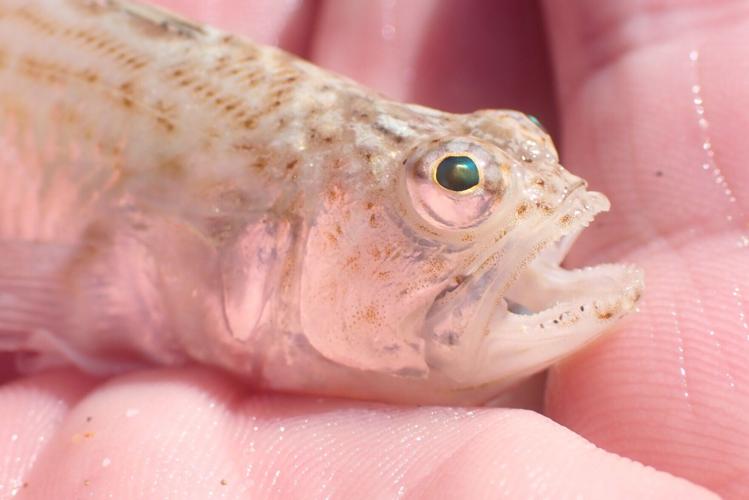
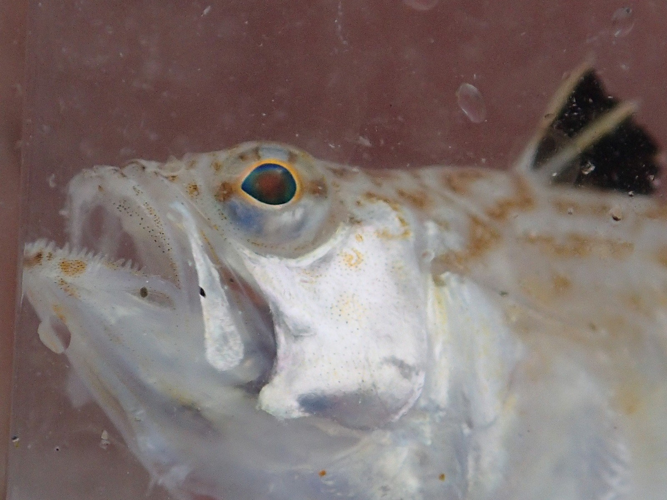
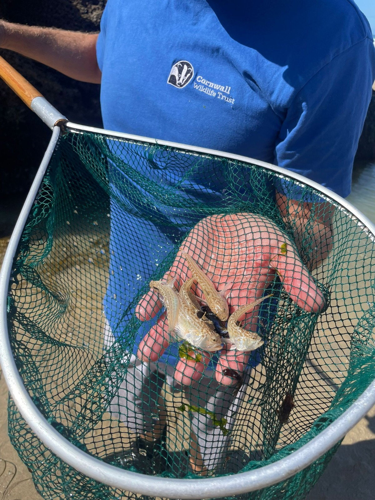
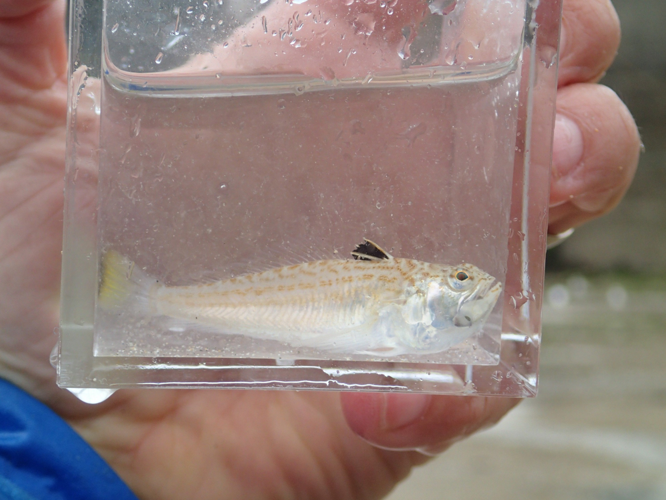

A Weever fish. (Matt Slater via SWNS)
By Lauren Wilkin
Brits visiting the beach during the heatwave have been warned of a venomous fish with an "excruciating" sting, which is hiding in the shallows.
Weever fish are small fish with venomous spines that bury themselves half in the sand, and when you step on them, their poison creates an extremely painful sting.
As the sea warms, more and more of these fish are being found in the UK shallows, an expert warned.
Matt Slater, marine conservation officer for the Cornwall Wildlife Trust, said: "Because of the heat waves warming the sea, we're seeing a huge number of weever fish around the coast already."
And while Slater says many gather in the warmer southwest seas in Cornwall, they can also be found all around the UK, including the east and west coast.
"There are hundreds down at Newquay right now," he added.
"If I go down with my net in the shallows, it'll be full of weevers after a few minutes."
Their official name is Echiichthys vipera — after the viper snake, known for its potent venom.
While these fish won't purposefully sting you, Slater says that thousands of beachgoers step on them every year.

Weever fish are small fish with venomous spines that bury themselves half in the sand in the shallows. (Matt Slater via SWNS)
And because they're found in the shallows at low tide, you don't even need to be swimming to be at risk.
"Weever fish have a dorsal fin with four hollow spines that supports the fin, when you step down it spikes into the foot," Slater added.
"The poison is then pushed out into the foot."
Slater says that despite their 'cute' look, their sting makes them feel like "a big scary monster."
"They're young now, because their main season is June to September," he said.
"But it doesn't matter what size they are. Even the small ones will give a nasty sting."
The poison creates a stinging, throbbing sensation that has been described as "excruciating" — with many people reporting the pain to be far worse than a bee or wasp sting.
Slater, who lives near Holywell Bay — a beach in the north of Cornwall — says he regularly sees a queue of people who have been stung by weever fish outside the lifeguard hut.
"If you've been stung, you need to put your foot in hot water," Slater says. "The poison is protein based, so hot water breaks it down."
"The pain should go away within 15 minutes to half an hour and you will be absolutely fine," he adds.

(Matt Slater via SWNS)
Although some reports have suggested the pain can last up to 24 hours.
"Lifeguards are always looking out for signs of anaphylaxis," Slater says, which is an adverse and dangerous reaction to the sting. "But it's very rare to have a bad reaction. They're not dangerous."
"Weever fish are important in our marine ecosystem. They hide in the sand waiting to see food and pop up to grab small shrimps and morsels that drift past them."
"They don't want to be stepped on. Which is why they have these sharp spines."
How to avoid weever fish stings —
A popular method to avoid weever fish stings is to shuffle your feet as you walk in the shallows, which supposedly scares the fish away.
However, Slater has debunked this method.
"The shuffling method doesn’t really protect you. If anything, it just makes you look a bit silly," he says.
"The easiest way to prevent a sting is to wear a pair of old shoes or wetsuit boots if you're walking in the shallows."
"Otherwise, just swim. Don't walk."
"You're more likely to find weever fish at low tide, rather than high tide. And they usually gather around rocky areas, too, where they can get stuck in the pools."

Their official name is Echiichthys vipera - after the viper snake, known for its potent venom. (Matt Slater via SWNS)
Slater encourages everyone to get involved with their local wildlife trust.
"I'm always catching these fish and educating tourists and locals about them at the Cornwall Wildlife Trust. We're always looking for people to get involved. Whether that's reporting on marine life they see, volunteering or finding out about careers and work experience.
"There's always something fun to get involved with," he says.
How heat waves are transforming marine life
"We’re in a marine heat wave, and have been every year for six years," Slater says.
"I'm really seeing the effects of climate change in my day-to-day, and noticing how rapidly the seas are changing."
"We're having hot summers and mild winters, so marine life is changing completely," he explains.
"There are far more warm water species coming to UK coasts, like jellyfish and weever fish, and unusual species too.
"There has been a huge octopus bloom, and you can now find bluefin tuna and huge shoals of sardines in the Cornish seas.
"The ecosystem now is more like the Bay of Biscay," Slater explains, which is a coast in France that sees regular high temperatures.
"We're also seeing huge numbers of spider crabs. Right now there are huge masses of spider crabs gathering all over Cornwall, in places like Newquay and Falmouth Bay."
He adds that they are completely harmless, however.