
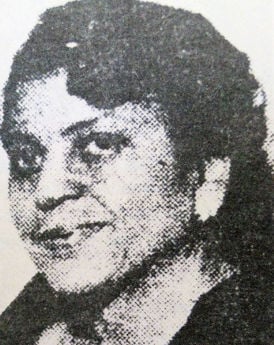
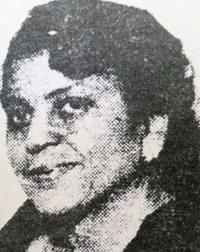
In 1961, the late Dr. Alice McGee Smart, who grew up in Festus, won the St. Louis Globe Democrat’s Woman of Achievement Award. In 1962, she became the first African American to receive a doctorate at Washington University. She taught history, social studies and geography at Harris Teachers College and Lincoln University, according to the commemorative book for the Festus Centennial Celebration in 1987.
McGee also was the daughter of a former slave.
Her father, Perry McGee, was born Sept. 2, 1850, near Glasgow, about 30 miles northwest of Columbia. He was interviewed as part of a Works Progress Administration project called Born in Slavery: Slave narratives by Federal Writers Project 1936-1938.
McGee was 87 years old and lived in Festus at the time.
“My grandfather’s name was Albert McGee and he was born in Virginia. He was a carpenter. My grandmother’s name was Emily and she was a slave in Glasgow, Howard County, Missouri. I was born just three miles northwest of Glasgow,” McGee said in the interview. “My boss then is now a banker in Kansas City. His name is James Alwald Swiney.”
McGee was a slave for the first 14 years of his life. Lincoln signed the Emancipation Proclamation in January of 1863 to free the slaves. The Proclamation, however, only affected those slaves who were in states that had seceded from the Union, or about 3 million of the 4 million slaves in the contested United States. Slaves were not freed in Missouri until January 1, 1865.
McGee remembered the slave auctions from his childhood.
“A man by the name of Grigsby was a slave buyer. It was like you would want a hog or cow and they would put slaves on the block and ‘cry them off.’ You have to make profit on the deal. A good strong man would sell for $300 and some for $100. A house slave was worth more than a field slave,” McGee said in the interview.
“They wouldn’t sell my mother. The old mistress would not allow my mother to be sold,” he said.
Before the war, McGee remarked, Lincoln had proposed that the country pay slave owners $300 for the freedom of each slave in the south.
“But the people would not sell any more than you would cut your shade tree down in your yard,” McGee said.
In October 1864, when Confederate Maj. Gen. Sterling Price made his way across Missouri in Price’s Raid, attacking Fort Davidson at Pilot’s Knob, then Boonville and then Glasgow, rebel soldiers took McGee with them, he said in the interview.
“The soldier said, ‘We want you to go with us and wait on the Captain.’ I was light as a feather almost and they boosted me up on a horse behind one of the soldiers and took me to Glasgow to an eating place.”
He cleaned the horse, waited on the captain and entertained the troops – walking on his hands and doing handsprings.
“Lots of times they would chip in and pay me a little,” he said. “When I left and was free I had $18 in nickels and dimes and had only one piece as big as a quarter.”
It was not long, however, before Horace Swiney came to Glasgow to find McGee and take him back to the farm, he said in the interview.
A few weeks later that freedom came to the slaves on the home place.
“One day young Swiney come out and told us we were free and for us to call him Mr. Swiney and not master,” McGee said.
Only one family left the 600 acre farm, he said.
“All the rest of us stayed right there. He had about 70 slaves,” he said. “After the freedom they paid me 10 cents a day or $3 a month and board.”
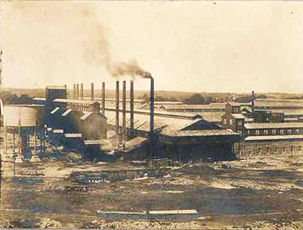
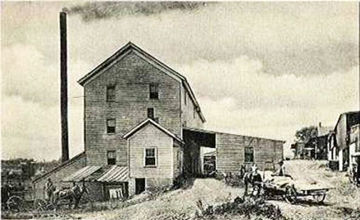
McGee finally left the farm, and did a variety of jobs, but eventually he settled in the Twin City area and worked in the “plate glass factory (PPG) in Crystal City” where he stayed for 30 years, and then worked another 27 years at the Festus Mercantile Co.
He and his wife, Lillia, were married for 55 years and had 12 children, and McGee was very proud of their achievements.
McGee lived with his daughter, Bessie Brown, at the time of the interview. She was a school teacher. A son, W. C. McGee, was the editor of the “Lansing Eye Opener,” in Lansing, Mich. Two sons worked for the railroad, and another worked in a glass factory in Rockford, Ill.
His daughter, Alice, who went to Festus schools and four colleges and later won the prestigious Globe Democrat award, had advantages McGee didn’t have when he was a child, he said in the interview.
“I went to school only three days in my life. The Mrs. learned me my A, B, Cs, and all the rest I learned myself. I paid $1.50 a month to go to night school in St. Louis for three months and learned to read and spell, but I just can’t write,” he said.
“If I had the chance that the young folks have now I would go as high as you could go,” McGee said.
In an interview for the state Historical Society of Missouri’s Black Community Leaders Project, his daughter, Alice, said both her parents placed a high value on education and that helped her go so far.
“One of the first jobs he (her father Perry) had was to help clear the ground on which the Pittsburg Plate Glass Company was built. And then he worked in a grocery store and sent us to school. He believed in school, and we all went to school, all of us practically, as long as we wanted to go.”
Note: Some of the excerpts were edited for clarity.
Send submissions to LOOKING BACK to nvrweakly@aol.com or bring or mail them to the Leader office, 503 N. Second St., Festus (P.O. Box 159, 63028). Please include your name, phone number, a brief description of what’s in the photo and tell us how you came by it. Please also include when it was taken, where and by whom (if known). A new LOOKING BACK photo will be posted each week.