
It was an LOL moment for me long before such a label existed.
The lyrics to Randy Newman’s “Short People” were outrageous, and I remember giggling at them back in 1977, when the song played on the radio of my teensy baby blue Chevette. I had lots of time to listen to the hits while commuting from my home in Farmington to Hillsboro, where I worked as the courthouse reporter for the Daily News Democrat.
“Short people got no reason to live
“They got little hands
“Little eyes
“They walk around tellin’ great big lies
“They got little noses
“And tiny little teeth
“They wear platform shoes on their nasty little feet
“Don’t want no short people ‘round here.”
Being of average height, I took no personal offense, but I’m not sure I caught Newman’s satirical intent from the get-go. He was making fun of irrational prejudice in what would become his first, and still most prominent, hit song.
Some people never caught on. A few vertically challenged folks lodged threats against Newman, who now says he dislikes both the “novelty” song and its success.
The late Isaiah Dixon, a not-so-imposing 5-foot, 5-inch delegate in the Maryland Legislature, even tried to create a state law banning the song from airing in Maryland, until advised his bill would infringe on the First Amendment.
I wonder what James Madison would have thought about it all. America’s fourth president most likely would have held to his modest nature and kept his personal feelings to himself.
Madison, our shortest president, stood 5 feet, 4 inches, an inch shorter than Dixon, and a foot shorter than Abraham Lincoln, our tallest president. But what Madison lacked in height, he made up for in stature.
I just finished “James Madison: A Life Reconsidered” by Lynne Cheney (wife of Dick, mother of Liz). In her 2014 book, Cheney portrays Madison as a remarkable man who, uncharacteristically for a politician of any time, didn’t brag about his accomplishments.
Maybe that’s partly why, she writes, Madison has never gotten the credit he’s due.
I enjoyed the book immensely because of the insights it provided into Madison’s life and into the birth of our nation. I hope you read it, too; maybe the following tidbits will whet your interest.
■ Madison is deservedly known as the “Father of the Constitution.”
In 1787-1788, he played an essential role in writing the Constitution, negotiating its approval and supporting and defining it in 29 of the 85 essays in the “Federalist Papers.”
Madison, along with Thomas Jefferson, would eventually become a strong proponent of states’ rights, but he was instrumental in creating America’s central government and balance of powers.
■ Known as “Jamie” within his family, Madison was the oldest son of a Virginia farmer. He was educated with the hope he would become a great man and in his young adulthood, he lived off an allowance from his father.
Madison studied law but did not become a lawyer, and in fact, held no other jobs than elected positions, culminating in two four-year terms as secretary of state under Jefferson and two terms as president.
Although he earned no salary during much of his life, Madison’s eight years as chief executive paid really well – $25,000 annually. In today’s dollars that’s north of half a million, more than Joe Biden makes.
Madison still died in near poverty, though, and his widow, Dolley, had to sell his estate, Montpelier, to stay afloat.
■ Speaking of Dolley, she was quite something. Seventeen years younger and 4 inches taller than her husband, she was an incalculable asset to his political career. Intelligent and gifted in the social arts, nearly everyone, male and female, who came within her orbit left charmed.
She called her husband, who was slight as well as short, “my little Madison,” and by all accounts loved him deeply. The besotted Madison was 43 when he married the 26-year-old widow. Their union would last 42 years, until Madison’s death in 1836.
■ Jefferson and Madison worked as a team throughout their political careers and wrote countless letters to each other – often in code. Madison helped Jefferson become president, and then Jefferson returned the favor.
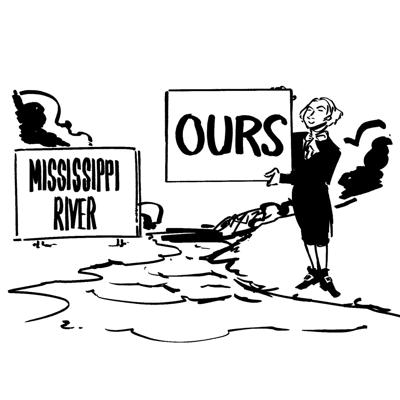
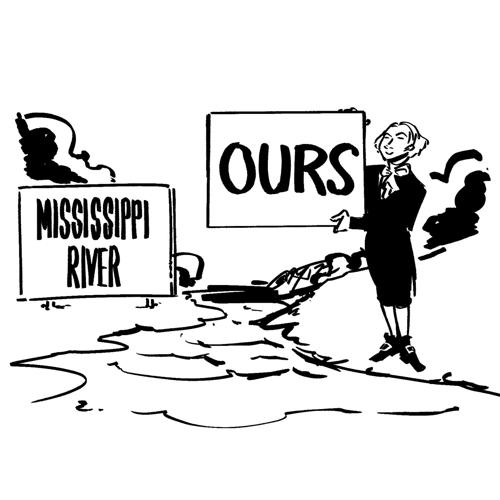
Notably, the two joined forces to give America control of the Mississippi River.
Several times over the decades, Madison worked diplomatically to thwart efforts, first by Spain and then by France, to close off America’s access to the great waterway.
The Louisiana Purchase, masterminded by Jefferson and Madison in 1803, settled the matter and opened up the West.
■ In the last couple of years, we’ve heard a lot about the sacking of Washington City, as it was known then, in the War of 1812, during Madison’s presidential tenure. That portion of Cheney’s book is riveting, tracking Dolley as she packed up silver and artwork while the flames approached. She had to leave the Executive Mansion with no word as to her husband’s whereabouts.
■ Eldridge Gerry was Madison’s first vice president and is remembered for his skill at drawing politically advantageous voting districts. He is the origin of the term “gerrymandering.”
■ In some rankings, Madison is named the most intelligent of our 46 presidents, and he’s invariably listed in the top five. Cheney also paints him as the most self-effacing.
If we could ask James Madison about either of those compliments, I’d just bet he’d have no comment.
And wouldn’t that be refreshing?