


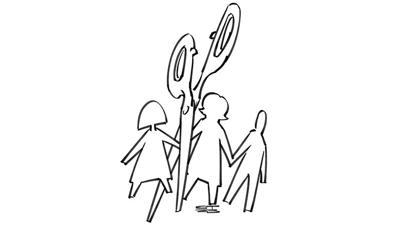
While the upcoming holidays are “the most wonderful time of the year” for many, for others it can be a time fraught with anger, resentment, sadness, guilt or a feeling of failure – all due to family estrangement.
According to a 2020 survey, more than one in four Americans reported being estranged from relatives, although that number is likely an underestimate due to social taboos associated with the topic.
I have experience with parental estrangement, and I don’t think it’s something to be ashamed of or hide from.
Family estrangement can be either a complete cut-off of contact or very limited contact (less than once per month) with a poor relationship. Some estrangements may last a few months or years, while others are permanent.
The reasons often cited as the cause of estrangement are numerous. The most common are abuse, harsh parenting, mental illness, value conflicts, betrayal of trust, refusal to respect boundaries and disputes over money.
Family estrangement is typically not caused by one significant event but instead usually comes after repeated behaviors that eventually play out into one last blow-up event.
That was true in my experience. My relationship with my parents was fraught with many issues, including a lifetime of unpredictable angry attacks of verbal and spiritual abuse.
When I decided I had enough, I laid down to them clear expectations of what behavior I would no longer tolerate. I told them that although I had forgiven them for previous actions, any further transgressions on the boundary would result in a permanent severance of our relationship.
The next time it happened, I kept my word. I blocked their phone number, e-mail and social media accounts.
But I did not end the relationship. Their behavior did.
That was more than five years ago. I have no regrets.
It’s socially ingrained that family relationships, especially involving parent and child, are meaningful and full of love. While most parents say they love their children unconditionally, that’s not always the case.
In my life, I’ve noticed people often reserve their worst behavior for those they are supposed to love the most. On the flip side, people will often let family members repeatedly get away with behaviors that would easily doom other relationships, or even result in criminal charges for physical and verbal abuse and even molestation.
There’s a belief that regardless of what happens in a family, transgressions must be forgiven and relationships maintained.
“That was in the past! They’re family! Blood is thicker than water!”
Malarkey.
Nobody should be forced to accept repeated abuse or disrespect for their entire lives from someone because they share DNA. While it may be prudent to give family members more chances to redeem themselves of bad behavior than you would a regular social relationship, I think it is absolutely appropriate to end a family relationship when someone shows they have no intention of ever changing hurtful behavior. You have no obligation to put up with it, whether it be a grandparent, sibling or parent. Toxic relationships don’t benefit anyone.
Do I see reconciliation in my future? It seems unlikely. Not because I don’t believe I’m capable of being able to forgive and forget, but more because I’m unable to see a future where they will change their behavior. I believe it would be a mistake to put myself back in the firing line of bad behavior, particularly with a relationship that brought very little joy, even in the best of times.
I can already sense the “blood is thicker than water” crowd itching to tell me that I’ll be eating crow when my own child decides to disown me. Then I’ll be sorry.
I disagree. I have what some might consider a somewhat clinical view of familial duty. Children do not ask to be born and therefore do not inherently “owe” anything to their parents who made the choice for them to exist. I do not believe parents should be praised for providing food, clothing and shelter to the children they chose to have. It is the bare minimum required by law.
When I became a parent, I accepted it is a one-way street on who owes whom time, love, care and attention. While I owe all of these to my child, he owes me nothing in return, although I hope he wants to do so voluntarily.
Hopefully if I’ve done a good job parenting, when he reaches adulthood, he will want to continue our relationship because we have a strong foundation of love, trust and a multitude of fond memories, not simply because of obligation. And if he doesn’t want a relationship with me, I don’t think he should be embarrassed or ashamed of his choice.
For those who struggle maintaining family relationships, estrangement can be a painful secret, especially around the holidays. A simple question from a friend or coworker about Thanksgiving or Christmas plans can be awkward and bring up painful memories of the past and a longing to be able to have a loving family holiday.
While people who have been estranged from their family may experience guilt, grief, sadness, or anger from the estrangement, they may also feel a sense of joy, relief and freedom once the relationship is severed.
For me, cutting off unhealthy relationships has made my life happier. After stepping away, it felt like a great burden was lifted. I won’t lie; it has been a little disheartening to skip family events and milestones I know they will attend, such as Thanksgiving, Christmas and birthday parties. But it has been well worth it to protect my mental health.
I have more energy and resources to use on healthy relationships with people who treat me with love and respect. Those are the people whom I truly want to spend time with on the holidays, blood or water.