


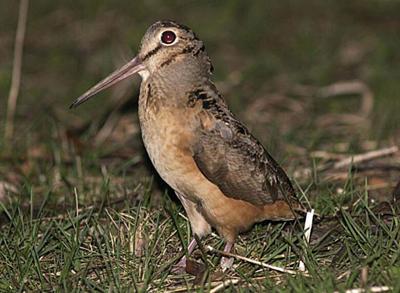
Somehow its nickname, timberdoodle, is not the most interesting thing about the American woodcock. A guided tour in northwest Jefferson County will give participants an opportunity to see these quirky birds in action.
The Dance of the Timberdoodles program is planned from 6 to 7 p.m. on Tuesday, March 8, at the Hilda J. Young Conservation Area. A presentation about the bird will be followed by a short hike to search for male woodcocks going through their unique courtship ritual. Participation is limited to 25 people and advance online registration is required at mdc.mo.gov.
Few woodcocks may live year-round in the Missouri bootheel, but the entire state is included in its breeding range, and it is one of the earliest migratory birds to return north from their winter visits to the southeast coast of the United States. Once they arrive here, the dancing begins.
After a short discussion in the conservation area parking lot off Highway FF southwest of Eureka, a department naturalist will lead a walking tour to look and listen for action.
Male timberdoodles flutter skyward, twittering and circling to great heights before falling back to earth while flapping noisily. Back on the ground, the male repeats a series of “peent” calls before repeating the process in hopes of attracting a mate.
While beauty is in the eye of the beholder, the timberdoodle is fortunate to have such good moves in comparison to his appearance. About the size of a mourning dove, the American woodcock does not have the same sleek physique. Peterson's Field Guide describes him as “a rotund, almost neckless brown bird with dead leaf pattern, an extreme log bill and large pop eyes.”
The state Department of Conservation tosses in a few other unflattering adjectives online to depict his round, plump body with short legs and tail. The color description is a little nicer, “mottled with cinnamon and gray, and the underparts are buffy.”
American woodcocks belong to the sandpiper family, but they are not beach boys like most of their kin. Timberdoodles prefer open woodlands, young forests near water sources, moist pastures and tree-dotted floodplains. Their diet consists mostly of earthworms that they find by probing damp soil with their long, flexible bills.
While the males will continue their dancing antics through the late winter and spring on warm evenings, young mothers will lay up to dozen eggs in nests on the ground. Almost immediately after they hatch, the young birds will run around, but they rely on Mom to find worms and ground-dwelling insects to feed them.
As ground-nesters, the eggs and young birds are susceptible to predators. As a game species in Missouri, adults are included in the migratory bird hunting seasons in the fall. A daily limit of three birds is allowed. Hunters must have small game and migratory bird hunting permits.
With a chance to see a unique bird putting on an elaborate show, “hunting” them on a warm winter or early spring evening hike may be even more rewarding. For more information about the upcoming program, call Powder Valley Nature Center in Kirkwood at 314-301-1500.
John Winkelman is Marketing Director for Liguori Publications near Barnhart, Mo., and Associate Editor for Outdoor Guide Magazine. If you have story ideas to share for the Leader outdoor news page, e-mail ogmjohnw@aol.com, and you can find more outdoor news and updates at johnjwink.com.