



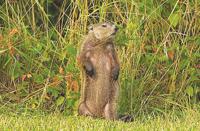
For an animal that has a day of recognition on the American calendar, the groundhog (also known as the woodchuck or marmot) is nevertheless the Rodney Dangerfield of mammals. There may even be some people who don’t give due respect to the Bill Murray-Andie MacDowell “Groundhog Day” movie, a comedy classic, but they’re wrong.
The film and the annual celebration it parodies are emblematic of the much-maligned woodchuck. My first introduction to this humble critter was at the knee of my sharpshooting uncles, who were tasked with taking them out from hundreds of yards away as the little marmots frolicked in the fields at Grandpa’s farm.
There was a reason for going after them. They had the potential to cause creek-bank erosion, or the collapse of the ground beneath heavy equipment or the footsteps of livestock – not to mention raiding the vegetables in the garden. But from the groundhog’s natural perspective, they were just setting up housekeeping in the area they found most suitable.
According to the state Department of Conservation website, the groundhog’s ideal habitats are timbered areas or thick vegetation at the edge of open land. They dig tunnels that intersect at a larger underground chamber for their nests. Almost exclusively vegetarian, they feast on flowers, grasses, and frequently, garden crops, sometimes necessitating the aforementioned critter control.
What most people know about groundhogs is limited to the Feb. 2 celebration in which captive animals are trotted out to hype an impossible wish for early spring. There is even some question as to whether we recognize the correct date for their supposed weather-forecasting abilities.
The state website says the six-more-weeks-of-winter story traces some of its roots back to Ozark folklore, but in its origin, the celebration shared Feb. 14 with the feast of St. Valentine. Somewhere through the years, the groundhog lost out to Cupid and retreated two weeks back into the dead of winter.
According to the tradition, a sunny Groundhog Day, producing a shadow when the animal emerges from his nest, signifies more winter, while cloudy skies indicate early warming.
That makes about as much sense as believing these animals truly can forecast the weather. In Missouri, woodchucks hibernate from late October until sometime in February. If the groundhog naturally awoke from its winter nap on Feb. 2 and found 75 degrees and bright sunshine, he would never deduce that spring was still six weeks away. And if that day dawned gray, gloomy and frigid like most winter mornings, then spring is almost here? It’s wishful thinking at best.
Whether it’s Punxsutawney Phil or any of the other poor creatures that will be shaken from their slumber to provide absolutely no reliable information, the woodchuck needs to be free to live his own peaceful existence. The only weather rodent ever worth his salt was Gus T. Hog, the creation of artist Judy Dixon for illustrating daily forecasts in the Jefferson County News-Democrat, in her days before cartooning for the Leader opinion pages.
In Missouri the woodchuck is most frequently referred to as a groundhog, but their other nickname, “whistle pig,” is attributed to the loud alarm call they share at the sight of danger. Also related to marmots such as the prairie dog and other ground-dwellers of the western United States, woodchucks are considered common here, but many of their cousins are listed as threatened or endangered species.
Their excavation work can actually be beneficial to soil and their abandoned homes provide dwellings for other animals, such as skunks, foxes, opossums and rabbits. Groundhogs, especially the young ones, provide a food source for larger predators, including hawks and other raptors.
I would advocate for Feb. 2 as a day to learn more about the lowly woodchuck, also made more famous than it wants to be with the tongue-twister question, “How much wood could a woodchuck chuck if a woodchuck could chuck wood?” When all is said and done, rather than fret over the next six weeks of weather based on Pennsylvania mythology, I suggest you throw another log on the fire and enjoy a good movie.
John Winkelman has been writing about outdoor news and issues in Jefferson County for more than 30 years and is the Associate Editor for Outdoor Guide Magazine. If you have story ideas for the Leader outdoor news page, e-mail ogmjohnw@aol.com, and you can find more outdoor news and updates at johnjwink.com.