
On more than one occasion I have been asked, “What podcasts do you listen to?” I know enough about the subject to avoid answering, “What’s a podcast?” but the reality is that I have had limited exposure to this not-so-new technology.
My introduction came during a carpool business trip. For several hours we listened to a multiple-episode documentary series. Hundreds of subjects were available, from true crime stories to supernatural-phenomenon discussions. It was compelling, but my interest faded when I returned to my own vehicle.
In the meantime, I found that my local library lends audiobooks on CDs that I could listen to while driving. I exhausted the shelves in both Festus and Crystal City of the stories that fit my style, so now I rely on the online connections through the library. Among my favorites is a collection of podcasts by Mike Rowe called “The Way I Heard It.”
So I am more familiar with the podcast concept, and have recently added one to my personal Spotify library – “Nature Boost,” from the state Department of Conservation. Like me, it’s a relative newcomer to the medium, but with nearly three dozen episodes available, listeners can find many topics of interest from subject-matter experts.
In the most recent release, host Jill Pritchard discusses the Christmas Bird Count with U.S. Fish and Wildlife biologist Sarah Kendrick. They talk about the history of the event and how the annual survey identifies potential troubles among specific bird populations.
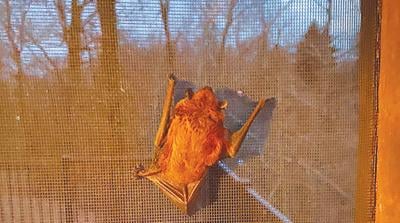
The first episode I sought out was from October 2022. Bat ecologist Jordan Meyer answered questions about the 14 species of flying mammals that make their homes in Missouri. I was interested in what he had to say because earlier this winter, we had a bat turn our screened porch into a temporary residence.
I initially misidentified the creature as a little brown bat, but after listening to the podcast, I realize our short-term visitor was a big brown bat. Despite their similar names, the differences between the two are significant. The little guy is about three inches long while the “big” one’s body is in the four-to-six-inch range. In my haste to get him or her on the other side of the screen door, I did not bring a tape measure.
My tools for catch-and-release were a small bowl and piece of cardboard. The bat expressed some dissatisfaction when trapped in the bowl, but there was great joy when he flew away from the house. There is still some question as to who was happier, the bat or my wife.
The primary piece of information from the podcast that I used to determine the species in my house is that little brown bats are rare and endangered, while big brown bats are common. That distinction is relatively new. The disease white nose syndrome has decimated the population of little brown bats by as much as 99 percent since the turn of the century.
Bats are feared for disease transmission, but we are more likely to make them ill than vice versa. The potential for rabies transmission is minimal, and the benefits of bats to humans are notable. Bats eat lots of mosquitoes, which are much more potent spreaders of disease.
In addition to eliminating agricultural pests like beetles that feast on summer crops, bats also help control populations of wasps, moths, grasshoppers, cicadas and more. Bigger bats can eat larger insects.
From their echolocation abilities to their distinction as the world’s only flying mammal, there is much more to learn about bats in Missouri. A 30-minute episode of the Nature Boost podcast provides a plethora of details. You can find a link and listen to it on the department website, mdc.mo.gov. Or, if you are much more tech-savvy than me, it’s available “wherever you get your favorite podcasts.”
John Winkelman has been writing about outdoors news and issues in Jefferson County for more than 30 years and is the Associate Editor for Outdoor Guide Magazine. If you have story ideas for the Leader outdoor news page, e-mail ogmjohnw@aol.com, and you can find more outdoor news and updates at johnjwink.com.