


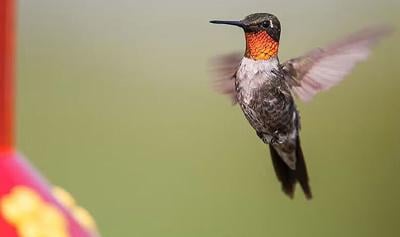
Spring brings bright color back to a gray landscape, and few things illustrate that vibrancy better than the ruby-throated hummingbird. The daffodils arrive sooner, the redbuds are easier to spot, and the woods pop with new green, but the tiny speedsters are the stars of April.
I’ve heard reports about the return of the annual mini-migrators to Jefferson County, so now is the time to mix up some sugar water and place your feeders where they will be found in a fly-by.
The recipe for attracting hummingbirds to your feeder is simple, and it does not include red food coloring. Mix four parts water with one part powdered sugar to make a nectar that is sure to draw a crowd.
“Boiling the solution will slow fermentation and keep the mixture fresher longer, especially if you are storing part of the mixture in the refrigerator for later use,” says the state Department of Conservation. “Never use honey or artificial sweeteners, and keep the feeder clean and the artificial nectar fresh.”
Missouri residents also can attract hummingbirds by planting several different native plants. The birds' bills and tongues are designed to find nectar deep inside tube-shaped flowers.
“Some favorite Missouri wildflowers are wild columbine, trumpet creeper (trumpet vine), cardinal flower, jewelweed (touch-me-not), royal catchfly, fire pink, wild bergamot, red buckeye, and native honeysuckles,” the conservation department says. “Hummingbirds are especially attracted to red or orange flowers, which is why many artificial hummingbird feeders are colored bright red.”
A combination of flowers and feeders will score swarms of the acrobatic birds. They also may be seen in the wild in places like river corridors that support many of the above-named wildflowers and vines. Seeing the little buzzers on a peaceful float trip makes a great day even better.
Since most of those native species of plants have not yet reached the flowering stage, the early birds' diets consist mostly of insects and tree sap. Their feeder visits will ramp up as we move into May, when they are beginning to make their nests and raise babies. Peak hummingbird activity in Missouri comes in August, and they stay with us until October.
Having multiple feeders and plants is a plus because hummingbirds will get territorial. The males defend a patch of flowers or an array of feeders because they are trying to make sure enough food is available for their nesting young.
The conservation department website points out an interesting fact about hummingbirds and how they deal with cold spring temperatures through a process of short-term hibernation called torpor.
“Their metabolism slows. Their body temperature can drop nearly 50 degrees lower than their usual body temperature of about 103 F. Their heart rate and breathing slows, and they may appear dead, but as the air around them warms, they wake up and resume normal activities.”
Most hummingbirds that we’ll enjoy watching this spring and summer will spend their fall traveling to their winter homes in southern Mexico and Panama. Their travel will take them on a non-stop flight across the Gulf of Mexico while we wait in our own version of torpor for them to return the following year.
John Winkelman has been writing about outdoors news and issues in Jefferson County for more than 30 years and was the Associate Editor for Outdoor Guide Magazine. If you have story ideas for the Leader outdoor news page, e-mail ogmjohnw@aol.com, and you can find more outdoor news and updates at johnjwink.com.