


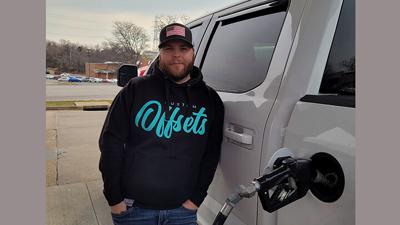

With gas prices reaching record highs this month, Jefferson County and Eureka residents say their household budgets have taken a hit.
Officials for the county and local law enforcement agencies and school districts also say they’re seeing the effects of the higher fuel costs.
OATS, which offers public transportation throughout the area, finds the increased gas costs particularly challenging.
According to AAA, the national average price for regular gas reached an all-time high on March 11, at $4.331 per gallon. As of Monday, at Leader deadline, that price had decreased slightly, to $4.325 per gallon. A year ago, the average cost of gas in the U.S. was $2.859 per gallon.
In Missouri, the average cost of regular gas was $3.840 Monday and $2.666 a year ago, according to AAA.
County
Jefferson County Public Works Director Jason Jonas said the county has 379 vehicles that use gas and 115 vehicles that use diesel, which is even more costly.
He said the county budgets about $1 million a year to cover fuel costs for those vehicles and has spent about $919,000 annually on fuel over the last five years.
Jonas said he is not sure how much the higher gas prices will impact this year’s budget.
“We can move money around in the budget,” Jonas said. “If fuel is running hot and we need more funds in there, we can maybe not do a project or if something came in under bid we can move that money over to the fuel. If prices hold this strong for the whole year, we may have to look at other measures to get the (fuel) line item under control.”
Law enforcement
■ Jefferson County Sheriff Dave Marshak said the increase in gas prices will not have a significant effect on how the agency operates, but he will keep an eye on how those higher costs affect the budget.
Jonas said the Sheriff’s Office has 207 vehicles and about $431,000 budgeted for fuel costs.
“One of our historical strategies for efficiency (to conserve fuel) has been to route some minor calls and reports to a substation, where a deputy can handle the incident over the phone,” Marshak said. “Handling some situations over the phone saves time, fuel and costs to our citizens. We will continue to implement measures to increase efficiency and effectiveness within our resources.”
■ Arnold Police Chief Bob Shockey said the Police Department’s budget hasn’t taken a big hit yet because when he prepares the agency’s budget, he plans for $5-per-gallon gas prices.
“It eats up our budget a little bit more, but I budget for much higher gas prices for this reason,” Shockey said. “It does affect our budget, and hopefully, gas prices will not stay up this high for that long. As of right now, all patrols will remain the same, and everything is running as normal.”
He said the Police Department has about $110,000 budgeted for fuel this fiscal year, which runs from Sept. 1, 2021, to Aug. 31.
Shockey said the department had about $110,000 budgeted for fuel costs last fiscal year and spent about $79,000 on fuel for its 30-vehicle fleet.
■ The Eureka Police Department has $60,000 budgeted to cover fuel costs, and the department is projected to spend about $72,000 on fuel by the end of the city’s fiscal year on June 30, said Barb Flint, the city’s finance director.
She said other police expenses are projected to come in under budget, which would allow the department’s $3.2 million budget to absorb the higher-than-expected fuel expenditures.
Eureka Police Lt. Michael Werges said the higher gas prices will not dramatically change how the department operates its 20-vehicle fleet. However, officers will be instructed not to let their vehicle engines idle if they believe they will be at one spot for an extended period of time.
“There are no plans to go to two-person cars or anything like that. We are not in any budget constraints,” he said. “We are not going to change our patrol routes. We are just going to try to cut down on the time vehicles are idling.”
School districts
■ Jessica DiPaolo, director of administrative services for the Northwest R-1 School District, said she will monitor fuel prices and the district’s budget for fuel.
She said the district budgeted $322,000 for fuel this school year and has used $220,280.69 of that so far.
DiPaolo said normally the last two to three months of the school year have lower expenses than December to February, which have the highest.
“We'll see if that holds true this year,” she said. “Should we need to cover additional fuel expenses, we will look at the overall budget to see if there are surplus funds from another area that can cover fuel costs, or grants and opportunities to save on overall fuel.”
■ De Soto Superintendent Josh Isaac-son said the gas price increases will cut into his district’s budget.
“Crude coming close to $140 a barrel certainly gets one’s attention,” he said. “I believe it is still too early to compare what is happening currently in terms of increases in global commodity prices to those seen in the 1970s for fuel, food and other items. I understand that commodity indices are up around 20 percent higher than the start of 2022, and this does have an impact on school budgets as well as household budgets in our local communities.
“Due to the increase in prices, we will likely need to make a budget adjustment prior to the end of the year, putting us in the same cost range we experienced in 2019,” he said.
In 2019, the district spent $197,412 on fuel. It budgeted $170,000 for this school year and had spent about $127,000 through the end of February, Isaacson said.
The last two years, spending on fuel was down, with COVID-19 playing a role: $122,542 in 2020 and $113,699 in 2021.
“As a school, we have to adjust our budget based upon market factors, just like folks do with their home budgets. If costs are up, we either have to utilize reserve balances or make cuts elsewhere. The current status of world affairs and the duration of these factors will play a part in what this means for our local schools as well as individuals in our local communities over the next few months,” he said.
He said that based upon the increase in fuel costs over the past two weeks, he did not anticipate having to cut, modify or consolidate bus routes.
■ Festus R-6 Superintendent Link Luttrell said the gas prices haven’t had much impact on the transportation yet because of its diesel gas reserves.
“We budgeted what we thought we’d need,” he said. “Diesel is what we use for our buses. We have two storage tanks where we keep our fuel. The fuel cost increase has not had an effect on us.”
During the 2019-2020 school year, the district spent $103,036 on diesel fuel. Last school year, the district paid $98,555 for its fuel, and so far this school year, it has spent $98,427, said Jonathan Earnhart, assistant superintendent.
“What I worry about is the impact on the families with students who are in performing arts or sports. The fuel costs could convince them not to go on road trips to see them.”
■ John Stewart, chief financial officer for the Fox C-6 School District, said he does not know how much the rising gas prices will affect the district’s budget by the end of this school year.
The district’s last day is scheduled for May 27.
Stewart said the district budgeted $332,500 to cover fuel costs for the 2021-2022 school year, and so far it has spent $390,597. District officials said Fox will reallocate funds from other parts of the budget to cover fuel costs.
He did say, however, that the higher gas prices will not affect how the district will continue to transport its students to and from school as usual.
“It doesn’t make running the routes more difficult, since we have to provide the service,” Stewart said. “However, it will add an unexpected strain to the budget.”
■ The Rockwood School District has updated its budget because of the recent increase in fuel prices, chief financial officer Paul Northington said.
He said the district originally budgeted $900,000 for this school year’s fuel costs but has increased that budget by $250,000 to $1,150,000.
“Naturally, the recent increase in fuel prices has had an adverse impact on school district budgets,” he said. “The decision for the past couple of years to transition our bus fleet from diesel to unleaded has helped to mitigate the increase in fuel costs. Currently, diesel prices are considerably higher than unleaded fuel, and this transition has helped to soften the recent increase in fuel costs.”
Northington said he isn’t worried about the district’s overall budget, though, because local and state revenue sources have exceeded projections for this school year.
“The district anticipates an operating budget surplus for the 2021-22 school year,” he said. “For the 2022-23 school year, we have the ability to absorb the increase in fuel costs without significantly impacting school operations.”
Public transportation
OATS Transit, a nonprofit group that provides transportation throughout the county, is facing a complex set of challenges because of rising gas prices.
“We have 700 buses statewide, and we use about 4 million gallons of gas a year, so even a 10-cent increase is a huge hit. It’s going to be a real hit on our budget,” said Jill Stedem, administrator and development director.
OATS Transit operates three services in Jefferson County: OATS Transportation buses run on an as-needed basis; Jeffco Express runs in cross-county and municipal scheduled routes; and JC Transit offers both scheduled and as-needed routes.
“We have about 65 vehicles in service,” operations manager Kevin Porter said.
“More individuals rely on public transportation when gas prices go up, so we will probably see an increase in the number of people who want to ride just as we need to economize,” Stedem said.
Company officials are meeting soon with other agencies to develop strategies to cope with the increases.
“From what we’re hearing, (higher gas prices) is not going to be here a few weeks and then gone,” Stedem said. “It’s a long-term problem. We’re meeting to come up with some ‘What if?’ scenarios, to brainstorm a plan.”
Stedem said some solutions could create other problems.
“We could be looking at an increase in what agencies pay us,” she said. “We could possibly cut some days of service or cut hours or routes. But then, we could put drivers out of work, and we worry about our personnel.
“We’re looking at options, and nothing’s off the table. We’re keeping a close watch on it.”
Gas customers weigh in
Leader reporters talked to people at several locations around the county on March 10 about the rising fuel prices and how they’re coping with the extra costs. Here are some of their responses:
Circle K, 4671 Hwy. W, in Byrnes Mill
■ Tyler Schutte, 22, of Dittmer said he works as a carpenter and his boss just started giving him $200 extra each paycheck because of the increase in gas.
“Just so we can afford to keep going to work,” he said.
Schutte has a Ram 2500 pickup, and it used to cost $90 to fill it up, and now it costs about $130.
“Once unleaded hits $5 a gallon, I am getting rid of the truck,” he said. “I won’t be able to afford it.”
■ Jacob Snodgrass, 41, of Festus said it used to take between $35 and $40 to fill his work truck, a Ford F-250 owned by Outdoor Evolution, and now it costs about $100
“Right now, we are eating it,” he said. “(The higher fuel cost) is already starting to trickle down into material and supplies.”
■ Michael Smith, 72, of St. Louis said he is worried about the rising gas prices and has cut back on his trips.
“I can hardly drive anymore,” he said.
Smith said he was running errands and decided to fill up in Byrnes Mill because it was a bit cheaper than in St. Louis.
He said it used to take about $35 to fill his Ford Edge now it takes about $75.
“I have this nice car and now I wish I wouldn’t have bought it because of gas,” Smith said.
He said he has canceled a road trip to Florida because of gas prices.
■ Cindy Brewer, 62, of Eureka said she has not been feeling the increase too much yet.
“I am retired; I don’t have to go to a lot of places,” she said.
Circle K, 100 Old Towne Drive, in Eureka
■ Dan Friedmann of Eureka said it used to take about $75 to $80 to fill his Ford F-150 and now it takes $103.
“It affects us in our decision-making,” he said.
Friedmann said he and his wife might not go out as often on weekends to save on gas, and they have canceled a trip to Michigan they had planned.
“That’s out the door now,” he said.
■ Trent Breeden of Ellisville was filling his work vehicle on March 10 to prepare for the expected winter weather since he is one of the owners of STL Snow Removal.
“I don’t like (the increase) at all because we are in the snowplow business,” he said.
It took $115 to fill his GMC truck, Breeden said.
“I will use (the tank) in one round of work,” he said.
Breeden said he is just “eating” the increased cost for his business.
“Can’t raise it on (customers) in the middle of the season,” he said.
■ Dylan Niederschulte, 28, of Robertsville said it used to take about $25 to fill his Jeep Cherokee and now it takes about $65.
“It’s affected my wallet quite a bit,” he said.
■ Kathy Williams of Eureka said she does not drive that much so she has not felt the effect yet and feels indifferent about the prices.
“I have a vacation planned in May, and I am still going,” she said.
Casey’s General Store, 1245 Truman Blvd., in Crystal City
■ Bridgett Turner, 18, of De Soto said the high price of gas has not affected how much she drives day to day.
“I drive to Steak n’ Shake (in Festus) every day and work 13-hour shifts.”
Still, the increase in gas prices is affecting her life.
“The price kind of hurts,” she said.
Turner said the price of gas has changed her summer vacation plans.
“I had planned on going on trips this summer. I’m not going to go now.”
■ Juanita Munton, 49, of Crystal City blames politicians for gas price hike.
“It’s all political,” she said. “I think it’s for them to get money back for the government from when they gave people money when they were in need.”
Munton said the gas price hike will affect her husband in his job.
“He’s a boilermaker and travels.”
Public transportation only offers limited help to the Muntons, she said.
“We have considered public transportation, but you can’t always do it.”
■ Tom Rozier, 53, of Bloomsdale is an Uber driver, so he is feeling the effects of the higher gas prices.
“It’s really expensive now,” he said.
Because of his job, he can’t use public transportation or limit his travel.
“I’m not changing my driving in general.”
Jefferson County Family YMCA, 1303 YMCA Drive, in Festus
■ Gerri Chervenak, 68, of Hillsboro said she is trying to plan her husband’s medical appointments around the same time to limit trips and gas consumption.
“I am trying to get doctors to move things around so I just have one appointment, so to speak,” she said.
Chervenak said public transportation is not an option for her and her.
She and her husband have already decided to cancel an upcoming trip.
“We’re canceling our planned vacation to Alaska.”
■ Karen Ives, 53, of Festus said she has reduced her travel because of the gas price hike.
Like Chervenak, she said she is trying to combine medical care and errands in general.
“I’m trying to do things in one trip.”
She said she and her husband will go on a planned trip to Iowa but realize it’s going to be costly.
“My grandson is graduating from Graceland University in Iowa. We’re going on the trip, even though it costs double now to fill my car.”
Jefferson County Administration Center in Hillsboro
■ Melissa Chestnut of Fenton said she hasn’t seen a big impact yet.
“I don’t know that it’s having that big of an effect on my budget. I don’t drive far that often,” she said. “I’d say the cost to fill up my tank is not quite double.”
Chestnut said she would “probably not” modify her driving habits.
■ Richie Camden of Hillsboro is a dog trainer, and he said his work requires a lot of driving
“So, it’s cut into my budget,” he said. “I’m trying not to let it affect what I charge my clients.
“I’m not traveling at all except for work.”
“It used to cost $60 to fill up my truck and now it’s into the $90s.”
“I guess I’m trying to reduce how often I get out, and try to combine trips when I can.”
■ Dave Baer of Barnhart said he uses a lot of gas in his business, so he’s feeling the higher gas prices.
“I own Kodiak Equipment, and I run about 12 trucks a day, so it’s probably costing me $1,000 a day in fuel costs now,” he said. “But this is affecting everybody. It all rolls downhill.”
He also owns the Case and Bucks Restaurant in Barnhart.
“The rising fuel costs have affected everything. The cost of food is going up. The minimum wage is going up from $7 to $12 an hour, and that’s a 35 percent increase. We’re trying to hold the line on our prices, but that’s going to be tough to do.”
He said it takes about $40 to put nine gallons of gas into his personal vehicle now and he has no personal travel planned.
■ Jim Allemann of Eureka said he doesn’t travel much but knows the higher gas prices will have an effect on his family budget.
“Because my wife is recovering from surgery, about the only place we’ve gone recently is our living room. Before I retired, paying more from gas would have made a bigger impact,” he said.
Allemann said he has no plans to travel much.
“I guess we’ll try to consolidate trips. Instead of going one place one day and another place the next, we’ll try to get them all at the same time.”
■ Joan Zavitsky of Eureka said she doesn’t have any travel plans, but will try to consolidate errands into fewer trips.
“The higher prices have impacted me, but I don’t have a problem with them going up in cost if it’s because of that whole Ukraine situation with Russia,” she said. “It costs me about twice as much to fill up my vehicle.”
QuikTrip, 1069 Jeffco Blvd., in Arnold
■ Mikal Merkt, 26, of Hillsboro said he is living in Arnold with his girlfriend and works at a dairy plant in Pacific. He said he doesn’t plan to adjust his driving habits too much because of the high price of gas.
“I’m spending about $35 to $50 more every time I fill my tank,” said Merkt, who drive a Ford F-150. “I may not drive as much on the weekends. That would be the only thing that would change.”
■ David Beyah, 34, of Fenton said he works at a FedEx location in Granite City, Ill., and drives his Chevrolet Impala about 27 miles to get to work. He said he recently purchased two vending machines to help supplement his income and hopes that will help him pay for gas.
“I’m trying to be an entrepreneur,” Beyah said. “I am looking for other ways to make money. I am good at saving. I always prepare for things like this, and I don’t spend money on unnecessary things that don’t matter. I don’t buy clothes, shoes or designer things. I keep the focus on my house and food. As long as I have a roof over my head, I don’t worry about too much.”
■ Doug Wallace, 46, of Imperial said he spent nearly $20 more to fill about three-quarters of the gas tank in his Chevrolet Impala on March 10 than he did on March 8. The price of gas at the Arnold station was $3.99 per gallon March 10.
“I put $30 worth of fuel in on Tuesday, and today, I filled up and it cost $49.78 for 12.448 gallons,” said Wallace, who works at Geneva Financial in Arnold. “At least I don’t work in Brentwood anymore. I would be on I-55, I-270 and Hwy. 40.”
Wallace said he doesn’t plan on adjusting his driving habits because of the price of gas.
He said he drives his daughter to Ballwin a few days a week, and he has started driving a neighbor, who also works in Arnold, to help that man save on gas money.
“I have to go where I have to go when I am doing mortgages,” Wallace said. “You have to go where you have to go to see clients and help them get things signed. You are in and out of the office all day.”
■ Orlando Travis, 46, of north St. Louis County operates an independent lawn-care service called At Work Lawn Care. He hauls his equipment trailer with a Chevrolet Silverado 2500 to various work sites, including locations in Arnold.
He said it cost him $107 to fill up his pickup’s gas tank and the tanks on two lawnmowers March 10. He said that was about a 25 percent increase from last week.
“I expect it to get higher,” Travis said. “I was cutting grass in 2007 and 2008 when it got near these levels. I will have to raise my prices by $5 to $10. I was charging between $40 to $60 for a quarter-acre lawn. Now that will be between $45 to $65 for a quarter-acre lawn. You have to move up your price to cover yourself.”