


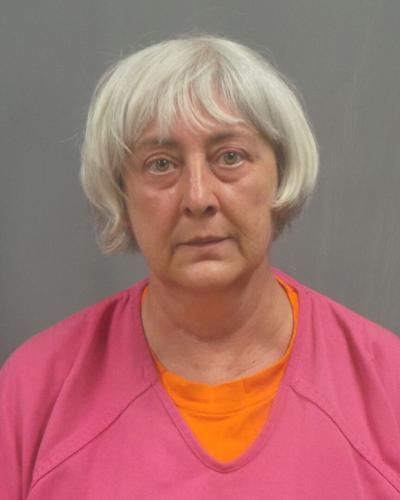

Alice Patricia Weiss
A Columbia woman has been charged with the 2004 shooting death of her then-boyfriend in Dittmer following an investigation by the Missouri Attorney General’s Office Cold Case Unit.
Alice Patricia Weiss, 65, was arrested and charged Wednesday with second-degree murder in the death of James Summers, court records show.
Weiss was being held without bond today (Aug. 12) in the Jefferson County Jail in Hillsboro. Court records do not list if she has an attorney.
The 17-year-old shooting death was assigned to the cold-case unit, which was established in December 2020 by Attorney General Eric Schmitt. Members of the unit and investigators from the Jefferson County Sheriff’s Office worked on the case, according to a release from the Attorney General’s Office.
The release did not say why the murder charge, which carries a penalty of 10 to 30 years or life in prison, was filed 17 years after the shooting. The probable-cause statement said no other suspect beside Weiss had been identified during the 15-year investigation into Summers’ death.
Jefferson County Sheriff Dave Marshak said new evidence was found about nine months ago by the department’s detectives that led to the charges, but said he could not disclose what that evidence was.
“Once the Attorney General announced he was investing resources into cold cases that would include experienced prosecutors, I knew it was a match,” Marshak said. “Once investigators started working on the case again, we reached out to discuss what was needed on this case. As a result of this latest investigation, we were able to obtain some new evidence that assisted in the overall decision to seek prosecution.”
Sheriff’s Office deputies had been dispatched at about 8 p.m. April 27, 2004, to a home in the 6600 block of Shenandoah Lane in Dittmer following a report of someone being shot. When deputies arrived, they found Summers’ body slumped against a detached garage, the case’s probable-cause statement said.
A .22-caliber gun was found between the home and the body of Summers, who had been shot in the back and face. There were no signs of a struggle, the report said.
Weiss, who lived with Summers and identified him as her boyfriend, was standing outside the home when deputies arrived. She initially told the deputies the gun in the driveway belonged to her, and that it had been stored unloaded in a bedroom closet, according to the report.
She said Summers was going to pick up his daughter from a gymnastics class, and she was in the master bedroom’s shower at the time of the shooting. She also said she heard two “pops” while in the shower and then found Summers shot to death, the probable-cause statement said.
Investigators re-created Weiss’s description of hearing gunshots by placing a recording device in the shower and firing a gun while standing in the driveway. The report said the sound from the gunshot was barely audible and someone would have to know what they were listening for to identify the noise as gunfire.
When deputies wanted to swab her hands for gunshot residue, Weiss twice tried to use the bathroom. After she was told she could not leave until after the swab, she told deputies she had shot the gun found in the driveway earlier that day for the first time in 20 years, the report said.
Neighbors told investigators they heard gunshots coming from the home, but none of them saw anyone who did not live in the area at the time of the shots. The only other person who lived at the home with Summers and Weiss was Weiss’s father, who suffered from dementia, according to the report.
Weiss was wearing a pink bath robe when deputies arrived. The Missouri State Highway Patrol lab examined the robe and discovered gun fire residue on its left sleeve. Weiss told investigators she was not wearing the robe when she had fired the gun earlier on the day of the murder, the report said.
The probable-case statement said a cousin of Weiss, who had picked her up the night of the shooting from the Sheriff’s Office, told investigators that while driving her home that night, she said she had “(expletive) up” when she changed her story about firing the gun, the probable-cause statement said.
Weiss told investigators Summers may have encountered a thief who shot him, and she told her cousin that Summers had gone outside after hearing what sounded like an intruder in the garage. When the cousin asked why she would take a shower while her boyfriend was possibly confronting an intruder, Weiss did not provide an explanation, the report said.
In 2008, the cousin spoke with investigators again and told them Weiss allegedly told him she wanted to know what killing someone felt like. She also allegedly told her cousin that if she were charged with Summers’ murder, she would say her father killed him because her dad had died.
Weiss also allegedly told her cousin the was “little difference between love and hate” and compared Summers with her older brother, whom she hated, when the cousin asked why she shot her boyfriend, the probable-cause statement said.
“The passage of time does not, in any way, diminish the importance of certain cases,” Schmitt said in the statement announcing the murder charge. “I’m proud to yet again announce that a cold case has been solved and charged by my office’s cold-case unit with the help of the Jefferson County Sheriff’s (Office). We will continue to fight for the families and loved ones of victims of violent crime who have little hope, who have waited long years and sometimes decades for justice to finally be served.”
Marshak said the Sheriff’s Office is working with the Attorney General’s Office on other cold cases, but he did not say how many cases and wouldn’t speculate on if those investigations would be successful.
“The success of this case was attributed to investigators back in 2004 and those working today,” Marshak said. “I wish I had more resources so I could really show this county what’s possible. Continued investment into the department will result in more successful prosecutions and more victims getting justice.
“Unfortunately, our limited crime lab capabilities require us to wait for unnecessary lengths before progress can be made on other cases.”