


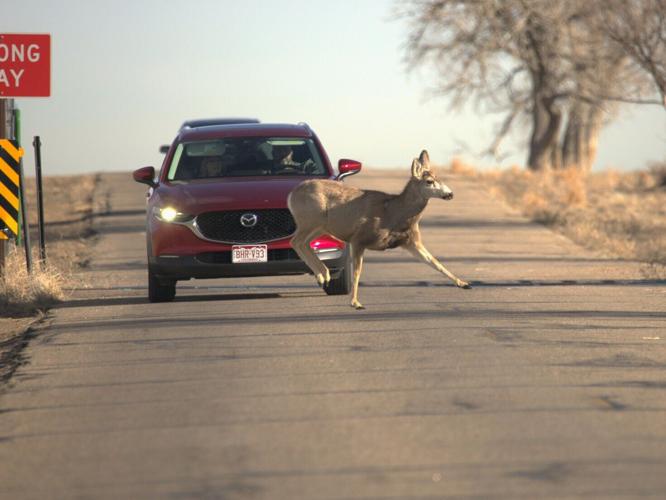
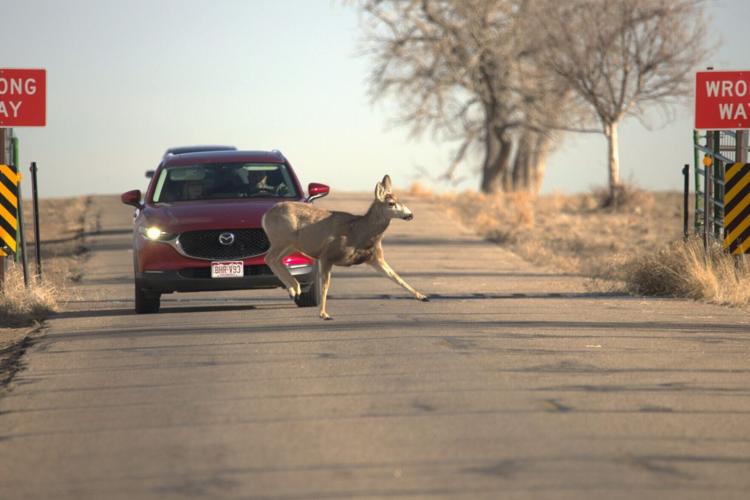
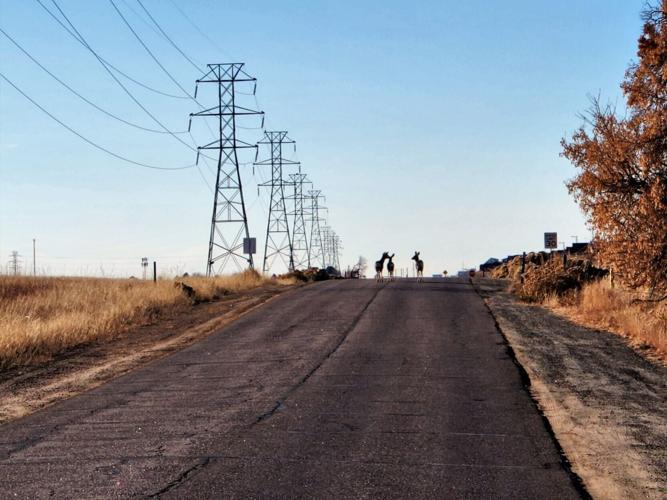
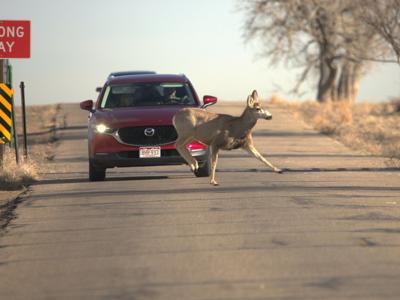

Mule Deer crossing the road in front of a car in Rocky Mountain Arsenal National Wildlife Refuge, in Denver. (Dr. Dave Kenny via SWNS)
By Stephen Beech
Animals in the wild are changing their behavior after watching humans, reveals new research.
Up to two-thirds of species — including deer, raccoons and birds — are changing their behavioral patterns in response to seeing people in their natural environment, say scientists.
An analysis of millions of animal movements has revealed how the mere presence of people, not just landscape change, can reshape how species use space and environment, with implications for conservation efforts.
Even small changes in how people move through environments can "significantly" affect animal behavior, according to the findings of the U.S.-led study published in the journal Science.
Walter Jetz, of Yale University's Faculty of Arts and Sciences in Connecticut, said: "Our findings provide an important nuance in our understanding of wildlife in a rapidly changing world.

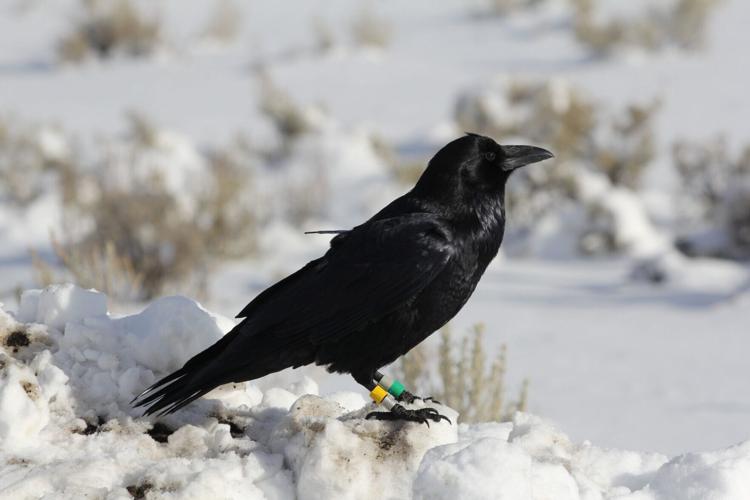
A Common Raven outfitted with leg bands and a GPS transmitter in Yellowstone National Park in Wyoming. (Matthias Loretto via SWNS)
"Animals are affected by both direct human presence and by human-caused changes to the physical environment, such as agriculture and urbanization.
"This study is the first to directly assess at scale how both causes, separately and in combination, impact wildlife habitat usage."
The study culminates a six-year, global collaboration between Yale researchers and colleagues from more than 50 academic and governmental organizations around the world.
The research team say their overall findings suggest that to protect wildlife, conservationists should consider not just habitat loss, but also where and when people are physically present.
In their work, researchers used GPS devices to track 37 species — 22 birds and 15 mammals — across the United States.
Mammal species included white-tailed deer, wolves, coyotes, raccoons, skunks, and some of the "big cats."

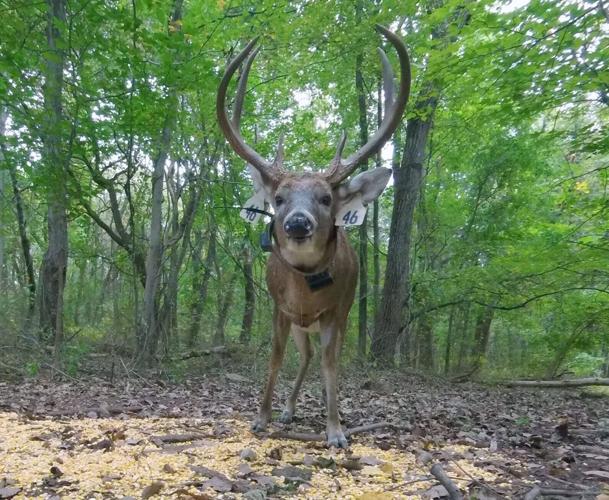
A white-tailed deer outfitted with a GPS tracking device peers into an automated camera trap in Staten Island, New York. (Dr. Dave Kenny via SWNS)
The birds included large species such as vultures, hawks, ducks, crane, and storks.
In all, researchers collected about 11.8 million location points from more than 4,500 animals.
For the first time ever, the team then used mobile phone data, coupled with satellite-derived measurements of human habitat disturbance, to study how both aspects of human behavior affected animal movement and habitat use.
Study co-leader Ruth Oliver said: "It has been challenging to capture the impact of human presence on wildlife.
"Mobile device data are typically not available, but our study was made possible thanks to a unique partnership that made estimates of human presence available to researchers during the COVID-19 pandemic."
She said COVID lockdowns dramatically altered human movement patterns, allowing researchers to study differences in human presence between 2019 and 2020.

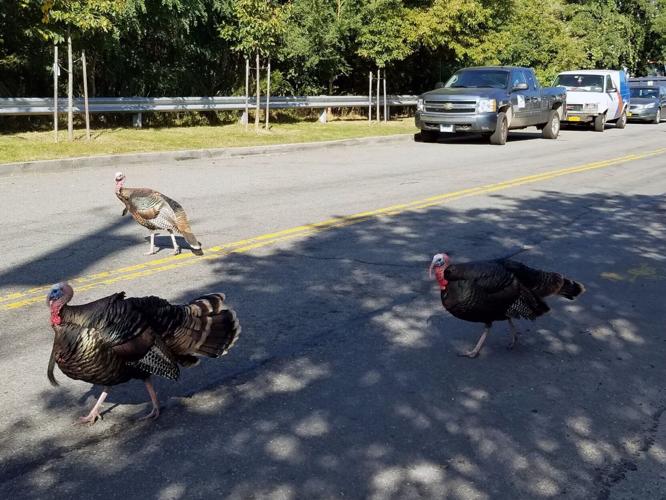
Wild turkeys crossing the road in Staten Island, New York. (Dr. Dave Kenny via SWNS)
That enabled scientists to separate the effects of human presence on animal behavior from longer-term landscape changes such as urban development and agriculture.
The research team measured the space that animals used and the range of habitats they occupied and then applied statistical models to link the behaviors to human activity and environmental conditions.
Results showed that more than 65% of species changed their behavior based on the presence of humans — and human presence tended to matter most in less-developed, natural settings.
But different species responded in different ways.
Oliver said many reduced the amount of space they used, probably to avoid people, but others had the opposite response.

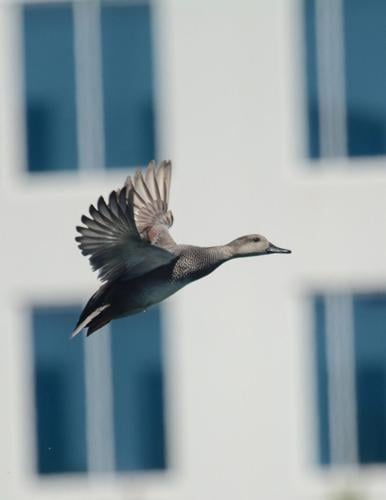
A gadwall flies through an urban landscape. (Jeremy Cohen via SWNS)
For instance, gray wolves expanded their range, possibly traveling farther to steer clear of humans.
Oliver said: "Ravens also covered more ground, likely taking advantage of food sources linked to people, while coyotes tended to restrict their movements."
The study also found that individual animals could adjust their behavior from year to year, showing some flexibility in response to changing human activity.
Jetz said: "Habitat loss is the key driver of biodiversity loss, but as we show, humans' direct use of the landscape — say for recreation — also mediates this effect.
"Depending on the quality of remaining habitat, animals make behavioral adjustments that either amplify or dampen the negative effects of habitat loss."

Mule Deer on a road in Rocky Mountain Arsenal National Wildlife Refuge in Denver. (Dr. Dave Kenny via SWNS)
He says the study highlights how new technology, such as GPS tracking combined with satellite data and measures of human presence, can uncover fresh insights into how wildlife responds to humans.
The findings also suggest that in addition to habitat preservation, efforts to skillfully manage the timing and intensity of human activity — such as limiting traffic during key periods or reducing disturbance in sensitive habitats — may help wildlife and people coexist.
Study co-leader Scott Yanco added: "The cutting-edge technology used in this study allows us to see, with unprecedented detail, how variable wildlife responses to human activities really are.
"This means that conservation strategies need to be very targeted, not one-size-fits-all."