
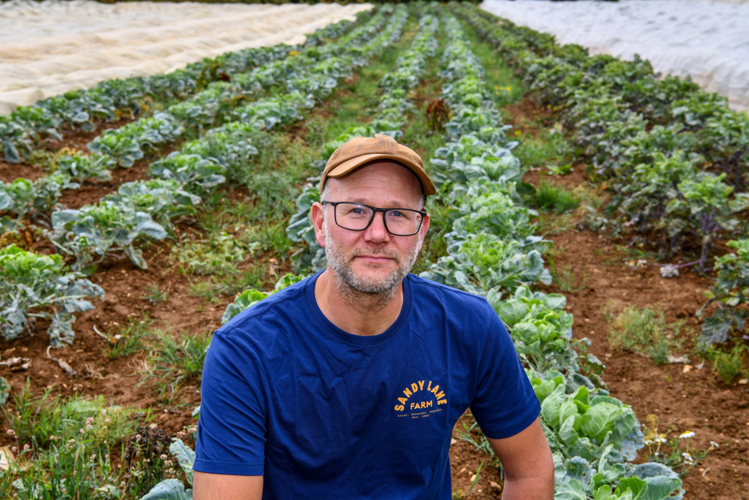
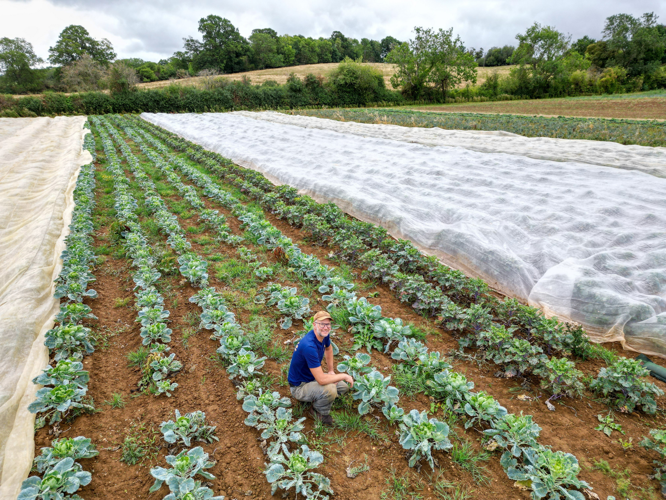

(Anita Maric via SWNS)
By Elizabeth Hunter
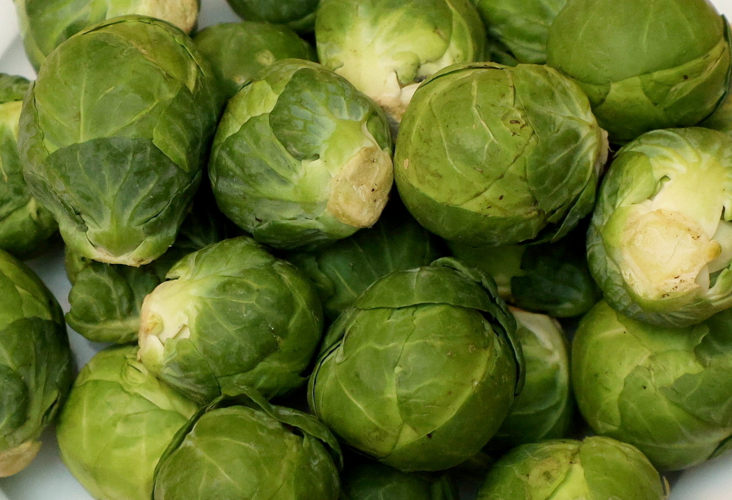
Brussels sprouts could be off this year's Christmas menu - as they have been struck by a plague of flea beetles, a farmer says.
The 2026 crop of the December 25th stalwart veg is being decimated by the bugs and the hot weather, according to George Bennett.
George, of Oxfordshire's organic Sandy Lane Farm, has raised concerns over whether the traditional Christmas food will be fit in time.
He says intense summer heatwaves have created the ideal conditions for pests.
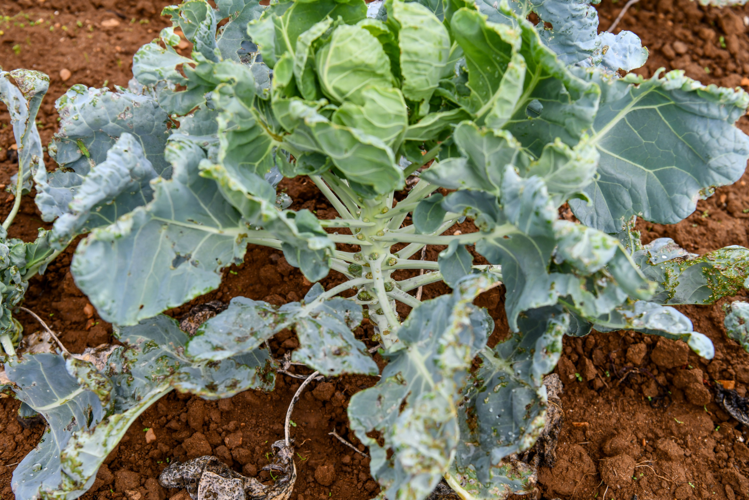
Flea beetles are tiny bugs that lay eggs in the soil beneath plants, before hatching and eating holes in brassica - the leaves of leafy vegetables like cabbage and Brussels sprouts.
Typically, they appear at the start of summer, and remain for around a month - but this year, due to extreme heat, the pests have been able to thrive for almost 12 weeks.

(Emma Trimble via SWNS)
George said: "Because it's been a very hot, dry summer, our brassica plants, which is the cabbage family and includes kale, Brussels sprouts and cabbage, have all been stunted and stressed.
"They haven't had enough moisture to get going and it's made them very vulnerable to flea beetle.
"Flea beetles nibble holes in all the leaves, and if they do too much nibbling, then they can kill the plant or limit the amount that the plant can photosynthesize, so it fails to grow and mature as it should do."
George said that this year, the bugs had been "really pervasive," and added that as much as 70% of the leaves had been eaten.
He added that the sprouts have been "touch and go," telling the BBC: "We will still have Brussels sprouts but they are likely to be quite small, not the big ones that are much easier to peel on your Christmas dinner."

(Emma Trimble via SWNS)
George said: "Brussels sprouts grow on trees - off buttons on top of a central stalk, and the stalks themselves are about half the size they should be.
"At the moment, the buttons are just starting to emerge, and they really haven't had enough water and leaf cover to really start to swell up.
"We're in a situation where the yield is vastly reduced because the length of the stem is so short, but also the size of the individual sprouts are going to be very small."
During this summer's heatwaves, which saw 40 days of above 30 C temperatures, the beetles were able to thrive - attacking the leafy plants to get sustenance and moisture.
The farm has attempted to manage the issue by covering the crops - but that raises another issue, as when the crops are covered, pests like caterpillars and aphids are protected from pigeons and wasps, allowing them to thrive.
"What do we do, or what don't we do?" said George.
"Do we take the cover off and let them be ravaged by flea beetles, or do we leave them on and have caterpillar and aphid problems that build up under the covers?"
"Next year it is due to be hotter and drier than this year - reports say that the El Nino effect means that it's going to be a more extreme summer next year.
"We're definitely thinking about how we're going to change our practices so that we're more successful for next year.
"Certain crops will be very difficult - particularly the brassica family, as it needs a long time to mature over the summer months.

(Emma Trimble via SWNS)
"That's the critical time for them to really get up to size.
"Shorter term brassicas are easier, like pointed cabbage or broccoli, but when Brussels sprouts are in the ground for such a long time over the hot, dry summer, that is a problem.
"But there are some things we can do - we can change the time that we plant to try and avoid the flea beetle, and we can experiment with different crop covers that are more tightly woven so that they can't nibble through the crop covers."
Despite the problems with this year's sprouts, the farmers remain hopeful for next year - and added that the temperatures have led other crops to do "exceedingly well," meaning that crop diversifying is key.
"The year has been very hot and dry, and it's been a real struggle for Brussels sprouts, but we have a mixed farming system and other crops have done very well.
"Squash and pumpkins have done exceedingly well - our potatoes, leeks, onions, carrots and beets have all done fantastically well.
"Part of our resiliency and our ability to survive is by having that diversity and I suspect that a lot of farmers going into the future will not only change their practices to be more successful, but also vastly increase the range of things that they're growing, so that if one thing doesn't work, another will."