

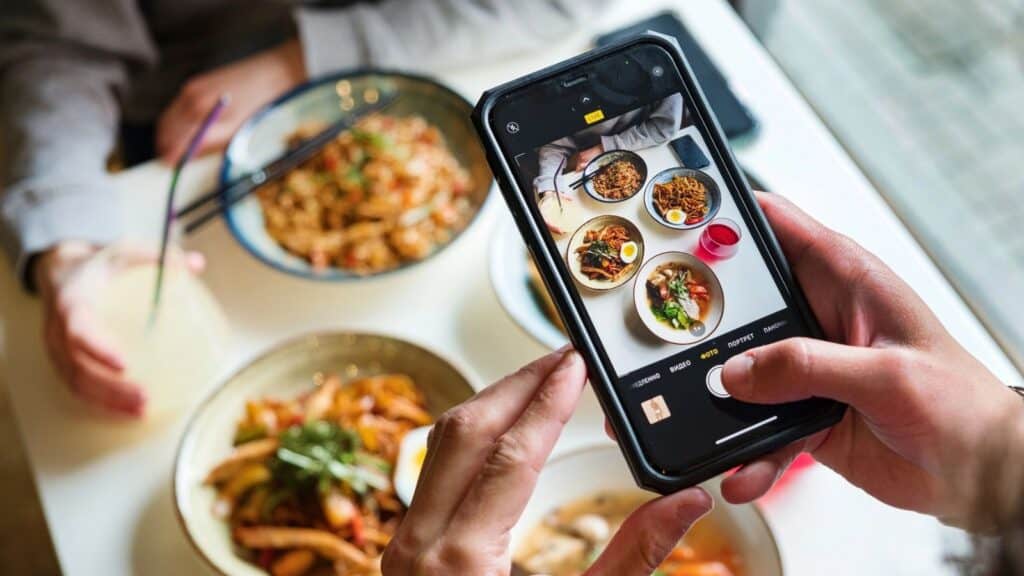
Chefs featured by the James Beard Foundation have a message for the dining room: put the phone down. Frustrated by a culture where guests photograph their food before tasting it, a growing number of restaurants are experimenting with policies that encourage guests to put their mobile devices away. Restaurants and bars across the country have already introduced some form of phone restriction, and the diners most eager to comply are the ones the industry least expected.
Gen Z reports the highest rate of intentionally reducing screen time, suggesting the audience for phone-free dining is broader than the industry expected. The James Beard Foundation’s January 2026 trends report captured exactly why the moment feels different this time. Ten JBF-recognized chefs and restaurant owners weighed in on the trends they expect to define dining this year, and the phone earned a section of its own.
James Beard Award semifinalist Emily Yuen put the frustration plainly, saying chefs are now expected to produce food that is not only delicious but also designed for Instagram. That pressure pulls focus away from the flavor and intention of the dish.
Jhonny Reyes, chef and owner of Lenox in Seattle, Washington, agreed: the experience should come before the share. What the foundation called the “phone eats first” era has a constituency of people who are tired of it.
The movement has a footprint
The pushback has moved from opinion into policy. Restaurants and bars in at least 11 states have already introduced some form of phone restriction, with Washington, D.C., reporting the highest concentration of such venues. Some lock phones in pouches, others offer free desserts for keeping devices off the table, but the intent is consistent: make room for the meal to actually happen.
In Charlotte, North Carolina, cocktail bar Antagonist places guests’ phones in Yondr pouches for two hours. Co-owner Mike Salzarulo told Axios in a The U.S. Sun article that the policy was built to create a space that forces genuine connection. The reaction has been overwhelmingly positive. One diner told Axios she walked away feeling more connected to her husband than ever: no notifications, no photos to snap, just the kind of conversation that used to be ordinary.
In San Francisco, California, Ama by Brad Kilgore takes a philosophical approach. Phones are actively discouraged, and guests in the restaurant’s Social Club are handed a card bearing the Japanese proverb “ichi-go ichi-e,” meaning one time, one meeting, as a quiet invitation to be present. There is no ban. The idea is woven into the room itself: low lighting, close seating, a layout designed for conversation over spectacle.
In Fort Worth, Texas, celebrity chef Tim Love has maintained a strict no-phone policy at Caterina’s since the restaurant opened. The policy drew skepticism early. It did not slow the restaurant down. “You’re like, ‘I’m just going to sit here and enjoy myself,'” Love said in an NBCDFW article. “And that’s what happens. It’s been really refreshing.”
The diners are already there
The chefs are not operating in a vacuum. A recent Talker Research survey of 2,000 Americans found that half of adults have made a deliberate effort to reduce screen time for their well-being. Gen Z reports the highest rate of intentional disconnection: 63% of that generation say they intentionally disconnect from devices, outpacing millennials at 57%, Gen X at 42% and baby boomers at 29%. The generation that grew up most online is the one most actively trying to put the phone down.
Food trend expert Kara Nielsen told Axios that when restaurants remove phones from the equation, something reliably good happens: people start engaging with the people around them. Customers who put their devices away walk out with a richer experience, Nielsen said, and the meal itself becomes more memorable.
It matters beyond the meal
The stakes are larger than any single dinner. The World Health Organization reported in June 2025 that loneliness is linked to more than 871,000 deaths annually, roughly 100 every hour. Americans aged 18 to 24 are spending substantially less time eating with others than two decades ago, with time spent with others dropping more than 20%. Shared meals have become less common, and the phone is not incidental to that story.
Restaurants stepping into that gap are not making a gimmick. They are making a bet that what people actually hunger for is an experience they can remember, not one they can post.
The chefs who sparked this conversation in the James Beard Foundation’s trends report did not call for bans or lectures. They called for presence. Yuen wants guests to put their phones down and really taste what is in front of them. Reyes wants to get back to real hospitality, real food, real moments. For the industry built around feeding people, that may be the most meaningful thing it can offer right now.
Jennifer Allen is a retired professional chef and long-time writer. Her work appears in dozens of publications, including MSN, Yahoo, The Washington Post and The Seattle Times. These days, she’s busy in the kitchen developing recipes and traveling the world, and you can find all her best creations at Cook What You Love.
The post Restaurants are locking up phones, and diners are grateful appeared first on Food Drink Life.