









(Photo by Mesut Yalçın via Pexels)
By Stephen Beech
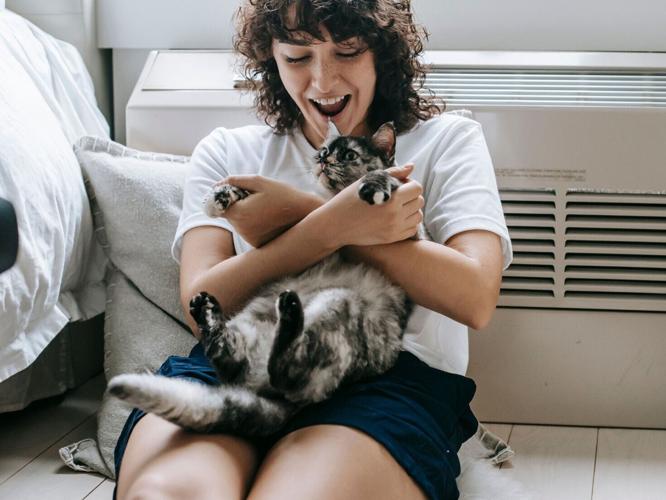
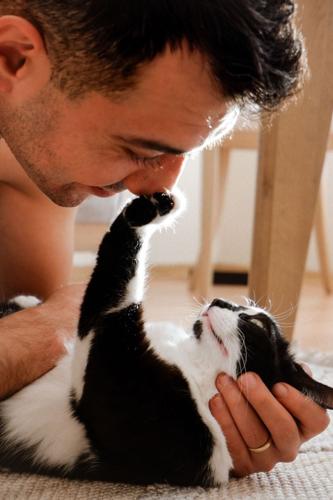
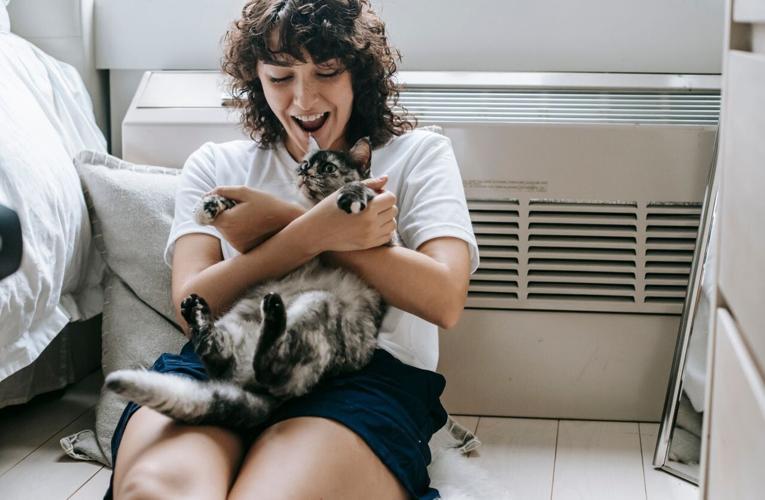
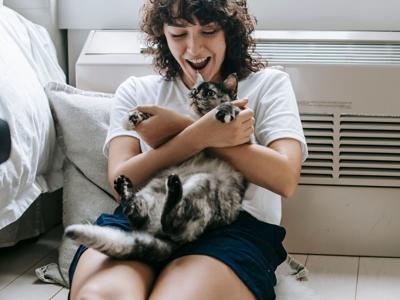
Cat owners who spend lots of time with their pets tend to have more positive moods, reveals new research.
Levels of the “love hormone” oxytocin correlated in cats and their owners, according to the study.
The findings of the Japanese study, published in the journal iScience, support the views of many cat owners who claim that their feline has improved their quality of life.
Some previous studies support the common claim that caring for a cat has positive effects on human health and well-being.
But the evidence has been inconsistent as other studies have reported possible negative effects of cat ownership.

One of the cats who joined the study wearing a Bluetooth Low Energy beacon. (Kyoto University / Saho Takagi via SWNS)
Researchers at Kyoto University in Japan questioned the idea that simply owning a cat provides intrinsic health benefits.
Instead, they wondered whether any benefits or drawbacks to keeping a cat come from the quality of the relationship between the human and feline—particularly how owners interact with their pets in everyday life.
To investigate, the research team conducted a one-month study of the daily lives of a group of 29 cats and their 19 owners.
In each household, the researchers conducted hormonal analysis through urine samples.
They also attached small Bluetooth Low Energy (BLE) beacons to the cats’ collars to measure daily physical proximity, and assessed the owners’ mood through questionnaires.

(Photo by Özge TaÅkıran via Pexels)
The cats’ behavior toward their owners and unfamiliar people was also monitored.
The results revealed a hormonal connection between cats and their owners involving oxytocin and cortisol—hormones that are associated with social relationships and stress, respectively.
The research team observed a positive correlation in the urinary concentrations of oxytocin of both cats and owners, with higher oxytocin levels in cats linked to lower cortisol levels and fewer negative feelings in their owners.
The cats’ oxytocin levels were more closely associated with their owners’ negative mood states than the owners’ own oxytocin levels were.
The research team observed that, ultimately, positive mood states in owners were not connected to how long they have had their cats, but rather to the overall physical proximity between owners and their cats.
In other words, owners’ positive feelings seem to be most strongly associated with how much time they spend close to their cats in everyday life.

(Photo by Sam Lion via Pexels)
Study corresponding author Saho Takagi said: “I think many cat owners are familiar with the sense of comfort and peace they feel when their cat climbs onto their lap seeking affection, they start to pet it, and the cat begins purring contentedly.
“Our findings suggest that this feeling may be partly reflected in the hormonal connection between cats and their owners, particularly through oxytocin, a hormone involved in the formation of parent-child bonds and social relationships.”
She added: “This study helps to explain why previous inquiries into the health benefits of cat ownership have produced inconsistent results by demonstrating that the quality of the relationship between human and cat matters more than simply owning a cat.”
But Takagi pointed out that the findings only exhibit associations, so any causation is still unclear.
She said the the team hopes to explore more deeply how cats and humans influence each other through their everyday interactions.