


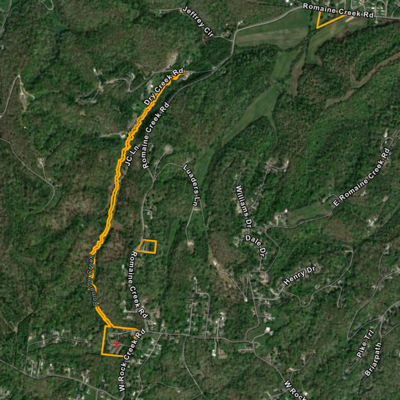
The Environmental Protection Agency on Oct. 1 reported detecting a dangerous amount of dioxin at the “Minker/Stout/Romaine Creek Superfund” site, which is situated along Romaine Creek in the Jefferson County portion of Fenton.
The EPA defines dioxin as a carcinogen that may pose serious health risks for those who come into contact with it.
The Superfund site was created in 1983 after large traces of dioxin were found in Romaine Creek sediments. A massive remediation effort ensued, with the EPA permanently relocating 11 nearby families affected by the contamination and removing 26,420 tons of soil. The soil was taken off-site for incineration at Times Beach, another community greatly affected by dioxin contamination in the 1980s.
In all but one area of the Superfund site, the EPA stated, “cleanup levels were achieved,” with the excavation of dioxin-contaminated soil exceeding 1 part per billion to a maximum depth of 4 feet, or to bedrock.
The one area with residual dioxin contamination of up to 226 parts per billion “remains covered by backfill” with permanent survey markers in place, the EPA stated.
The EPA reported it had finished remediation efforts by 1997. The remediated properties are now reoccupied, with one listed on the Abandoned and Uncontrolled Hazardous Waste Disposal Sites Registry. The registry, coordinated by the Missouri Department of Natural Resources, requires “state inspections annually and a filed deed notice for the property, which allows residual contamination to be left on-site, while still protecting human health and the environment,” according to the EPA.
In the EPA’s Five-Year Review for Cleanups report, sampling results from 2025 confirmed the presence of dioxin in the soil at the Superfund site to be above 1 part per billion, triggering the need for further remediation.
“These detections confirm that the remedy (from 1983) is no longer functioning as intended,” the EPA stated.
According to an EPA fact sheet, the previous remediation goal for the site was to find less than 1 part per billion of dioxin in the soil. The new goal is to find no more than 51.1 parts per trillion of dioxin in the area.
In the years since the site was established, the EPA stated that toxicity values, risk assessment methodologies and “recognized exposure pathways for dioxin” have changed significantly.
While the EPA said they were unaware exactly why an increased level of dioxin was found in the area years after the site was determined to be safe, the agency theorizes that increased temperatures may have contributed.
“Increased temperatures across Missouri could potentially impact vegetation that is preventing soil from eroding,” the EPA stated. “This could lead to contaminated soil becoming exposed and the subsequent redistribution of dioxin.”
The Superfund site impacts about 20 area properties, said EPA spokesman Kellen Ashford.
“The site’s remedial project manager has notified all property owners within the site boundary and neighbors who have requested routine updates,” Ashford said. “A portion of these residents were also notified that the remedy (dating back to 1983) would not likely be determined protective during community interviews held in March 2026 for the five-year review.”
Bubbling Spring Ranch Arena
According to an EPA report from 1985, the history of dioxin contamination along Romaine Creek began at a chemical plant in Verona, Missouri. The plant manufactured Agent Orange, a chemical herbicide and defoliant, and hexachlorophene, a chemical widely used as a disinfectant, from 1968-1972.
The plant sold dioxin, a byproduct of manufacturing Agent Orange, mixed with waste oil that was used across the state as a spray for dust control on gravel or dirt roads.
The Bubbling Spring Horse Arena was sprayed with the oil mixture on June 11, 1971. Over the next year, six horses died at the arena, with officials later pointing to the contaminated soil as the likely cause of their deaths.
“The problem spread” in March 1973, according to the EPA report, when workers excavated approximately 850 cubic yards of the contaminated soil from the arena and used it as fill material for the Minker property and mobile homes on the Stout property in the Jefferson County portion of Fenton.
The Minker property, according to the report, was about 2 miles south of the horse arena. The report stated in 1985 that the contaminated fill material was found to be eroding into the Romaine Creek headwaters.
The Minker property, included on the Abandoned and Uncontrolled Hazardous Waste Disposal Sites Registry, was sold to a private citizen in 2003 and has not been developed or changed since it was remediated, according to a 2025 DNR report.
The report states the land is vegetated, with no structures on the property. A fence surrounds the site with a locked gate to prevent public access.
According to the report, the nearest public water well lies more than one mile southwest of the property, and any contaminated soil on the property “is not expected to impact this well.”
“This site poses no current health threat but could in the future if site conditions change,” the report stated.
The Stout property, not included on the registry, was in the Rock Creek basin about a half mile south of the Minker property. According to the 1985 EPA report, the original fill material is believed to be underneath the concrete mobile home pads, and the report stated that minimal erosion is occurring at that site.
Next steps
Ashford said details about the planned removal action – such as the planned cleanup timeline and properties needing remediation – will be shared during a community meeting likely to be held in 2027.
“The meeting will provide the public the opportunity to further discuss topics such as cleanup options, institutional controls and traffic control during cleanup activities,” he said.
Ashford said the EPA has worked closely with DNR at this site and anticipates working closely with local officials once the cleanup timeline has been confirmed. In addition to physically cleaning up the site, local officials can help the EPA administer environmental covenants or deed restrictions on the properties to protect future residents and landowners.
For information about the Superfund site, including how to contact the site manager, visit epa.gov/superfund/minkerstoutromainecreek.
Ashford said that as soon as the timeline for the removal action is confirmed, the EPA will publish the timeline in the announcements section on the Superfund site page.