


Hundreds of thousands of Americans will fly to Iceland this summer, and most will still treat it as a long weekend: land, race the Golden Circle, fly home. That quick version of the trip is exactly what the country is now trying to change. The part worth planning for is what comes after the sightseeing, when the tour buses leave and the sun is still high near midnight, and a growing number of travelers are skipping the drive back to Reykjavik to soak in a geothermal lagoon and stay the night nearby.
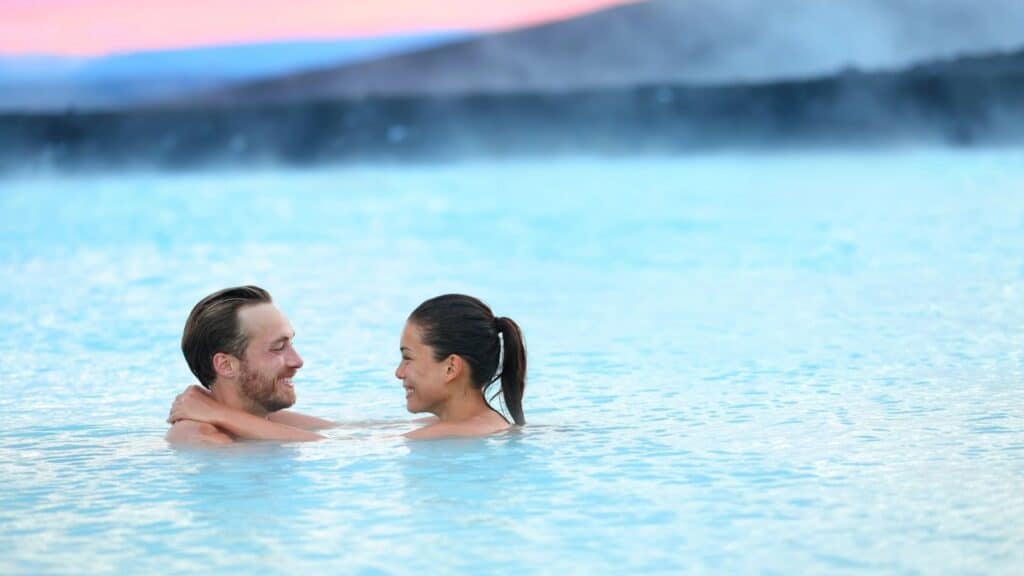
For years, the Iceland trip looked the same for almost everyone, and it still works, but the old standby, the Blue Lagoon, now sits a few miles from a volcano that has erupted nine times since 2023. The eruptions remain confined to one remote peninsula southwest of the capital, and travel across the rest of the country carries on unaffected. The Blue Lagoon reopens quickly after each one, while the newer lagoons sit well clear of the eruption zone.
Iceland draws around 2.3 million visitors a year now, more than ever, and Americans are the single largest group, more than a quarter of everyone who lands at Keflavik. But the numbers hide a problem. Overnight stays per visitor have been falling, and a strong krona has made the country one of the more expensive stops in the region, so the value of each trip is shrinking even as the headcount holds. Tourism is 8.8% of the economy, too big a share to let each visit get shorter and cheaper.
Part of the reason people leave so fast is that Iceland taught them to. For decades, Icelandair has let transatlantic passengers add up to seven nights in the country at no extra airfare, turning a layover between the United States and Europe into a quick stop of a day or two. The stopover filled Keflavik and put Iceland on millions of itineraries, but it also taught many travelers to treat the whole country as an intermission. Getting them to book Iceland as the trip, rather than the pause in the middle of one, is the harder problem the country now faces.
A wave of lagoons built to make the trip longer
That is the job the new lagoons are built for. Over four years, a run of design-led geothermal baths has opened across the country, each one landing in a different region and most of them far enough from the capital to hold a traveler somewhere overnight.
Sky Lagoon opened on the edge of Reykjavik in 2021, minutes from the capital and its cruise-ship and city-break traffic, the one lagoon close enough to fold into a single stopover day. Admission there runs more than $90 a person, a reminder of how expensive the country has become. A year later, Hvammsvik Hot Springs opened an hour north in Hvalfjordur, a tidal-fjord bath most Golden Circle visitors never reach, and quickly became one of the country’s most talked-about baths.
Forest Lagoon arrived the same year outside Akureyri, four hours north, in a part of Iceland most short trips skip. The newest, Laugaras Lagoon, opened in 2025 as the only premium lagoon directly on the Golden Circle, its upper and lower pools joined by a walk-behind waterfall. Together, the out-of-town baths push the reason to soak into the four corners of the country.
What the soak says about where Iceland is heading
The pattern is clearest at the height of summer. June through August brings the warmest weather, the midnight sun and the heaviest crowds of the year, the exact pressure the country’s sustainability-first tourism strategy is trying to ease by spreading people out. A lagoon at the end of a long, bright evening does two things at once. It pulls travelers off the crowded midday stops, and because the newest baths sit hours from the capital, it turns a day trip into an overnight one.
For the American planning a trip, that changes the shape of the week. The classic move is to base in Reykjavik and drive out and back each day, which is why the same three Golden Circle stops fill at the same hours. Building the trip around the lagoons flips it: a night near Hvammsvik or up in Akureyri, another on the Golden Circle at Laugaras, and the country opens up beyond the crowded core. The lagoons run on timed entry and sell out in peak weeks, so the good evening is the one you reserve before you fly, not the one you hope to find on the day.
Iceland has spent a decade proving it can get people to come. The harder task now is getting them to stay, and the lagoons are its bet that an extra night in the water is worth more than another name on the arrivals list.
Mandy is a luxury travel, fine dining and bucket-list-adventure journalist with expert insight from 47 countries. She uncovers unforgettable experiences around the world and brings them to life through immersive storytelling that blends indulgence, culture and discovery, and shares them with a global audience as co-founder of Food Drink Life. Her articles appear on MSN and through the Associated Press wire in major U.S. outlets, including NBC, the Daily News, Boston Herald, the Chicago Sun-Times and many more.
The post Iceland’s tourists keep coming. The problem is how fast they leave appeared first on Food Drink Life.