


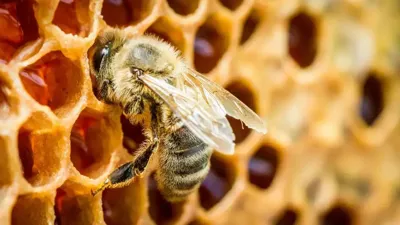
At BeeTopia, travelers can pull on a veil, approach a working hive and taste the landscape from a beekeeper’s point of view.

Photo Credit: Gentry Hale
I used to believe all honey was created equal and that bees were something to run away from. Then I booked a tour of Savannah Bee Company’s new BeeTopia experience.
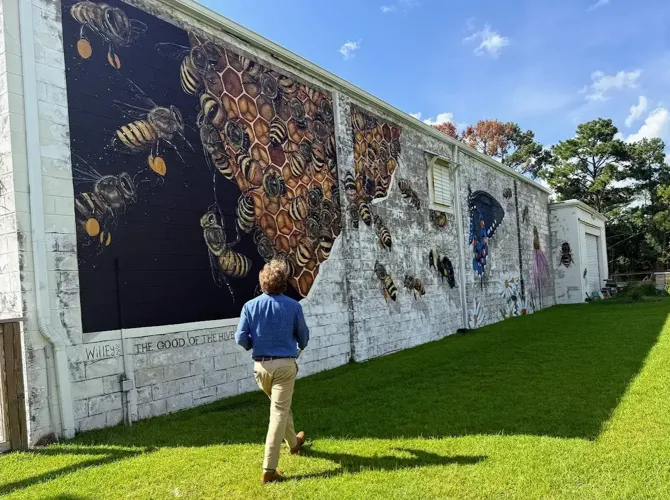
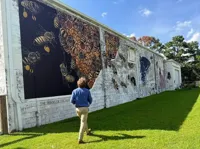
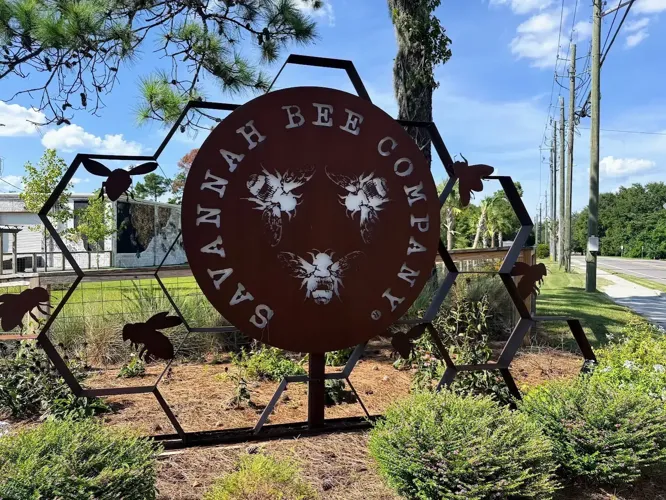
The tour begins at the company’s new headquarters at 313 Stiles Ave. in Savannah, Georgia, a 65,000-square-foot warehouse near Enmarket Arena. To get there, I wound through an industrial stretch of West Savannah, where loading docks and concrete suddenly give way to a decorative pollinator paradise. On the exterior of the warehouse building, 72 enormous bees and butterflies climb the walls in the world’s largest bee mural, painted by artist Matt Willey.
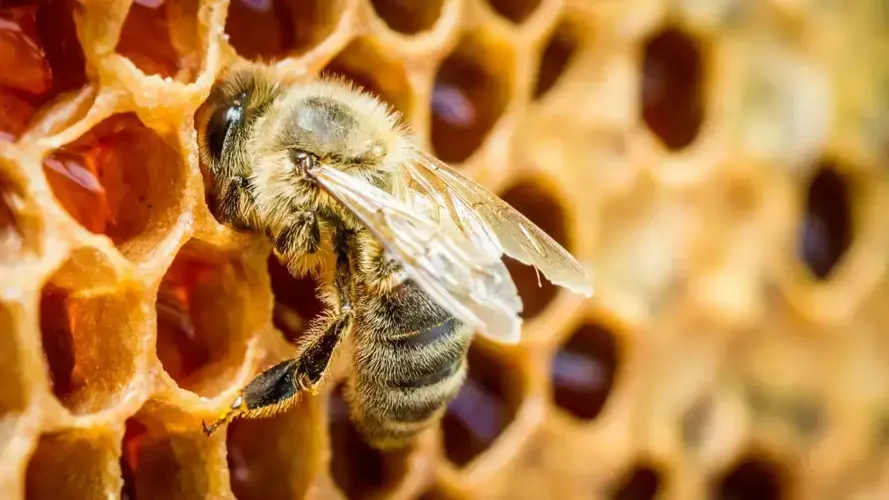
Once inside, I settled into an old church pew to peer into a working observation hive built between panes of glass. A pipe leading outside allows the bees to come and go, while the glass gave me a glimpse into the private machinery of a working colony. As I watched the creatures move like a city at rush hour, my guide explained the mechanics of the hive, the roles of each bee, how labor is divided, how bees communicate and how flower nectar is turned into honey.
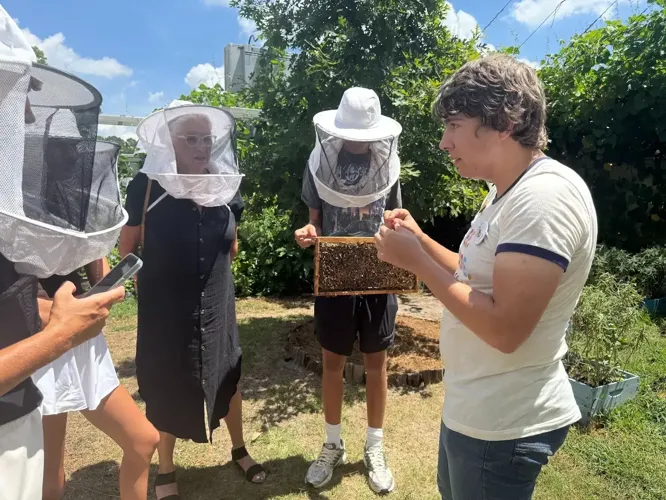
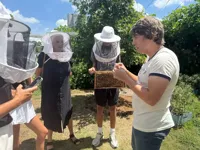
After the lesson, I was handed a veil and led outside to face what, for many, is a lifelong fear: stepping into a garden swarming with bees. A few of the women in my tour group said they had spent their lives retreating from anything with a stinger. Now, after learning about the personalities, priorities and temperaments of the insects, they stood shoulder to shoulder with me, excited to be surrounded by tens of thousands of honeybees.
BeeTopia is America’s newest and largest iteration of the growing trend of apitourism: travel built around bees. The experience gives visitors of all ages a chance to learn in depth about the importance of honeybees, the threats they face, the role pollinators play in our ecosystems and the landscapes captured in honey. And it allows anyone the opportunity to suit and see what it feels like to be a beekeeper for the day.

Photo Credit: Gentry Hale.
In the Bee Garden
I found the sound of buzzing swirling around me to be very relaxing. My guide said research has linked natural soundscapes, like the hum of bees, to lower stress and improved mood. He sent a few puffs of smoke across the hive boxes, temporarily interfering with the bees’ ability to detect the alarm pheromones that warn the colony of danger. He slowly lifted a frame crawling with worker bees. I watched as the woman who had been shaking with fear only moments earlier reached toward the comb, pushed her finger into one of its honey-filled cells and tasted pure honey straight from the hive.
“Humanity has been intertwined with bees since the very beginning,” says Ted Dennard, founder of Savannah Bee Company and the visionary behind BeeTopia. The experience is one part of his larger effort to keep humans and bees on the same team.
BeeTopia keeps visitors up close and personal, teaching groups of up to 30 about beekeeping, pollinator habitat and ingredients produced inside the hive, including beeswax, propolis and royal jelly.

Photo Credit: Gentry Hale
The Brand Behind BeeTopia
BeeTopia is the latest chapter in a company that began with a few hives and tupelo honey poured into wine bottles. The brand officially launched in 2002 and grew into a national name selling specialty honey and products made with ingredients from the hive. Education has always been a stabilizing pillar of the business. In 2013, it helped establish the nonprofit Bee Cause Project, which has since awarded bee education grants to more than 1,000 schools and organizations across North America.
BeeTopia brings that educational mission home, taking the lesson out of the classroom and building a travel experience around it.

Photo Credit: Gentry Hale
Taste What’s Blooming
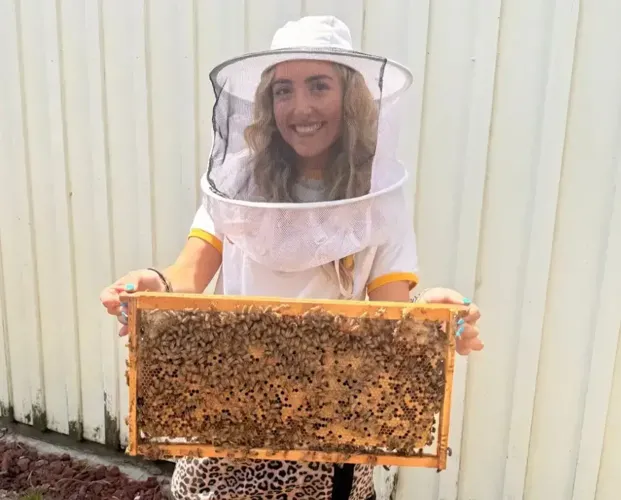
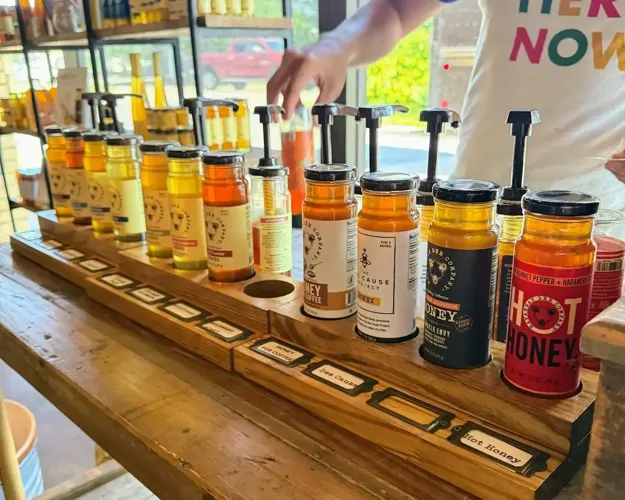
After snapping a photo with a bee-covered frame outside, I returned indoors for a guided honey tasting. I had no idea that tupelo, orange blossom and acacia honey could taste so different without added flavoring. When one flower blooms abundantly, bees collect most of their nectar from it, and the resulting honey carries its distinctive flavors and aromas.
Weather, timing and nectar shape the color and flavor of each batch of honey, and a poorly timed bloom can erase an entire varietal from the year’s supply.
“You don’t get the honey you want, you get what the bees produce,” Dennard says.
The tour includes several Savannah Bee Company varieties and, when available, honey fresh from the hives outside. You can also try a mead tasting, paired with honeycomb and cheese.
As I tasted each honey, I began to think differently about the plastic bear sitting on a shelf at home. I had never considered which flowers its honey came from, what landscape produced it, how the bees were treated or how much of its original character remained after mass processing and filtration.
I found Savannah Bee Company’s honeys to be more like wine than a simple condiment: they were a record of place, season and conditions that will not occur in exactly the same way again.

Photo Credit: Gentry Hale
BeeTopia is Not Finished Yet
BeeTopia began hosting tours in April 2026, but Dennard is still building toward a larger vision. Before its official grand opening on Oct. 29, Savannah Bee Company plans to add a multimedia presentation, children’s touchscreen games and an interactive floor where flowers appear beneath visitors’ feet. A larger mead bar and kitchen are also underway.
Dennard describes BeeTopia as “a place where we can be inspired to make small but meaningful differences in the lives of our pollinators.”
Those differences stretch far beyond BeeTopia’s garden walls. The USDA estimates that about one third of all food we consume directly or indirectly benefits from honeybee pollination, but wrapping your brain around that statistic can feel abstract. It becomes a lot easier to understand after peering in a working hive and watching thousands of bees work in real time.
By the end of the tour, I no longer saw honey as a uniform sweetener or bees as something to escape. Honey became a product of flowers, weather and responsible beekeeping and bees became hard workers holding together our food system.
And yes, I left with a few jars of honey packed for the flight home.
Plan Your Visit
- Where: BeeTopia at Savannah Bee Company, 313 Stiles Ave., Savannah, Georgia
- What: Observation hive, outdoor hive encounter, pollinator garden, mead and honey tastings
- Tours: 11 a.m., 1 p.m. and 3 p.m.
- How long: Approximately one hour
- Reservations: Book through Savannah Bee Company. Online booking closes 24 hours before a tour; call for possible day-of space