


An Israeli special forces operation that failed to find the remains of airman Ron Arad, captured in Lebanon in 1986, killed 41 people and wounded 40 in eastern Lebanon.
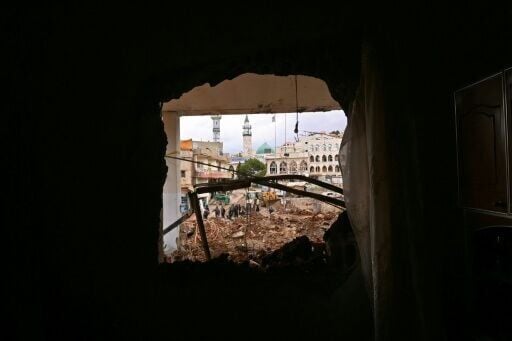
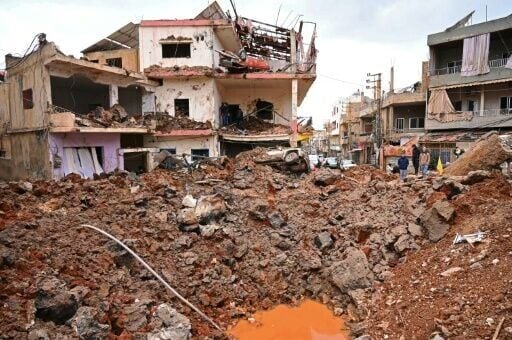
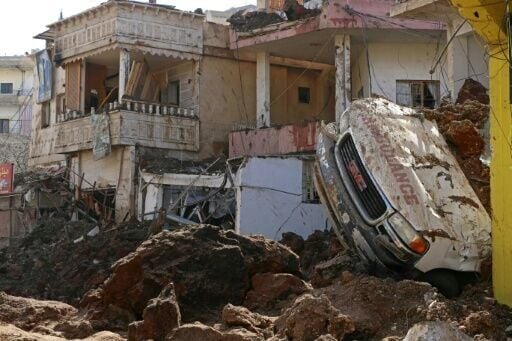
Gutted buildings, torn-off roofs, munitions scattered on the ground surrounded a large crater in Nabi Sheet, the town that witnessed the operation which involved air strikes and clashes.
"The sounds of the explosions were like something out of a movie," Nabi Sheet resident Mohammed Mussa, 55, told AFP during a media tour organised by the Iran-backed group Hezbollah.
"We later understood that there was a commando operation underway."
The operation was met with "resistance", he said, referring to Hezbollah fighters in the area, adding that it had "escalated into clashes and attacks against the Israelis".
The explosions were powerful enough to send a car onto a building's second floor.
Another damaged home showed the shredded remains of posters of Hezbollah leaders.
The strikes on Nabi Sheet and its surroundings killed 41 people and wounded 40, Lebanon's health ministry said.
The Israeli military had issued evacuation warnings for the area at noon on Friday.
"With this warning, we prepared and evacuated the children from the town to protect them," Nabi Sheet mayor Hani Moussawi said.
Israel's military said Saturday it had carried out an operation overnight in Lebanon to find Arad's remains but had failed to uncover any trace of the navigator missing since 1986.
"No findings related to him were located... No IDF (military) injuries were reported," the army said.
Israeli Prime Minister Benjamin Netanyahu said later that while the operation did not yield any traces of Arad, Israel's commitment to tracking down all its missing servicemen remained "absolute and permanent".
Lebanese military chief Rodolphe Haykal said the Israeli soldiers wore military uniforms similar to those of the Lebanese army and used military vehicles and ambulances similar to those of the Hezbollah-linked Islamic Health Authority.
Haykal added that Israeli attacks targeting Lebanon were hindering the implementation of the army's plan to disarm Hezbollah.
- 'Infiltration' -
Hezbollah said earlier Saturday it had confronted Israeli troops that infiltrated an east Lebanon town overnight by helicopter.
The group said its fighters had "observed the infiltration of four Israeli enemy army helicopters from the Syrian direction".
After landing and disembarking, the advancing troops "were engaged" by Hezbollah fighters as they reached a cemetery in Nabi Sheet, it added.
"The clash escalated after the enemy force was exposed," Hezbollah said, adding that Israeli troops launched strikes before evacuating.
An AFP correspondent in eastern Lebanon, where Hezbollah holds sway, heard warplanes and intense gunfire throughout the night.
Lebanon's military said it witnessed a commando operation by Israeli forces, adding that "three soldiers and a number of civilians were killed as a result of the violent enemy shelling" that accompanied the attack.
Arad has been missing since he was captured after he ejected from his combat jet over Lebanon in 1986 as the aircraft went down.
He is presumed dead, though his remains have never been returned.
Arad's wife Tami thanked the military but said the lives of soldiers should not be put "at risk" in the hunt for traces of her husband, Israeli media reported.
- 'Resist' -
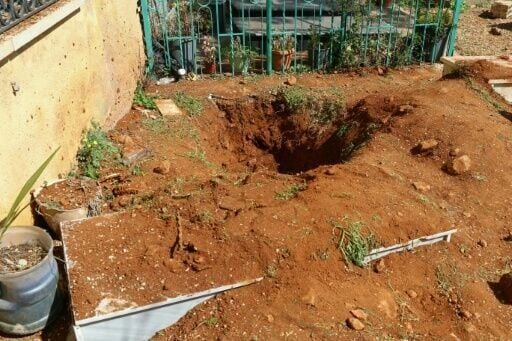
In the town's cemetery, an AFP journalist saw a hole that looked like a dug-up grave, surrounded by other tombstones.
Earlier on Saturday, a Hezbollah official in the Bekaa region, where Nabi Sheet is located, told AFP that the cemetery the Israelis raided belonged to the Shukr family.
Last month, Lebanese authorities charged four people with kidnapping Ahmad Shukr -- whose brother Hassan is suspected of involvement in Arad's capture -- on behalf of Israel's Mossad intelligence agency.
As the Israelis withdrew after the failed operation, mayor Moussawi said "the bombing became indiscriminate and very heavy, resulting in destruction in dozens of locations".
"It cost a great deal: infrastructure, destruction and the blood of our sons," he added, insisting however that "as long as Israel exists, we will continue to resist it".
Israel has launched numerous strikes and sent ground troops into Lebanon since Hezbollah fired missiles at Israel to avenge the killing of Iranian supreme leader Ali Khamenei.
Lebanon's health ministry on Saturday said Israeli attacks on the country had killed nearly 300 people since Monday.
burs-del/lba/nad/amj/rh