


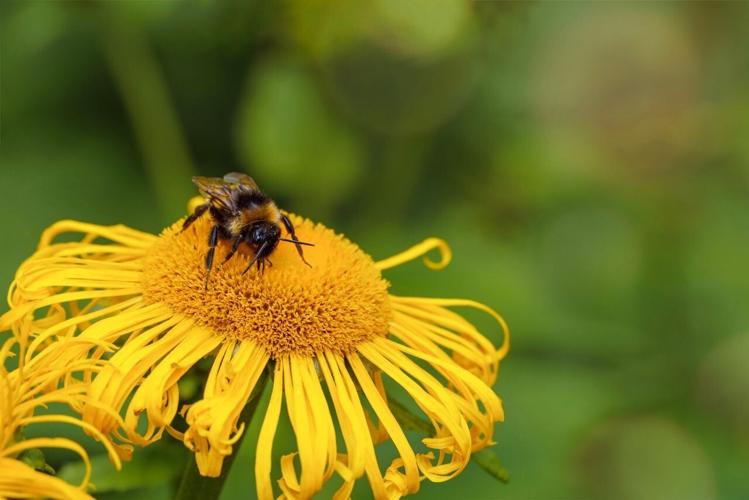

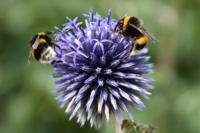

Photo by Susanne Jutzeler, suju-foto via Pexels
By Stephen Beech
Bumblebees show their emotions through facial expressions such as "licking their lips" — a trait only previously seen in mammals.
A groundbreaking study proving bees exhibit emotion-like behaviors has implications for the understanding of the consciousness of all insect species, say scientists.
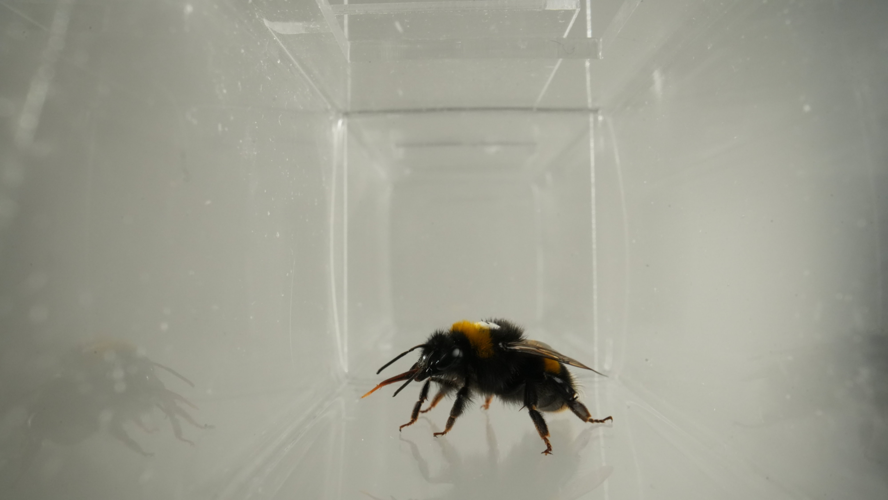
Researchers in China used slow-motion video to capture bumblebees shaking their heads and wiping their mouths if they don’t like food.
Bees were also seen to “lick their lips” if they do like what they're consuming.
Dr. Andrew Barron, from Macquarie University in Sydney, Australia, says the "revelation" changes scientific understanding of the inner life of insects.
He said, “Facial expressions are an important window into the internal states of animals.

(Bee Lab, Southern Medical University via SWNS)
"There's always been a tension between thinking of insects as animals or some sort of mini robots.
"This is another step toward showing there's an inner life to being a bee.”
Led by professors Fei Peng and Cwyn Solvi, of Southern Medical University in Guangzhou, China, the study of 18 colonies of bumblebees found the insects show observable “liking and disliking” behaviors, as opposed to “wanting” actions or feeding reflexes.
Peng said, “Many people are comfortable saying that insects can sense, learn and make decisions, but much less comfortable saying that they may evaluate things as pleasant or unpleasant.
"Our findings push on that intuition."
Key findings of the first-of-its-kind study, published in the journal Proceedings of the National Academy of Sciences (PNAS), include bees displaying "distinctly different" facial behaviors after consuming sweet liquids compared to bitter and salty liquids.
The researchers also observed post-consumption glossa — or “tongue” — protrusions, akin to the bees “licking their lips” — after eating sugar solutions.
Aversive head shaking and mouth wiping were also seen after the insects tasted salty and bitter liquids.
The emotion-like behavior has never been previously observed outside of mammals.

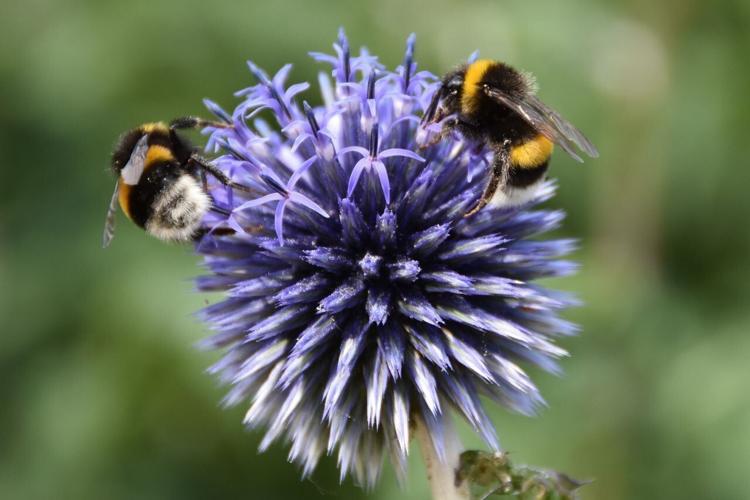
Photo by Marc Nesen via Pexels
Barron, a neuroethologist who studies the connections between animal behavior and its underlying control by the nervous system, said, “We don’t yet understand what the bees truly experience, but we can observe emotion-like behaviors.
“What's important is we’ve now got a practical read on their inner life that we can work with experimentally.”
Barron says the implications extend beyond bees to all insects.
He said, “In terms of how the brain is organized, there's no major difference between a bee and a fly — this means there's more to consider in terms of how we might treat or react to insects.
"By human standards, the bee brain is tiny — weighing less than a milligram — and yet our evidence suggests the remarkable bee brain can support a form of bee inner life.”
Barron says the work is an important step toward understanding how brain activity relates to subjective experience.
He added, “We hope further studies will show how the bee’s mental life arises from mechanisms in the brain so we can close the gap between the mental and the physical.”