



A Belgian court Wednesday adjourned a case pitting TotalEnergies against a farmer seeking compensation for climate-change damage, pending the outcome of a separate trial against the French energy giant in Paris.
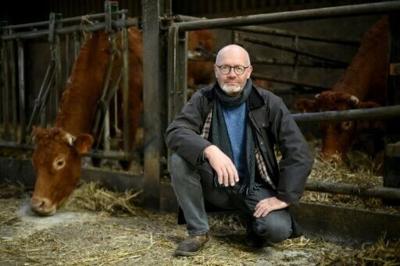
Hugues Falys, a farmer from Belgium's western Hainaut region, is backed by environmental groups including Greenpeace in the David-versus-Goliath case they hope could prove a turning point in the climate fight.
Together they took TotalEnergies to court on the grounds the French group is Belgium's leading refiner and distributor of petroleum products, launching the country's first climate case brought against a multinational company.
The Tournai business court in western Belgium was expected to hand down its verdict Wednesday, but instead decided to suspend proceedings until September -- after the expected conclusion of the Paris case in June.
"The decision to adjourn the proceedings was made in the interest of ensuring a fully informed debate," the court said in a statement.
"The court retains full jurisdiction over the entire dispute and retains full discretion in its assessment of both the facts and the law for the remainder of the proceedings," it added.
It set the next hearing for September 9.
The French case referred to by the Belgian court was brought by several NGOs and the city of Paris, which are demanding TotalEnergies stop developing new hydrocarbon projects and cut back oil and gas production.
The Paris plaintiffs accuse the firm of having failed to properly consider environmental risks under a 2017 law that imposes a "duty of vigilance" on large companies.
TotalEnergies and its accusers are at odds over the reach of the definition of the environment -- whether it means risks on a local scale such as a polluted river or more broadly global warming.
The energy firm's lawyers argued global warming is beyond the scope of that law.
- Destroyed crops -
Similarly, in the Tournai case, the plaintiffs argue the firm can be held liable for global warming because of emissions generated when its products are burned -- a claim rejected by TotalEnergies which accuses pressure groups of "instrumentalising the judiciary".
The lawsuit was filed in 2024 and argued over a series of hearings between November and January.
Falys is seeking 130,000 euros ($150,000) in damages for four extreme weather events that struck his farm between 2016 and 2020.
First a storm destroyed his strawberry and potato crops, then three periods of drought hurt fodder production, affecting cattle in turn.
But the farmer and his backers are also seeking much broader action from TotalEnergies on countering climate change -- notably for it to stop investing in new fossil-fuel projects.
The goals of the lawsuit are "reparation and transformation", said Belgium's human rights league (LDH), which is backing the complaint alongside Greenpeace and food‑rights organisation FIAN.
Making its case in court, the company called it "absurd" to single out a particular firm over the pace of the energy transition -- arguing that it accounts for less than two percent of the oil and gas sector.
"It's a bit easy to blame energy producers for pollution and warming," argued company lawyer Francoise Labrousse back in December, stressing the overarching role of governments in steering climate policy.
TotalEnergies is a frequent target of climate and human rights activists, along with other energy giants.
In one closely watched case, a Peruvian farmer took German energy company RWE to court, alleging its emissions helped melt an Andean glacier threatening to flood his home.
A German court dismissed the claim against RWE in May last year, but in a major step, ruled that corporate polluters could -- in principle -- be held liable for climate damages.
Dutch courts also issued a landmark ruling ordering Anglo‑Dutch giant Shell to cut its net carbon emissions, finding they contributed to global warming and its harmful effects.
But the judgement was overturned three years later, when an appeals court found that an NGO and individual citizens could not make such demands.
The case, known as "People vs. Shell", is now before the Dutch Supreme Court.
mad-ub/ec/rmb