


American watermelon hits peak domestic harvest in July, and what bartenders and chefs are doing with it this summer goes well beyond the backyard slice. The fruit turning up on bar menus and restaurant plates this National Watermelon Month is the same one from the backyard cooler, but what kitchens are making with it now is worth paying attention to.
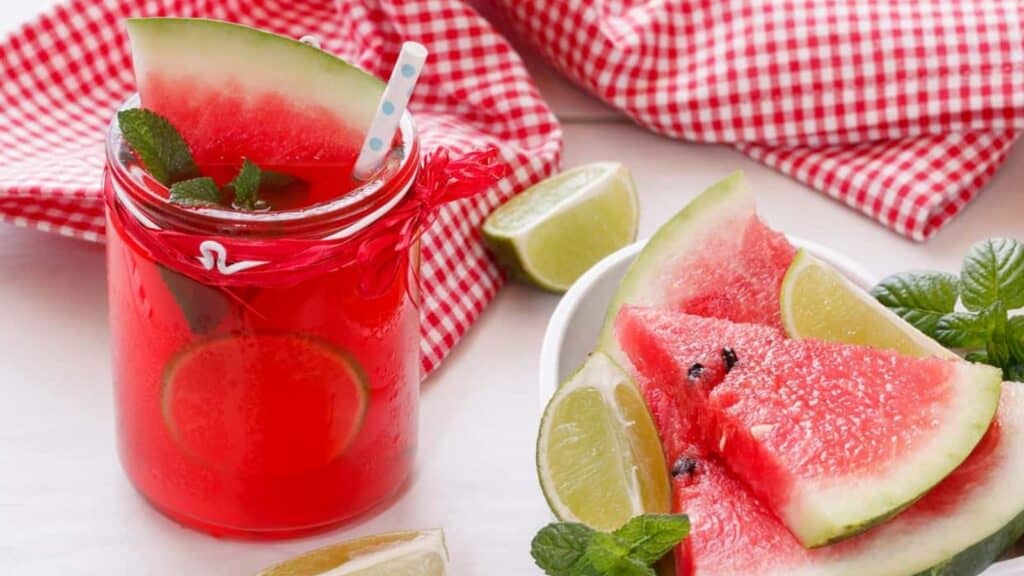
Kitchens and bars have the best product of the year right now, watermelon grown at full ripeness, not a random fruit pulled early for a February shelf. July’s peak harvest timing collides with two bigger forces reshaping food and drink in 2026: a documented move toward fruit-forward cocktails driven by consumer demand for fresh, seasonal ingredients, and a zero-waste cooking philosophy that has chefs paying attention to the whole fruit, not just the red part in the middle.
A melon built for this moment
The United States produced 3.7 billion pounds of watermelon in 2024, with Florida alone accounting for nearly a quarter of national output. At nearly 15 pounds available per person, watermelon’s availability runs double every other melon variety combined, and the bulk of that volume is moving through the market now.
Numbers that size put watermelon in a different category from other seasonal fruits getting culinary attention. When a fruit this widely grown starts getting serious treatment in bars and kitchens, it is not a niche experiment but an indication that the whole category has more range than the market gave it credit for.
Bartenders figured it out first
The cocktail world has been circling watermelon for years, but 2026 is when the approach got more intentional. The Bacardi 2026 Cocktail Trends Report identified local and seasonal ingredients as one of the defining forces in bar culture this year, with 77% of consumers checking ingredient origin labels.
For watermelon, that is a significant opening; its natural sugar content is high enough to sweeten a drink without additions, its water volume makes it ideal for fresh-pressed juice bases and shrubs, and its color is the kind of deep, saturated red that does not need enhancement. A watermelon cocktail made from a locally grown fruit, listed as such on a menu, carries a story that a bottle of watermelon liqueur simply cannot.
The part everyone throws away
While bartenders were working the flesh, chefs started looking at what was left. Watermelon rind, the thick white layer between the green skin and the red fruit, has been part of Southern preservation traditions for generations, typically pickled or preserved.
What is happening in restaurant kitchens in 2026 is a sharper, more savory version of that instinct. Pickling and fermenting are having a major moment in professional kitchens this year, driven by a zero-waste mandate most serious kitchens now treat as non-negotiable.
Watermelon rind is a natural beneficiary. It holds texture through fermentation, carries brine and spice without turning soft, and costs nothing beyond the watermelon already being purchased for its flesh. One fruit, fully used, with two completely different applications on the same menu.
A variety most people have never seen
The third thing changing about watermelon this summer is the fruit itself. Enza Zaden and Sprouts Farmers Market launched Moon & Stars, an heirloom-inspired seedless variety, exclusively across more than 480 Sprouts locations in 25 states for the 2026 season.
The variety is visually unlike anything in the standard produce aisle: dark green rind marked with bright yellow speckling, deep red flesh and a crisp texture that ranked first for overall preference in blind testing across five watermelon varieties. It is available through early September.
Moon & Stars represents something bigger than one new variety on a shelf. Heirloom watermelon varieties largely disappeared from commercial production as the industry optimized for uniform, shippable fruit. Their return to retail, in a seedless format that performs well in the field, is the same farm-to-table logic that transformed tomatoes, corn and stone fruit, finally reaching a fruit that summer has always taken for granted.
What comes next for watermelon
Florida produced 912 million pounds of watermelon in 2024, more than any other state, per the same USDA report. Most of it was sold as a commodity, priced by weight, bought for the flesh and stripped of everything else. The bars and kitchens treating it differently this July are working against decades of that assumption, and the timing has rarely lined up this cleanly around a single ingredient: peak domestic harvest, fruit-forward cocktail demand and a zero-waste mandate that has reached mainstream kitchens all converging at once.
Watermelon has the scale, seasonality and culinary range to sustain that kind of attention. The question is whether the rest of the market follows before the season ends.
Mandy Applegate is the creator behind Splash of Taste and seven other high-profile food and travel blogs. She’s also the co-founder of Food Drink Life Inc., a unique and highly rewarding collaborative blogger project. Her articles appear frequently on major online news sites, and she always has her eyes open to spot the next big trend.
The post America’s favorite summer melon is showing up in craft cocktails, and the rind is next appeared first on Food Drink Life.