


The developers of the Polo Grounds subdivision in the Jefferson County portion of Eureka say they will stick to plans to sell the 101 homes in the development, even though the County Council denied their request to set up a special assessment district.
McBride Berra Land Co. LLC of Chesterfield had asked the County Council to approve the formation of a Community Improvement District (CID), which would levy yearly assessments on the lots in the subdivision to underwrite infrastructure costs to extend water and sewer lines and build streets and sidewalks.
The council voted 4-2 on June 12 against an ordinance that would form the district, and on June 26, it voted 5-2 to place ato deny the district on its July 10 agenda.
Jeannie Aumiller, general counsel and senior vice president of real estate for McBride, said the setback will not affect plans to sell homes in the subdivision on Hwy. FF between High Trails Drive and Jim Shell Drive-Haas Road and south of the Windswept Farms and Mirasol communities.
“We’re going full steam ahead,” she said. “We’re very excited about this area. We understand the council’s vote, that a CID will not be formed. But that’s not going to change the big picture.”
As proposed, the CID would have been overseen by a five-member board made up of McBride Berra officials since the company currently owns the 39.1 acres because no homes have been built yet. Homeowners eventually would have taken their place after homes were sold.
Katie Jenner of the St. Louis law firm of Husch Blackwell, who represented McBride Berra at the June 12 meeting, said under the CID proposal about $3.4 million of infrastructure work in the Polo Grounds would have been borne by the developers, then repaid at 7 percent interest over about 27 years by the homeowners, who would have been assessed yearly payments of $1,700. After the entire amount was repaid, the CID and its board would have been dissolved.
Councilman Bob Tullock (District 7, House Springs) asked why McBride wouldn’t just roll the infrastructure costs into the price for each home.
“We want to keep homes at a reasonable price,” Jenner said. “(Under a CID), you only pay if you’re there. If you sell your house down the line, the new buyer pays the assessment.”
She said homes in the Polo Grounds are listed in the $300,000s to about $600,000.
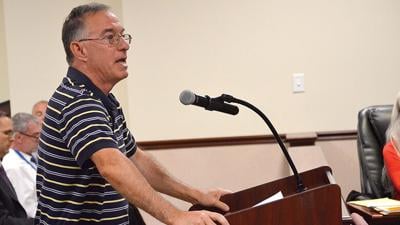
About 50 people from the area attended the June 12 meeting, and four spoke against allowing the CID.
“Corporate welfare – this is it,” said Bradley Hoene. “They’re going to essentially invest $3.5 million and get repaid back at 7 percent interest over the course of 27 years. If you can guarantee me 7 percent interest over 27 years, that is one heck of an investment. Not only are they doing that, they’re going to cheapen the cost of their homes.
“This doesn’t affect me directly,” Hoene said, “but this is a horrible, horrible precedent for Jefferson County to set. As a county, we should not be involved in projects like this.”
The county has about a dozen CIDs, including one for Windswept Farms in the Eureka area that was approved unanimously by the County Council in July 2019.
Tom Merriman said he remembers attending meetings in early 2022 concerning a rezoning request and preliminary plans for the Polo Grounds.
“Residents said there were going to be problems with the infrastructure, with the water and with the sewer. Every rebuttal came back, ‘No, we’ve got it taken care of.’ And now, it comes down to the last minute, and no, they don’t have it taken care of,” he said.
Denise Kasten agreed with Merriman.
“We pay taxes for infrastructure. A poorly planned development, where they didn’t plan for everything they needed, shouldn’t fall on us,” she said. “This is not beneficial for our community and it’s not beneficial for the future homeowners. Once they move in, they’re our neighbors and we will care about them.”
She cited an article written by former Missouri Auditor Nicole Galloway that said taxpayers end up paying substantial costs associated with CIDs.
Council members Gene Barbagallo (District 2, Imperial), Shannon Otto (District 3, Arnold), Charles Groeteke (District 4, Barnhart), Dan Stallman (District 6, De Soto) and Bob Tullock (District 7, House Springs) voted to place the resolution to deny the district on the July 10 agenda, while Brian Haskins (District 1, High Ridge) and Scott Seek (District 5, Festus) voted against placing the denial on the agenda. The June 12 vote was the same, except Stallman was absent.
“This is not an unprecedented thing,” Seek said at the June 12 meeting. “This council has voted for CIDs before.”
“I have voted for and against these types of districts,” Groeteke said. “I believe there are proper uses for them and I believe there are others that may or may not be proper. The council should consider what is best for the county.”
“The costs of this being pushed onto the homeowners, I don’t think it should be done like this, so I don’t think I can support this,” Tullock said. “What is in the best interest of Jefferson County overall? I sat in the audience where these folks are sitting now and listened to the testimony, and they said they weren’t going to have any problems. There is nothing preventing this developer from incorporating the cost of the CID into the price of the homes.”
“This is just another chance, I believe, for people who don’t want this to get another bite at the apple, which is really not fair,” said Haskins, who represents the area. “This is really just housekeeping at this point. It’s only a relationship between the lot owner and the builder. These are high-dollar homes; they can afford it. It should be up to the buyer whether or not they want to buy that home. It shouldn’t be up to us.”