
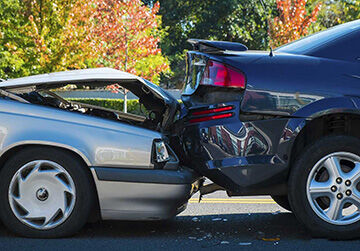

In what may seem to be a paradox, Missouri has seen an increase in fatalities from traffic accidents, even while fewer motorists have been on the road because of the COVID-19 pandemic.
Speeding also seems to be up and is contributing to the fatal accidents, authorities reported.
Gov. Mike Parson noted in a recent news release that while traffic volumes around the state have been off as much as 50 percent for much of the year, fatal accidents were up 15 percent this year, as of July 9, compared to the same period last year, according to the Missouri State Highway Patrol.
Through July 9, Missouri had 465 motor vehicle accidents resulting in a fatality, compared with 402 on the same date last year.
In the highway patrol’s Troop C, an 11-county area that includes Jefferson County, traffic fatalities are up 9 percent, from 133 on July 9, 2019, to 146 on July 9 this year.
“We’ve definitely seen a dramatic increase in fatal accidents this year,” said Cpl. Juston Wheetley, a spokesman for the highway patrol. “With that, we’ve seen marked increases in the speed at which motorists are operating their vehicles, and more distracted driving and driving without seat belts. When you combine higher speeds with inattention, you’re getting accidents that are a lot more severe.”
Speed kills, Wheetley said, and a recent report from the Governors Highway Safety Administration supplies backup.
Missouri ranks 11th nationally in fatal traffic accidents that involve speeding, at 36.5 percent. New Hampshire ranks first with 52 percent.
Jefferson County ranks 25th among 593 counties nationwide, with 44.6 percent of its fatal accidents attributed to high rates of speed.
Wheetley said he didn’t know if drivers out on the roads over the last few months feel more comfortable speeding, not wearing seat belts and talking on cell phones because they are contending with fewer vehicles.
“I don’t know that that’s a direct cause, but I’d think you could say it is certainly a factor,” he said.
Wheetley said a disturbing statistic is that since Jan. 1, about 70 percent of the fatal accidents around the state involved drivers or passengers who were not wearing seat belts.
Historically, he said, that percentage usually ranges from the high 50s to the low 60s.
“It’s only a guess as to why people don’t feel the need to wear a seat belt,” he said.
In Jefferson County, the highway patrol handled eight fatal accidents between March 15 – when businesses and schools started closing in response to the pandemic – and July 9, the same number as last year.
“We’re definitely seeing spots around the state that are higher than others, and I-55 is one of them,” Wheetley said. “Interstates in general you’re seeing higher speeds on than the secondary roads. But, overall, I think what’s going on in Jefferson County is pretty typical of the trend statewide.”
Sgt. Matt Moore of the Jefferson County Sheriff’s Office, director of the Special Operations Division that includes traffic control, agreed.
“The complaints we’ve been seeing on our online form (the Sheriff’s Office has an online reporting feature) are that we’re hearing about more incidents of reckless driving – faster, and with people talking on their phones while they’re driving.”
Moore said there’s no proof that with traffic down, those who are on the roads feel more inclined to speed and take more risks, but he thinks there may be something to it.
“I don’t know that they’re necessarily feeling safer out there with fewer vehicles on the road, but I know there’s a need to get the word out to the public that they need to obey the speed limits, buckle up their seat belts and put their phones down,” he said.
Moore said the Sheriff’s Office is stepping up its enforcement efforts to try to make the roads safer.
“We’re trying to get more officers out there,” he said. “We get state grants to help pay for enforcement of hazardous driving offenses, and seat belt violations.”
Wheetley said the highway patrol is taking a similar stance.
“First, we’re trying to get the word out, that unnecessary speeding is not going to make a big difference on your arrival time,” he said. “But increasing your speed does greatly increase your chances of killing or seriously injuring yourself, or killing or seriously injuring someone else.”
“Education is a big thing. People need to be reminded – don’t talk on your phone or text while you’re driving. You can only do one thing at a time well, and if you’re busy on your phone, you’re more likely to drive your car faster. And we all need to be reminded that seat belts save lives.
“Our officers are out, and they’re enforcing traffic laws. We’re putting extra officers out to target areas that have seen more accidents.”