

Some wild animals now will be allowed as pets in the city of Arnold, as long as owners get a permit and follow the rules.
The Arnold City Council voted 7-0 on Dec. 6 to change its ordinance on wild animals.
Formerly, no wild animals were allowed as pets. The revised ordinance outlines what characteristics will disqualify a wild animal from being permitted in the city. Most of those characteristics are those that might jeopardize the safety and comfort of the owners and their neighbors.
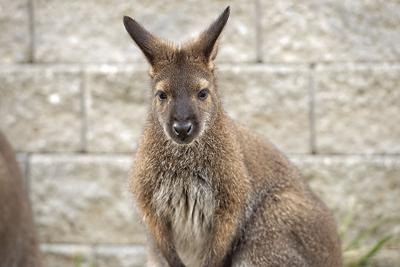
The discussion about whether wild animals should be allowed as pets was raised last September, when residents Steve and Ashley Hauck found out from Arnold’s Animal Control Department that their two wallabies were considered wild animals and were not allowed as pets within city limits.
Wallabies – from the same family as kangaroos, but smaller – are originally from Australia, New Zealand and New Guinea.
The couple asked Arnold Ward 3 Councilman Mark Hood if there couldn’t be some exceptions to the rule. Now there are.
“That makes me really happy,” said Ashley Hauck, 34. “Not everybody can have a cat or dog. I’m glad they are willing to allow new animals.”
Arnold City Administrator Bryan Richison said council members are pleased, too.
“Everyone was pretty happy with the result,” he said.
However, people who want to keep a wild animal must have a permit.
The ordinance has taken effect, but the Community Development Department has not yet prepared a permit application form, Richison said.
“That’s the only hold-up right now,” he said. “Once that’s done, people will be able to apply for permits.”
He said there is nothing in the ordinance about a fee and there probably will not be one.
Once permit application forms are available, interested residents will be required to submit a completed form to the Community Development Department identifying the kind of wild animal the resident seeks to have and where it will be housed. The Community Development director will then evaluate the application on the following criteria:
■ The applicant must be able to provide a sanitary and safe area to keep the wild animal in a humane condition.
■ The wild animal cannot be a breed or species that makes frequent loud noises or emits any kind of odor that would be a nuisance to the neighborhood.
■ The wild animal cannot be a breed or species that is known to carry communicable diseases that can be transferred to humans and create a public health hazard.
■ The wild animal cannot be poisonous.
■ The wild animal cannot produce any kind of toxic odor or substance.
■ The wild animal cannot be a carnivorous predator in its natural state in the wild.
■ The wild animal cannot have any traits or characteristics that would endanger the public or cause a public health hazard.
■ The applicant must provide proof of insurance coverage for the wild animal.
The Community Development director will decide whether to permit the animal and notify its owner. Permits apply only to a particular animal and each animal must be permitted separately.
If a permit is denied, the applicant has 10 business days after receiving the notification to appeal to the city administrator, and the city administrator’s decision on the permit will be final.
Hauck said when she and her husband Steve, 42, moved to the area in 2013, they didn’t know that wallabies were not allowed.
She credited Hood for his help.
“He literally took care of it that day (seeking a provision to allow wild animals). He said, here’s what we can do, but he said he couldn’t promise anything,” Ashley Hauck said.
She said her two wallabies, Brizzy and Syd, have received a lot of attention since the original story.
Hauck said she believes they are happy they will probably get to stay, “even though they didn’t know what was going on.”