



To assist voters to make informed choices in the June 2 municipal election (rescheduled from April) and to accommodate those who wish to cast absentee ballots, the Leader will present its Voters Guide on its website. Each day, a new contested race or ballot issue will be posted at myleaderpaper.com.
Absentee voting for the June 2 election is open now. Absentee voters can cast their ballots at the Jefferson County Administration Center, 729 Maple St., Hillsboro, or by mail. The deadline to request a mail-in absentee ballot is May 20. To request a mail-in ballot or for other information concerning the election, call the Jefferson County Clerk’s Office at 636-797-5486.
Today, we focus on candidates for the Crystal City Board of Education and its ballot issue, Proposition KIDS. Tomorrow, profiles of candidates for the Sunrise R-9 Board of Education.
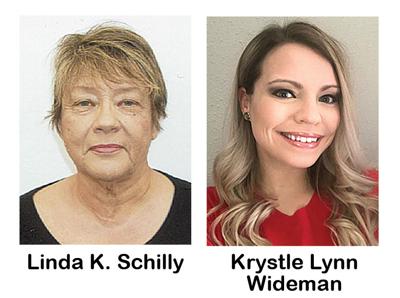
Five people are in the running for three available seats on the Crystal City Board of Education in the June 2 election.
All three incumbents are trying for new three year terms. Linda K. Schilly is running for her fourth term and Lonnie J. Compton his second. Cindy Coleman, who ran unopposed in 2018 to finish the final two years of a vacant seat created when David Perry moved from the district, is seeking her first full term.
Two challengers are seeking to unseat them, Krystle Lynn Wideman and James Joseph Berger.
School board members are not paid.
Also on June 2, the district is asking voters to approve Proposition KIDS (Keep Improving District Schools), which, if approved by a simple majority, would shift 80 cents from the district’s bond repayment fund to its general fund.
While the shift in funds would not require a tax increase, a debt service levy is temporary and expires when the debt is paid off. By shifting the 80 cents to the operating levy, on the other hand, it becomes a permanent tax.
Board member Ken Holdinghausen said passage of the measure is vital for students.
“It’s something we really need to keep improving the education of the kids,” he said.
The district’s current overall tax levy is $4.8573 per $100 assessed valuation. The measure, if approved, would allow the district to shift its entire 80-cent debt service levy into its operating levy.
District officials said they intend to use the money generated by the measure – estimated at about $509,000 a year – to pay for safety and technology upgrades and to address HVAC problems around the district.
Superintendent Steven Barnes said district officials will need to make tough budget decisions if the measure fails.
“We would have to make cuts if it doesn’t pass,” he said.
SCHILLY, 68, lives at 313 Jefferson Ave. in Crystal City. She and her husband, Crystal City Mayor Tom Schilly, have two sons and four grandchildren. She is retired after working for 40 years for the Jefferson County Circuit Clerk’s Office, first as a court clerk and then as supervisor of the court clerks.
She is a graduate of Herculaneum High School.
COLEMAN, 50, lives at 109 11th St. in Crystal City. She and her husband, Darren, have two children. She is the chief product marketing and strategy officer for Mphasis Wyde, a global technology and services provider.
WIDEMAN, 33, lives at 902 Mississippi Ave. in Crystal City. She and her husband, Rodney, have two children. She is a family and consumer sciences teacher (home economics) in the Festus R-6 School District.
She earned a bachelor’s degree in 2008 from Missouri Baptist University.
COMPTON, 61, lives at 2158 Missouri Ave. in Festus. He and his wife, Marcie, have two children and four grandchildren. He is self-employed and runs L.D. Compton Construction Co., Marlo Properties and Marlo Commercial Snow Removal.
He is a graduate of Festus High School.
His daughter, Shanna Mayer, is a counselor at Crystal City High School. He has worked a contractor for the district, both on capital projects and on snow removal.
BERGER, 73, lives at 145 Ozark Drive in Crystal City. He and his wife, Michelle, have two grown children and four grandchildren. A retired investment broker and broadcaster, he also worked for the Missouri Department of Education and St. Louis University and now is a substitute teacher in six county school districts.
A graduate of Webster Groves High School, Berger earned a bachelor’s degree in sociology with a minor in military science from Southwest Missouri State University (now Missouri State University). After serving in the armed services during the Vietnam War, Berger earned a master’s degree in guidance and counseling from Southwest Missouri State University.
What experience do you have that might serve you well in this position?
Schilly: I have served on the board for 24 years and have worked with six superintendents and numerous board members, all of whom have different ideas and agendas. I have served on other boards and helped numerous candidates with their campaigns. I have been a Sunday school teacher.
Coleman: Our family has a long history of being proud Crystal City Hornets. That pride has translated into being active in the district for many years and taking on various volunteer roles. Past efforts include serving on the Crystal City Elementary School PTO, being treasurer of the Crystal City High School Boosters and sitting on various committees. Recent efforts include serving as the president of the Boosters.
Wideman: Being in the education profession, I can relate to what board members should be doing for their students, teachers and community. I can help to bridge the connection between our educators and the board.
Compton: I am chairman of the Crystal City Planning and Zoning Commission, president of the Crystal City Parks Board and past chairman of the Jefferson County Sheriff’s Merit Commission.
Berger: I have served for three years on the Crystal City Park Board, for four years on the Jefferson County Family YMCA board and two years on its veterans committee, for 10 years as a Jefferson County Amateur Radio Club trustee and five years on the Jefferson County Pickleball League board.
What are the biggest problems facing the district and how would you address them?
Schilly: Low enrollment, which affects revenues. We need to work hard on educating the public to show them that our students receive the best possible education available. By listening to the needs of the parents, students, teachers and administration, this will continue to be accomplished.
Coleman: As a small district, we face challenges that many other schools may not have to consider. Therefore, we must be diligent in our decisions to ensure that all of our resources are being used to the maximum benefit for the students.
Wideman: Providing increased opportunities for our students to prepare them for the future. These opportunities might include integrating more technology or offering more trade skills courses. We can help teachers refine their curriculum by allowing them to select professional development opportunities to best address their needs. We can then use what they learn to provide what they need to increase student success.
Compton: Low enrollment. Work on increasing our average daily attendance. Financial stability. We need to pass Proposition Kids.
Berger: The financial viability of the district is highly dependent on serious and creative discussions regarding successful applications undertaken by similar districts of the same scope, size and demographics. The superintendent and the board must continue to constantly evaluate the academic service our district affords to students in relationship to sustainable and realistic financial policy.
Why should voters elect you to this position? List your goals, if elected.
Schilly: Over the years, I have dealt with many problems in the district. Doing so has given me an insight to what our patrons expect from a board member. I realize that you cannot always make everyone happy with a board’s decision but if patrons are given a fair resolve to a problem, I have done what I’m elected to do. At times, it is hard being a board member but if you treat each problem that arises with a willingness to listen and weigh the objectives, you are doing a good job.
Coleman: During my two years on the board, we have been able to overcome challenges and identify areas such as technology and curriculum that we should be continuously improving upon. These areas are critical and rapidly changing at all levels. The ability to communicate well and work together with administration, parents and the community is essential to ensuring we are informed and considering all options. The pace at which change occurs today requires continuous planning, which requires continuous collaboration at all levels.
Compton: My goals are to increase average daily attendance, to pass Proposition KIDS and to prioritize capital improvement projects.
Wideman: I will put our students first. My professional background will give the board a different, yet necessary, perspective. Putting students first also means that I will be present at many of their activities. My pragmatic approach, experience and commitment to solidifying the success of the district will benefit its students and stakeholders.
Berger: I was educated in a community steeped in tradition, not dissimilar to Crystal City, and since retirement I have been dedicated to public service in a variety of areas, but nothing as important or impactful as direct involvement with school board policy. The heart and soul of any community is the pride and success that can be identified by its schools – Crystal City has a wonderful past – and I would work hard with the board and superintendent to make sure that, if possible, that past will be replicated by employing the best possible reasonable perspective.
What is your stance on the district’s plan to switch to a four-day school week?
Schilly: My biggest concern when we were approached with this idea was the need to be able to provide for our students’ care on the day we were not in school and that this care should be provided at no cost. Once this was accomplished, a plan was started and our parents, students and teachers were notified of this possible change. If we had the support of these individuals, I was supportive of this change.
Coleman: The methods and tools for which students learn and retain information are far more interactive and vastly changing. We should invest in the best tools that enable each student’s success. As the primary resource for every student, this includes our teachers. A four-day school week will allow for monthly professional education days rather than a few days per year. This provides an advantage to our students and our district. It also will provide an advantage to a small district to attract and retain quality staff, while providing a no-cost care day for those families on the off day.
Wideman: It’s a creative option worth trying. From an educator’s perspective, I can understand the worry about overextending students’ attention each day. From a parent’s perspective, I know that our students will enjoy having the extra time each week to participate in other activities outside of school. Based on results from the stakeholders, a four-day week is worth trying.
Compton: I voted yes.
Berger: The board and superintendent were faced with a set of circumstances that culminated in a decision that was not unlike other districts of this size – although most, if not all others, are not bordered by three school districts. There was a variety of factors considered aside from budgetary cuts, such as teacher retention. How this change fits in with the Crystal City fabric should be monitored for successful outcomes as well as unintended consequences
The district is asking voters for approval to shift 80 cents from the debt service levy to general operations. Do you support this issue? Why or why not?
Schilly: I support the 80-cent shift, which will give more flexibility with revenues so we can use the money on items such as additional security, replacing heating and cooling systems that are more than 20 years old, and additional technology. These are all expensive items that the district will need to make and would cause an additional financial burden if it doesn’t pass. Without passage, there would be a need to make some very difficult cuts.
Coleman: This proposition is a win-win for the community and the district as there is not an increase to taxpayers but allows the district to be able to use funds as they are needed. Restrictions that create delays cost the district and limit the ability for us to ensure that we are able to address current and future needs.
Wideman: I do support Proposition KIDS because it won’t impact our tax dollars but it will have a great impact on our students, staff and district.
Compton: Yes. It means no tax increases for taxpayers. The 80 cents will be in the general fund, which will allow the money to be prioritized to areas needed.
Berger: There is absolutely no debate on this issue. Without this necessary shifting of funds, the financial consequences to the district would be more than just perilous. It would necessarily put the board and superintendent in a position to make decisions based on pecuniary pressures and not well-thought-out, incremental and reasoned assessments. I strongly support its passage.