


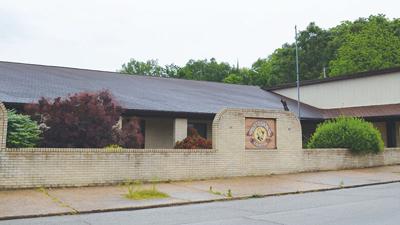
The De Soto School District’s new Innovative Learning Center for junior high and high school students will have a home in the De Soto Junior High building, at least for a couple of years.
De Soto Board of Education members agreed in April to establish a program beginning next school year to address behavior and academic issues for all students, and in May the board decided to house the center for students in grades six through 12 in the Junior High.
Separate spaces at Athena and Vineland elementary schools will be used for students referred to the program in those buildings.
The center for the older students will be built in an area that had housed the Junior High School library, and walls for classrooms will be built by the district’s staff.
Superintendent Josh Isaacson said the cost to renovate the space would be about $4,300 and would allow a center of about 5,000 square feet. The library will be moved to a smaller area elsewhere in the building, Isaacson said.
The board was asked to consider an alternative – establishing the center in a city-owned building at West Pratt and South Second streets.
School officials said the city would have allowed the district to use about 2,960 square feet of that building rent free, although the district would have had to pay about $7,500 to renovate the building, which formerly housed Farm and Home Realty offices. In addition, the deal was only good for five years.
“We don’t know the condition of the HVAC system, it will need new restrooms and we’d have additional utility costs,” Isaacson said. “Also, the staff would not have on-site access to principals and other administrators, or to the teaching staff and to nurses if they’re needed.”
He also said meals would have to be brought in from another school. Board member Tarrole Milfeld, who has championed the idea of the Innovative Learning Center, cast the only vote against starting it at the Junior High site, saying she always thought it would be a stand-alone facility.
“I think we need to make the best overall decision for all the students involved, and not just look the construction cost,” she said. “When we voted on it, it was my understanding that it would be off-campus, that it would be best to move these students away so they would have their own space.”
Board member Michael Golightly said he was concerned the space available at the West Pratt building wouldn’t properly serve the district’s needs.
“Considering this would be the first semester for a new program, would this space be too small? Too big? Starting a new program has a lot of stress and challenges,” he said.
Board member Mark Ferrell said the board has to be good stewards of tax money.
“I don’t think it would be right to spend that money and not have it in five years,” he said. “There’s a possibility we could get the program running and in five years have to do it all over again. I think this will give us a chance to look at all of our options.”
Board members also agreed in April to use about $460,000 of the district’s $3.7 million allotment of Elementary and Secondary School Emergency Relief Fund III funds through the American Rescue Plan Act stimulus package to pay for the center for the next two years. They also said the board would assess whether the program is successful continue it afterward.
Isaacson said that once the program is established and data shows it is successful, an appropriate off-campus site can be found.
“I know that this (building the center in the Junior High building) is a quick fix, but we need to get something going soon to have it in place for this coming school year,” he said.
If it’s moved from the Junior High building, he said, the renovations there would still be used.
“That’s not money that would be wasted,” he said.