



This is the third and final installment in a series about homelessness in the county. It focuses on the need for a homeless shelter in the county, as well as funding for that shelter, so the organizations that work to help people who are unhoused can better provide the services they need. For those who’d like to support those programs, a list of organizations that help the homeless is included.
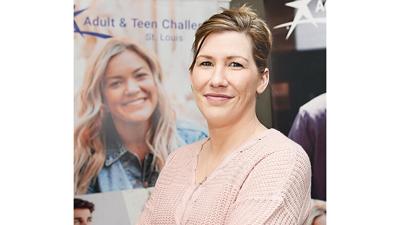
Hannah Schweigert, a 35-year-old Festus native who battled drug use and was homeless for a year and a half, said breaking the homeless cycle was nothing short of divine intervention.
She said her downward spiral began at age 22 after a boyfriend threatened to kill her if she left him and she began experiencing post-traumatic stress disorder from overwhelming fear and anxiety.
“I tried to get away from this abusive relationship with heavy alcohol use,” said Schweigert, who had been an avid track and cross country athlete at Festus High School and Missouri Baptist University.
“A friend gave me pain pills to help me get off alcohol. I became addicted to pain pills. Five years later, I was stealing from my family, who had tried and tried to help me.”
Without a job and having cut ties with her family, Schweigert drove to St. Louis in July 2019 and began a couch-surfing lifestyle, staying with people she met who supported her drug habit. Her drug use gradually escalated to dangerous street drugs like methamphetamine and the potent synthetic opioid fentanyl.
Schweigert said she began sleeping in her car parked in front of St. Louis’ tent encampments near the Dome at America’s Center. When her car broke down, she moved to one of the encampments. In November 2020, the 5-foot-7-inch woman weighed only 100 pounds and without money to buy more drugs suffered from fentanyl withdrawal.
“I could not function,” Schweigert said. “I called the hospital, and they sent an ambulance for me. I reached out to an old friend who somehow tracked me down and came to get me. She had found Adult & Teen Challenge in High Ridge. They had a bed for me if I committed to stop using. I qualified for a scholarship that covered the cost.”
Schweigert credits the assistance she got from the Adult & Teen Challenge program with helping her turn her life around, and now she works as the program’s vocations coordinator and lives in the re-entry house to prepare for living independently.
“God reached out and made a way,” she said. “God saved my life.”
Without county homeless shelter, groups struggle to reach those in need
Jefferson County’s homeless mostly keep to themselves. They live hidden away in tent encampments. Some live in their cars or hotels paid for by churches. Some stand on busy street corners with signs asking for donations.
Newly homeless people, including families with children, have succumbed to high rents, inflation, job losses and lack of affordable housing.
Some homeless people have lost identification documents. Many have no cell phone or internet access, which makes it more complicated to connect with resources.
While some of those who are chronically homeless are content with the lifestyle, many of those who are unsheltered have fallen on hard times and are seeking help.
Without an emergency or transitional shelter in Jefferson County, though, organizations that support homeless people can only provide services on an ad hoc basis.
Representatives from the recently established nonprofit New Hope Outreach Center want to open a rehabilitative homeless shelter in Jefferson County that would help people who want to escape homelessness.
“We want to open a shelter that offers a comprehensive, goal-oriented program,” said Pastor Dan Ross of New Hope Fellowship Church. “The idea is to help those who want to change. Our community partners would help us by providing services.
“We are actively seeking a location for the New Life Outreach Center.”
Rehabilitative models in Jefferson County have been successful in reaching domestic violence survivors and those with substance abuse and addiction issues who without that help would have otherwise been homeless.
Comtrea’s A Safe Place, a shelter in Jefferson County for victims of domestic abuse and their children, provides comprehensive treatment in a safe environment.
“In 2022, there were 39 women and 52 children who would have been homeless if they did not live at the shelter,” said Holly Porter, director of A Safe Place.
Adult & Teen Challenge of St. Louis, located in High Ridge, has an 80 percent success rate in its yearlong faith-based program that focuses on helping people with drug and other life-controlling addictions, said Ross, chair of its board of directors.
John McKinnon, CEO of Adult & Teen Challenge of St. Louis, said the organization helps people who may have been or are at risk of becoming homeless.
“We had 20 women residents and 30 men residents in 2022 who would have been homeless if not enrolled in our program,” he said.
Living homeless poses many dangers
The risks associated with being homeless are great, said Lisa Flamion, a licensed counselor with the Jefferson County Sheriff’s Office Crisis Intervention Team.
“Homeless people may not have enough food or water. They may not have a safe place to sleep, which can cause delusions from a lack of sleep. Some have missing fingers or toes from frostbite. Dehydration is common in the summer months. Most forgo their basic health and dental needs, and those with mental illness who don’t have access to medications may have difficulty functioning.”
Linda Martinson of 25:35 Ministries understands the dangers to people who live unsheltered. “We lost a 50-year-old man who died from a drug overdose in May of 2021. We were very close to him,” she said. “Over the past four months, we have lost two more guys. One man who lived under a bridge was hit by a car, and another one died of a massive heart attack.”
Groups say funding needed to reduce homelessness
The 25:35 Ministries group is one of 40 organizations that make up the Jefferson County Homeless Coalition and work together to provide services to the county’s population of people living homeless.
“The beauty of what is coming forth is a community collaboration,” said Sue Curfman, president and CEO of Comtrea. “However, for many of us on the Coalition, this is not our primary job. As nonprofits that are federal- and state-funded, we don’t have a lot to spend.
“The Homeless Coalition took on new life when Dan (Ross) and Casey (Kindt) joined. New Hope can bring some resources, and if we all work together, we can do this, but we have to have funding.”
“The Coalition realized that everybody had a part (to help), but there was no solution,” Ross said. “Our goal from the beginning was to rehabilitate and train, to be the cog in the wheel. We felt our part was to bring everybody together and provide a centralized place where homeless people can receive services from all the resources our county has to offer. Importantly, we would partner with Jefferson-Franklin Community Action Corp. (JFCAC) to ensure housing opportunities and rent vouchers are available to help with expenses when they exit the program.”
“Having a shelter that provides rehabilitation services, job training and residential care that leads to permanent housing would be a great resource in Jefferson County,” said Cpl. Drew Crews of the Sheriff’s Office Homeless Outreach Team. “It would help law enforcement because potentially you would have a place for homeless families and individuals.”
Flamion agrees.
“A shelter that offers a wraparound program that provides social services, urgent care and housing support would be an incredible help,” she said. “We have to stop looking at homeless people as a problem. Many are not lazy and want to work. Other factors like not having the internet, a place to shower, transportation, clothes and proper identification prevent their access to employment.”
The New Hope Outreach Center’s transformational model incorporates a six-month rehabilitation program for long-term success, Ross said.
Although the center will not accept people with substance use issues, it will refer them to treatment centers and consider their eligibility once treatment is completed, he said.
The Outreach Center plans to partner with Comtrea, JFCAC, the Jefferson County Health Department, Mercy Hospital Jefferson and Axios Counseling in providing services to its residents.
“There are many unknowns until a location is secured,” Ross said. “We have no question about the viability of the program, and we have sustainable sources of income through renewable grants and donations from area churches and businesses. However, we need start-up funds to help get this underway.”
An earlier proposal for the New Hope Outreach Center consisted of a five-building campus that included a residential facility, medical-dental office, long-term care treatment center, employment training and an office. The proposal required rezoning of a 28.19-acre residential property in Mapaville to planned mixed use. The Jefferson County Planning and Zoning Commission voted against recommending the rezoning request last November and subsequently the County Council denied the request.
“We originally applied for a little over $6 million in grant support from the county’s ARPA (American Rescue Plan Act) funds to build at the Mapaville location, as this site was planned with extensive services, property upgrades and advanced security features. We have since revised our ARPA application to just under $2 million,” said Casey Kindt, executive director of the New Hope Outreach Center. “We were encouraged to put in an application after making a presentation, but we have not yet learned whether we will receive funding.”
ARPA funding was signed into law in March 2021 to provide financial relief to state and local governments in the aftermath of the COVID-19 pandemic. Jefferson County was awarded $43.7 million in ARPA funds that must be spent by December 2026.
When the ARPA funding was announced, County Executive Dennis Gannon said it included providing for public health and safety initiatives that make Jefferson County a better place. When recently asked whether ARPA funding could be used for a homeless shelter, Gannon said those funds couldn’t provide the ongoing revenue a homeless shelter needs.
“A homeless shelter would need sustainable, long-term funding. The county is not in a position to provide sustainable funding, but I do think we can help make life better for those who are homeless,” he said.
Ross said ARPA funding would go a long way to help get the New Hope Outreach Center off the ground.
“ARPA funds would help us get started by providing the seed money to do what the original funding was intended to do. This includes new housing opportunities, homeless prevention services, and the acquisition and development of a shelter,” he said. “We outlined in our application a direct correlation between the ARPA regulations and our monetary requests.”
The New Hope Outreach Center and its partners in the Homeless Coalition believe a rehabilitative shelter would offer hope to those who want to change their lives, Ross said.
“We share a goal to address homelessness in Jefferson County in a humane way that will bring the unsheltered to safety and lead them to lives of joy and dignity,” he said.
How to help
For those who would like to support groups that help people who are homeless and work to overcome homelessness in Jefferson County, the following is a list of organizations to which you may send donations:
■ 25:35 Ministries: Donate through Venmo @twentyfive35ministries, PayPal at 2535ministries.stl@gmail.com or send a check to 25:35 Ministries, P.O. Box 25035, St. Louis, 63125. Visit 2535ministries.com for more information.
■ Finding Grace Ministries: Donate through PayPal or mail a check to Finding Grace Ministries, 1243 Water Tower Place, Suite 400, Arnold, 63010. For information, call the organization’s drop-in center, the Harbor, at 314-403-0210.
■ Grace Life Chapel: Donate online at gracelifechapel.co/give to Champion Life Outreach or send a check earmarked for homeless outreach to Grace Life Chapel, 1 Victory Drive, Pevely, 63070. For information, call 636-475-3000 from 9 a.m. to 4 p.m. Monday through Thursday.
■ Homeless Youth Initiative: Donate at dra4help.org/home/partners/homeless-youth-initiative/ or mail a check to Homeless Youth Initiative, 130 Brandon Wallace Way, Festus, 63028. For information, call 636-931-7696, ext. 158.
■ Mercy Health Foundation Jefferson: Donate online at mercyhealthfoundation.net/communities/jefferson to “area of greatest need” noting the donation is to support the unhoused emergency fund or mail a check earmarked for the unhoused emergency fund to Mercy Health Foundation Jefferson, 1400 Hwy, 61, Festus, 63028. For information, call 636-933-1603.
■ New Hope Outreach Center: Donate online at newhopeoc.com or send a check to New Hope Outreach Center, 5919 Antire Road, High Ridge, 63049. For information, send an email to newhopeoutreachctr@gmail.com.
■ Salvation Army of Jefferson County: Send checks earmarked for the homeless fund to Salvation Army, 3740 Telegraph Road, Arnold, 63010. For information, call 636-464-0787.
■ St. Patrick Center: Checks earmarked for Jefferson County veterans and their families may be sent to St. Patrick Center, Amanda Laumeyer, Senior Director of Philanthropy, 800 N. Tucker, St. Louis, 63101. For information, send an email to alaumeyer@stpatrickcenter.org.
Click through to see all stories in this series related to homelessness in Jefferson County:

Click through to see all three stories in this series related to homelessness in Jefferson County.