


When Congress approved a new $900 million federal emergency relief package in the waning days of 2020 to help organizations affected by the
COVID-19 pandemic, a huge sigh of relief could be heard from Hillsboro.
Jefferson County’s government is not in line to get any of that money directly, but the relief came from a clause in the legislation that will allow state and county governments more time to process applications for aid through the Coronavirus Aid, Relief and Economic Security (CARES) Act that was approved by Congress in March.
Jefferson County was approved to receive $26,406,492 through the CARES Act, and initial thoughts were that any money left unspent by the end of 2020 would have to be returned.
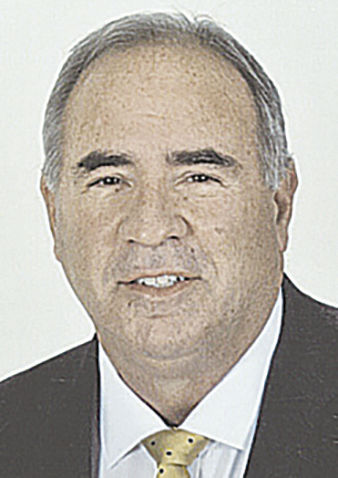
“We found out later that while applicants had to spend the money in 2020, we (the county) had until sometime in March to actually disburse funds,” said County Executive Dennis Gannon.
The new aid package extended that deadline through 2021, but state and county governments will not receive any new direct funding in the $900 million stimulus package.
Instead, money is designated to state agencies for specific purposes such as coronavirus vaccinations, mortgage assistance, transportation needs and education.
“The bill that President Trump signed (extended the deadline through the end of the year), but Gov. Mike Parson said he would allow counties to spend money from the CARES Act through June 30,” Gannon said.
Under the CARES Act, the county government, the Jefferson County Health Department, local government units, nonprofit agencies and businesses could apply for reimbursement for money expended to help address the pandemic.
To date, the county has distributed at least $19 million of that money.
“While we have a couple of local government applications still to go through, it’s my understanding that we have maybe 75 applications from businesses and nonprofits that still have to be processed,” Gannon said. “We’ve had a great response to this.”
For businesses and nonprofits, the review process is twofold – applications first are vetted by the Jefferson County Economic Development Corporation and then go to the county for a review by Auditor Kristy Apprill’s office.
“It’s amazing what that four-person office has been able to do,” Gannon said. “I understand that some people are getting anxious, but we figure at some point, we’re going to be audited, and we want to make sure we have the proper receipts and documentation for everything. But if they give us the proper documentation, they’ll get paid. But we don’t want to have to go back to someone and say, ‘You have to give us this money back.’”
Gannon said once all the applications that were submitted before the Nov. 10 deadline are processed, county officials will determine how much of that $26.4 million is left.
“We’ll go back to businesses that asked for $30,000 but we allowed $25,000 and review those first,” Gannon said.
After that, he said, the county may accept new applications, although Gannon said he’s not sure whether expenses incurred since the first of the year will be allowed.
“I can tell you that we’ll do everything we can to make sure this money has been disbursed,” he said.
Through the Jan. 11 meeting of the Jefferson County Council, which approves reimbursements, more than $11 million had been paid out to local government jurisdictions, which include public and private schools.
Guidelines issued by the Missouri Treasurer’s Office mandates counties to designate at least 15 percent of their CARES Act funding to their local health agency, which put the Health Department in line for at least $3,960,974.
For expenses incurred through Oct. 31, the county had reimbursed the Health Department $3,249,462 to date.
A total of 129 awards worth more than $1.7 million have been approved for locally owned businesses and nonprofit agencies, including churches.
They were eligible for two types of awards.
Under the Business Safe Reimbursement Program, businesses and nonprofit agencies are repaid for expenses made to directly make their businesses, employees and customers safer, such as purchasing face masks, personal protection equipment and cleaning supplies. Those reimbursements are capped at $5,000 per firm.
Another type of payment to businesses and nonprofits, the Emergency Relief Reimbursement Program, provided relief for other expenses related to the virus. Those awards maxed out at $25,000.