



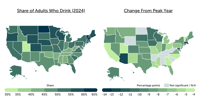
While northern states have higher rates of alcohol use, many have experienced large declines in recent years
Source: Trace One analysis of SAMHSA data
These shifts in the marketplace are unfolding against a backdrop of notable differences in drinking habits across the country. Alcohol use is generally more prevalent in the northern half of the United States than in the South, a pattern often linked to cultural, historical, and demographic differences. In 2024, the highest shares of adults who drink were found in New Hampshire (61.8%) and Vermont (61.4%), followed by North Dakota (60.8%), Wisconsin (59.5%), Rhode Island (58.9%), and Colorado (58.2%).
Northern states tend to have stronger traditions of beer and spirits consumption, higher rates of social drinking, and, in some cases, fewer cultural or religious influences discouraging alcohol use. By contrast, states across the Southeast and parts of the Mountain West—such as Utah (31.0%), Mississippi (40.5%), and West Virginia (40.9%)—report far lower rates of alcohol consumption.
When looking at changes from each state’s peak year, clear regional patterns are harder to spot—though some individual changes are striking. Significant declines have occurred in a wide range of locations, from Arizona in the Southwest (down 12.8 percentage points from its 2005 peak) to Maryland in the Mid-Atlantic (-11.1 points) and Wisconsin in the Midwest (-10.6 points). In the Northeast, Connecticut dropped 10.2 points from its peak, and Massachusetts posted the sharpest drop in the nation at 13.3 points.
Although large declines are spread across the country, one pattern stands out: Southeastern states tend to drink less overall yet are more likely to show no statistically significant change from their peak years. Alabama, Arkansas, Kentucky, South Carolina, Tennessee, and West Virginia all report stable rates, indicating that alcohol consumption in much of the region has held steady even as other parts of the country have experienced notable declines.
Additional details on data sources and calculations are provided in the methodology section. For complete results, see The Rise of Alcohol Alternatives: Which States Are Drinking Less? on Trace One.
As featured on


Trace One just released new data showing Americans are continuing to drink less alcohol, wit…