


“A little dirt never hurt.”
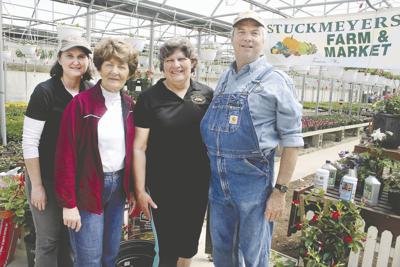
That was the title of the first seminar for the season at Stuckmeyer’s Farm Market in Fenton. Outside it was downright chilly for early April, but inside the greenhouses where the seminar took place, the air was warm enough for most people to shed their coats.
Surrounded by thousands of infant plants poking their tops over the rims of pots, the 15 or so attendees were eager to learn about dirt – yes, dirt. There were plenty of questions. What qualities does good soil have? Is it okay to re-use soil that was used for growing plants the previous year? How often should you water? What about fertilizer and insecticides? Can you grow vegetables in the same spot year after year?
The important thing is to make sure your soil is light and airy, Janet Leckrone said.
“If you get that real wet stuff, it sits in the pot and it gets so hard, the roots can’t even grow,” Janet said. “When you get a nice premium soil, it just helps things grow and move.”
Janet, whose parents started Stuckmeyer’s, said the roots of plants grown in containers typically only reach five to six inches below the ground.
“If you want to keep the bottom dirt, that’s fine,” Janet said.
As for rotating the location of vegetables, she said it is important not to grow them in the same place every year, particularly tomatoes.
“The diseases that the tomatoes have stay in the ground,” she said. “If you replant it in the same place, you’re going to have it every year. We fight it here too because you only have so much ground, and you’ve got to try and switch it every year, but within five years, we’re going to be planting in the same ground again.”
Phil Leckrone said it is important to take a soil sample from the ground where you plan to grow vegetables and have it tested.
“That way it would tell you what you need to add,” Phil said. “It’s not going to help with the diseases, but it would help if you’re low on potassium and nitrates.”
The University of Missouri Extension offers free soil testing. Each sample should contain about 1 1/2 cups of dry soil from six to seven inches deep. The Extension office is at 301 Third Street in Hillsboro. Call 636-797-5391 or email Jeffersonco@missouri.edu.
After the seminar, the Leckrones took time to answer a few more questions about the ideal way to grow vegetables.
“JeffersonCounty’s known for having rocky soil,” Phil said. “It’s really hard. That’s why we grow in the bottoms here. We have fertile ground, so you can just keep digging until you hit rock.”
He recommended a first-time grower put down some light fertilizer and then till it up with the soil. If the soil is rocky and not suitable for growing, Phil said he would build a raised bed and fill it with a truckload of good quality topsoil. Bulk topsoil is better than bagged topsoil, he said, because the soil in the bags is hard and packed.
If you have a smaller bed and don’t need a whole truckload of topsoil, combine the bagged topsoil with peat moss, he said, and then add in some compost.
“You’ve got to get a pretty good loose soil to grow your vegetables,” Phill said.
Another important consideration when growing vegetables is the location, he said, and that means finding a place that has as much sun as possible.
“You can get by with partial sun with a few vegetables, but tomatoes and sweet corn and everything need just bright sun,” he said.
Good drainage is also important, Janet said.
“You want to have it where it gets water if it needs water, but it doesn’t sit in water,” she said.
Phil said he often gets questions from people who water their plants every day and can’t understand why their tomatoes aren’t growing.
“We don’t water but once a week,” Phil said. “Now, when you have some extremely hot weather and it’s in a raised bed, that might dry up a little more and you might want to water it every three or four days, but every day of watering, that doesn’t do it any good.”
Over-fertilization can also cause problems. The Leckrones say they put a light fertilizer in the ground with vegetables when they start them, but that’s it.
“Sometimes people keep fertilizing them, and all the plant does is grow foliage,” Phil said. “It doesn’t want to produce.”
As for pesticides and fungicides, the Leckrones said they don’t use them on plants that are going to be eaten. Chemicals are expensive, they pointed out, and why spray when there’s not a problem?
So, when is the right time to get your vegetables in the ground? The frost-free date averages about April 15 in JeffersonCounty, and that’s when the tomato plants go in the ground at Stuckmeyer’s.
The Leckrones said they’re willing to take the risk of a late frost.
“Because we do wholesale, the first tomatoes are worth the most money,” Phil said. “You know what you can cover or what you can take the risk with.”
He said it is not worth waiting until all risk of frost is gone.
“You sort of go by the weather a little,” Phil said. “Some of the trees are smart out in the woods, so you kind of watch your dogwoods. Usually, they don’t get fooled, but anything can happen.”
Chopped Spring Salad
3 cups roughly chopped greens
1 cup sugar snap peas
1 cup chopped broccoli
1 cup halved cherry or grape tomatoes
1/4 cup green onion, finely sliced
2/3 chopped or sliced baby carrots
2 slices cooked bacon, chopped or crumbled
Add the chopped greens to a mixing bowl or salad plate. Then arrange the peas, broccoli, tomatoes, green onion, and carrots on top, followed by the bacon. Drizzle desired amount of dressing on top and toss. Serve.
Caramelized Sweet Onions
4 pounds sweet onions, chopped (about 12 cups)
1 teaspoon chopped fresh or 1/2 teaspoon dried thyme
2 tablespoons olive oil
1/2 teaspoon salt
Cook onion and thyme in hot oil in a large deep skillet over medium heat, stirring often, 35 to 40 minutes or until caramel colored (a deep golden brown). Remove from heat; stir in salt.
Store cooked onions in a zip-top plastic freezer bag or an airtight container in refrigerator up to one week or freeze up to two months.
Linguini with Asparagus and Pine Nuts
12 ounces linguine (3/4 box)
1/4 cup olive oil
1/4 cup pine nuts
4 cloves garlic, sliced
2 pounds asparagus, trimmed and cut into 1-inch pieces
Kosher salt and black pepper
1 cup shaved Parmesan (about 3 ounces)
Cook the pasta according to the package directions; drain the pasta and return it to the pot.
Meanwhile, heat the oil in a medium skillet over medium heat. Add the pine nuts and garlic and cook, stirring frequently, until golden, one to two minutes. Add the asparagus and cook, tossing occasionally, until just tender, two to three minutes.
Add the asparagus mixture to the pasta along with one teaspoon salt and 1/4 teaspoon pepper and toss to combine. Sprinkle with the Parmesan before serving.