


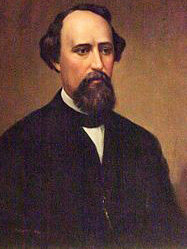
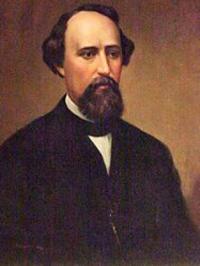

Thomas Clement Fletcher was born in the city of Herculaneum on Jan. 17, 1827. He was the first Missouri governor who was born in the state and one of only two born in Jefferson County. That alone sets him apart. During his term, however, the Civil War ended and the state, greatly divided during the conflict, began the long road of healing under his direction.
Missouri entered the United States as a slave state in 1821 as part of the Missouri Compromise, with Maine entering as a free state. During the Civil War, nearly 40 years later, Missouri, a border state, was claimed by both the Union and the Confederacy. It developed two competing state governments and sent representatives to both the U.S. Congress and the Confederate Congress.
According to the Washington Post, Feb. 21, 1899, Fletcher’s family members were slave owners, but Fletcher was an abolitionist since his youth.
Beginning his public service in the circuit clerk’s office at 17, he was elected to that position in 1849.
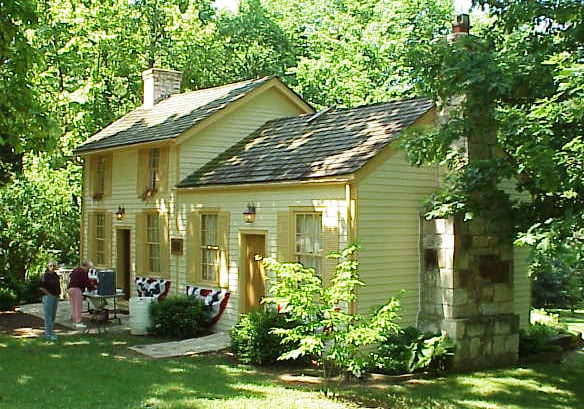
He built a house in Hillsboro in 1851 and lived there during the first four years of his marriage. The house still stands today, maintained by a foundation formed in 1994. Fundraising events and community gatherings are held throughout the year at the home.
Fletcher became a lawyer in 1857 and moved to St. Louis. He partnered with Louis J. Rankin and helped to lay out the city of De Soto. He bought a house and moved his family there in 1860, according to the Missouri Civil War Sesquicentennial website.
He was instrumental in forming the state’s Republican Party and served as a delegate to the Republican National Convention in Chicago, where he supported the nomination of Abraham Lincoln, according to the Missouri State Archives.
The Missouri governor, in 1860, however, was Claiborne Fox Jackson, a Southern sympathizer who was pro-slavery and a supporter of secession. He had won the election portraying himself as a moderate and a supporter of the Union, but once elected he pushed for secession. Most Missourians, however, wanted to remain in the Union. Undaunted, Jackson prepared a militia with the hopes of capturing the St. Louis arsenal. When Union commander Nathanial Lyon captured a militia training camp named after Jackson near St. Louis, both sides prepared for war, according to the State Historical Society’s “Historic Missourians.”
Jackson called for 50,000 state volunteers and Lyons led forces to capture the state capitol, Jefferson City. Jackson, his supporters and most of the state legislature fled. The state convention removed him from office and a provisional governor, Hamilton Gamble, was put in place.
Meanwhile, Fletcher was fighting for the Union. He served as assistant provost marshal general in St. Louis before receiving his commission as colonel of the 31st Missouri Volunteers in October of 1862, according to the Missouri Civil War Sesquicentennial website.
“Those volunteering for the Thirty-first were from Jefferson County and included his brothers, William and Carroll. Fletcher became their colonel, receiving his commission in October 1862,” the website said. “Fletcher saw action with Blair’s brigade at Chickasaw Bayou, north of Vicksburg, on December 19, 1862, where he was wounded and captured. He spent the next five months in Libby Prison at Richmond.”
Colonel Fletcher later commanded the 47th Missouri Volunteers under General Thomas C. Ewing at the Battle of Pilot Knob.
For his service at Pilot Knob he was made a brigadier general of volunteers.
Fletcher was elected in governor in 1864 and took office in January of 1865.
As Missouri was not included in Lincoln’s Emancipation Proclamation, it was Fletcher’s task to emancipate the slaves of Missouri.
The emancipation proclamation took effect Jan 14, 1865.
“After the proclamation was read on this date by George K. Budd, the St. Louis delegate of the convention, a 60-gun salute was fired, to announce that Missouri was free. That night there was a great fireworks display in the skies over St. Louis,” according to Slavery in St. Louis by Scott K. Williams.
The war ended in the spring of that year. Robert E. Lee surrendered to Ulysses S. Grant at Appomattox Courthouse on April 9, 1865.
Fletcher then worked to bring the two sides of the state together. As the war ended, citizens were required to swear an oath to the Union as a condition for voting and for working in certain professions. The effort was to limit the political activities of ex-Confederates and supporters. Fletcher worked hard for a constitutional amendment to abolish the practice but was unsuccessful. His term ended in 1869 and he returned to practicing law. He died in 1899 after an apparent stroke, according to the Missouri Civil War Sesquicentennial website.
Send submissions to LOOKING BACK to nvrweakly@aol.com or bring or mail them to the Leader office, 503 N. Second St., Festus (P.O. Box 159, 63028). Please include your name, phone number, a brief description of what’s in the photo and tell us how you came by it. Please also include when it was taken, where and by whom (if known). A new LOOKING BACK photo will be posted each week.