

The English colony at Jamestowne in what is now Virginia was established in 1607. Each year thereafter, supplies and colonists arrived to shore up the vulnerable colony.
In 1609, additional colonists traveled on the flagship Sea Venture. Among the passengers were John Proctor and his brother, Joshua. The crew and passengers were shipwrecked off Bermuda. Nine months later, after building two smaller ships and collecting extra food, they finally arrived at Jamestowne. There, they found the 50 survivors of the previous winter ready to abandon the colony; 100 had been alive the previous autumn.
Because the castaways had brought food and other supplies from Bermuda and other supply ships soon arrived, the colony was saved for the time being. Still, the fragile colony had to deal with financial problems, sickness, inexperienced settlers and a confederation of native tribes who spoke the Algonquin language. These Native Americans were sometimes helpful, sometimes hostile. With all those challenges, how could the colony survive?
Chapter 1 – Saving Mattanew
The young Powhatan boy had slipped into unconsciousness. His uncle carried him into a settlement across the river from Jamestowne in the late summer of 1615.
“Mattanew is sick,” the stranger told Englishman Jonas Kemp, who was pulling weeds from his kitchen garden. “Medicine man can’t heal.”
Then he laid the boy on the ground and stalked away.
“What am I supposed to do about it?” Jonas shouted toward the man’s retreating back.
“What’s going on?” his wife called out the window of their cottage.
“That Indian just left this child,” her husband called back resentfully.
Mary Kemp raced out of the kitchen followed by their two young sons.
She felt the boy’s brow and then his chest. “The poor child is raging with fever,” she said.
“Well, get him away from our sons!” Jonas ordered.
Mary poked and prodded the boy’s body and then explained: “We don’t need to. His leg is infected. See how swollen it is and there’s a line forming above the wound. This is nothing that will hurt us. Bring him inside and I’ll make him an onion poultice to draw out the infection.”
Mary mashed raw onions and then cooked them with a bit of lard and added a few drops of water. She placed a thin layer of dishcloth between the wound and the steaming poultice, then wrapped it so that the onion mix would stay in place.
***
A week later, Mattanew’s uncle returned. Hidden behind a tree, Comahum observed his nephew limping about, picking squashes from the Kemps’ garden, then taking them into the cottage.
Since both his parents have died, it might be better for him to stay here, the Powhatan reasoned. I already have many sons to work my farm. He is one less mouth for me to feed.
Ten-year-old Mattanew became part of the Kemp family. Jonas worked him hard on the farm but as his own boys grew, he worked them just as hard.
When Mattanew worked alone, Comahum would sometimes stop to visit with him. Each time, his uncle would encourage him to stay with the Kemp family, but also to remember the family of his birth. This confused Mattanew.
“Are the English going to leave us soon?” the uncle continued to ask on each visit.
“I don’t think they want to leave,” Mattanew would reply.
In three years, the question had changed to: “How many more of them have come to stay this time?”
When Mattanew would tell him, he would growl: “Just remember who you are,” before he stalked back to his nearby village.
***
By 1618, many more colonists had arrived from England: More carpenters, fishermen, blacksmith, masons and farmers. Settlements were being developed on both sides of the James River.
Englishman John Proctor was one of those settlers determined to stay. He and his brother, Joshua, had arrived in Jamestowne in 1610. For the first few years, they had lived in the fragile fortress and huddled together with the other settlers for protection. Later, they had moved inland a mile and helped to build Jamestown Citie.
In 1618, the Virginia Company had proposed a plan that would allow John and the others to be awarded more land of their own. John was looking forward to a bright future. He would soon be living on his own land.
Did you know?
The “headright” system was designed to attract new settlers to the colony that would later be called Virginia. By 1618, the Virginia Company had developed a policy that gave 50 or more acres of land to those men who could afford to pay for their own voyage to Jamestowne. If they were able to live on and develop the land for a specified time, they gained ownership. Those who had arrived before 1616 and who had lived there for at least three years were awarded 100 acres. John Proctor was one of those.
In England, a faction of the Virginia Company led by Treasurer Sir Edwin Sandys encouraged the integration of Native Americans into English settlements. Tribal families were to receive houses in the settlements and funds were established for a college for Indian youth to Christianize and civilize them. Unfortunately, many of the settlers held contempt both for the Indians and for the men in England who made decisions for them without having ever experienced their problems in the New World.
While the settlers thought of the Powhatans as having one supreme leader just as they had one king, the governance of the tribes was much less structured. Convincing Great Chief Powhatan to agree to a treaty did not guarantee that the other tribes would go along.
Chapter 2 – New colonists
By 1619, John Proctor had been awarded land across the James River from Henricus Citie. He had traveled the 50 miles upriver and had established a camp on his new plantation. His brother, Joshua, was given the job of overseeing the clearing of the fertile land along a creek where they planned to grow tobacco.
Having established his claim, John sailed to London to escort more colonists to Jamestown. He also intended to bring back his younger brother, Henry, and to look for a sturdy woman who would agree to be his wife.
***
In London, he married a shopkeeper named Alice. Together they traveled to the home of his birth in a village on the outskirts.
After a neighbor called out that John had just returned home, Henry rushed to greet him. In his haste, the redheaded youth ran swiftly down the muddy path to the road, upsetting the hens that were busily pecking for food along the way.
“Is it true?” he shouted. “Are you really going to take me to Virginia with you?”
John laughed. “Of course it is. I was sad to hear of our father’s passing, but since he is gone and Mother wants to move in with her sister, we have decided you should live with me.”
In the sunlight, Henry’s pale blue eyes glistened at the thought of the great adventure ahead of him.
“I have another surprise for you,” John said. “I want you to come inside and meet my new wife, Alice. She will join us on our voyage home.”
“Wasn’t your other wife named Alyce, too?” Henry asked.
“Yes, but sadly she passed away in London before I could bring her to the New World,” John said. “This Alice will do well. She is young and strong. I may yet have sons to carry on our name.”
“Do you own much land there?” Henry asked.
“I do, brother, and you shall share in the building up of it into a grand plantation.”
***
As the sailing ship left from London on a warm day in July 1619, Henry waved goodbye to his mother and her sister on the shore.
“Will I ever see them again?” he asked.
“Perhaps,” John replied. “More ships are making the voyage to Jamestown all the time. I will need to return again in a year to bring more colonists to the New World so that I may extend my land holdings.”
“What’s it like in the New World?” Henry asked.
“Very different from the streets of London, my brother. Imagine a place filled with trees and woods and swamps. Then imagine that instead of streets of busy people buying, selling and rushing down to the docks, you will see only a few people at a time.”
“Why aren’t there more people?” Henry asked.
John cleared his throat, deciding how to answer that question without frightening the boy.
“There are some dangers in the new land. But don’t be afraid. Look, I’m here and safe and I’ve been living there since 1610.”
“What will our new home look like?” Henry asked.
“I don’t know,” John replied. “While I’ve been traveling, Joshua and some indentured servants and tenant farmers have been building shelters. We will soon clear out the timber, build many houses and begin to grow crops.”
John smiled then, a smile of confidence in the future.
“I believe the colony has been saved by the efforts of a man named John Rolfe. He has begun exporting an excellent variety of tobacco seed. Smoking tobacco is becoming popular here in England as a cure for many diseases. We will grow tobacco as well as food and sell it to buy the things we will need.”
“I’ve heard that there are savage Indians,” Henry said, his eyes widening in fear.
“Oh, you have. Well, most of them hunt game and grow crops like we do. They did act up a couple of years ago, but that’s all over now, so don’t worry.”
“John, I’m not feeling very well,” Henry said as the ship began to ride the ocean’s swells.
“You do look a little green around the gills,” John replied. “Within a few days, you will become accustomed to the rocking of the ship. For now, why don’t you go down to our berth and sleep for a while? Alice is already down there.”
Did you know?
The first tobacco plants were brought from South America to Europe by the Spanish around 1550. The Spanish conquerors had learned from the natives to smoke tobacco as a remedy for diarrhea, pain relief and as a narcotic. The Spanish had tried to keep a monopoly on tobacco. The person who smuggled the seed to John Rolfe did so under the threat of being put to death. In a time when herbs provided the only medical relief for most of Europe, the new herb was welcomed as a miracle cure for many ailments.
Chapter 3 – A new home
To John’s great relief and Henry’s disappointment, the six-week voyage from England to Jamestowne was uneventful. John found it difficult not to compare this placid journey with the unending lashing of the wind followed by the terrifying experience of running the ship aground on the shoals of Bermuda on his first voyage.
Alice quickly adjusted to the pitching and tossing of the ship and soon Henry had also gained his sea legs. He was surprised to notice that his brother’s new wife seemed very different from their gentle, soft-spoken mother. Alice was loud and rowdy with the crew, exchanging crude jokes with them at the expense of others. Sometimes he caught his brother frowning.
***
When the ship arrived at Jamestown in September 1619, few of the inhabitants cheered for the new arrivals. As the ship docked, John explained that during the early years, ships had been greeted with much greater excitement.
He pointed out that, in the past year, many new settlements had been established as far away as 60 miles up the James River, so the population had been scattered over a much wider territory. “Thousands of people live in this colony now,” John said.
“The buildings at Jamestowne appear to be crumbling away,” Henry observed. “How can the people defend themselves with a rotting fortification?”
“We hope we won’t have to,” John said. “The Powhatans have been our friends for some time now. We haven’t needed as much protection since Pocahontas married John Rolfe in 1614.
“Most of the Powhatans have been willing to trade their corn and game with us for metal tools. Besides, we have moved the Citie of Jamestown a mile away from the river and the newer fortifications we are building will be stronger.”
Henry was first to see a young man waving from the dock.
“Who is that?” Henry asked.
“That’s your brother Joshua greeting us,” John said. “You had just been born when we left on the Sea Venture. He’s 19 now.”
“We will be heading upstream to the Corporation of Henrico once I can find a boatsman to take us all,” John said. “It lies upriver more than 50 miles from here.
“I’ve already found one,” Joshua replied as he joined them. “We leave tomorrow.”
They all slept on the sailing ship that night. The following morning, John rounded up the dozen workers who had agreed to come to Proctor's Plantation with him.
***
“Please tell me more about where we are going,” Henry asked as they began sailing upriver the following morning.
“We will be living across from Henricus Citie,” John explained, below the falls on the south side of Falling Creek.
“Our land as well as the Citie is part of the Corporation of Henrico. When Sir Thomas Dale founded it, his men first built a palisade fence across the neck of a peninsula for safety.
“The Citie has three streets and seven acres of enclosed land for keeping livestock. There’s a church, several houses and some storehouses. There are also watchtowers and five block houses for defense.
“Land has been set aside there for the first college in this New World and a charter has been obtained. Perhaps it will be built in time for you to attend, Henry.”
“Are there Indians?” Henry asked.
“Not too far away is another settlement. Henricus Citie used to be near an Arrohattock village but the Indians have moved north a few miles.
“Several smaller settlements lie along the James River within the Corporation of Henrico. Right now there are about 100 people living in the entire area. Only nine of them are women, but I have no doubt that Alice will be determined enough to thrive here.”
Alice smiled through clenched teeth.
“The earlier soldiers also built Mount Malady some distance from the settlements. Those new arrivals who are very ill are quarantined there. That’s as much a protection for us as a service for the newcomers. Soldiers guard the compound.”
“Could we use it if we got sick?” Henry asked.
“You could,” Joshua replied. “There are beds for 80 people but no doctor.”
“Our land has plenty of timber,” John said, “so now that we have more field workers, we can build shelters and barns as we need them. We will soon see how much Joshua has accomplished while I was away.”
Did you know?
Named Matoaka upon her birth in the 1590s, Pocahontas (her tribal nickname) was reportedly one of Chief Powhatan’s favorite children. She first caught the attention of the English when she and other Native American children began visiting Jamestown.
John Smith described her as playful, spirited and smarter than the other children. Later, Pocahontas was credited with saving Smith from death at the hands of her father.
With the settlers fearing the Algonquin Confederation led by Powhatan, Pocahontas was captured and made a hostage in 1613. Fearful of reprisals from Powhatan, the Jamestown leaders turned her over to Sir Thomas Dale at fortified Henricus Citie.
Rev. Alexander Whitaker was given charge of her upbringing. He instructed her in Christianity and tutored Pocahontas in the English traditions. While living at his home, she converted to Christianity and was baptized.
Whitaker probably introduced her to John Rolfe. The couple married in April 1614. After their marriage, Powhatan signed a peace treaty with the English settlers.
In 1616, Pocahontas traveled to England with her husband and infant son, Thomas, While there, she contracted an illness (possibly tuberculosis or smallpox) and died at the age of 22.
Chapter 4 – River highway
By the time he had turned 14 in 1619, Mattanew had moved with the Kemps to a newly founded settlement at Shrewsbury south of Paces Paines. The young man had realized that he would always be different from his adopted family. Still, he was grateful to Mary and Jonas. He had learned to speak the strange tongue that the Kemps called English. When a visiting minister gathered members of the community for church, Mattanew was encouraged to accompany the Kemp family. Eventually, he became a Christian and he also learned to read the Bible.
His uncle continued to visit him occasionally but those visits were often unpleasant for both.
“Why do you hate the English so much?” Mattanew asked.
“I hate all of them who sail into our river,” Comahum replied.
“Many times ago, the Spanish sailed up our river and began to build a settlement. With them were black men forced to do their bidding. Those Spaniards were cruel and greedy. They captured our men and forced them to bear their burdens. Sometimes they tortured our people trying to get them to tell them where the gold was hidden. There is no gold here. Finally, so many of the Spaniards died of swamp sickness that they went away.”
“But the English are different,” Mattanew cried out.
“No my nephew, even the kind ones push us away from our good farming land, fish in our streams and kill our animals for food. We only want for them to go away.”
***
Upstream on the James River, the party lead by John Proctor neared Shrewsbury. From the boat, the passengers could see many temporary shelters. All that had been solidly built so far was a stubby block tower and a high wooden fence with a row of soldiers’ quarters set against it.
Outside the fence, men were building small cottages and one larger building that would someday serve as a church, school, government office and hospital.
Upon landing, John stepped off the boat to speak with a friend he spotted. While he and an older man smoked their pipes and discussed the local politics and happenings, Joshua and Henry became bored. They followed the aroma of cooking food to an outdoor summer kitchen.
“That smells good,” Joshua said to a woman stirring a kettle with a long pole. “What’s in it?”
“Just about anything you can imagine,” the woman replied. “Some fish, some turtle meat, a little salt pork left over from someone’s sea voyage along with squash, lima beans and Indian corn. We eat whatever we can find. Takes a lot to fill the stomachs of a working crew of men.”
“Is the food done yet, Mary?” one of the carpenters called. “It’s near time for the men to return from the tobacco fields. May not be a very good harvest this year. Been too wet. But when we complete the barn, we’ll cure what we can harvest and make some profit.”
Just then a group of sweating workers appeared, looking tired and dirty.
“Do you all live here together?” Joshua asked.
“We do now,” one of them said, “until we clear the land and plant crops. Most of us hope to move inland and claim our own farms later.”
“May we have some of the food too?” Henry asked.
“The masters will be eating first,” Mary said, “then the indentured servants. But since you are guests, take a gourd bowl and help yourselves now.”
As Joshua and Henry sipped the salty broth and then picked out chunks of meat, fish and vegetables from the bowls with their fingers, they looked around at the gathering men. The lone young man with the straight black hair stood out.
“Is that an Indian?” Henry whispered.
“I suppose he is,” Joshua replied.
Joshua set down his empty wooden bowl near the fire pit and walked over to the young man.
“What’s your name?” he asked in a friendly voice.
“I’m Mattanew,” the youth replied.
“You like growing tobacco?”
“My ancestors have grown tobacco for times and time again,” Mattanew replied. “I’m showing these men how to do it.”
“You speak English well,” Joshua said.
“I have been with my family for four years, Mattanew replied. “Mary who cooks this food is my adopted mother.”
Mattanew pointed to two teenage boys. “Those are my brothers, Andrew and James Kemp.”
“Time to move on,” John called.
“Hope we see you again someday,” Joshua said.
Did you know?
Many new settlements such as one called Shrewsbury were financed by London investors. The plantation's 20,000 acres had previously been part of the territory of an association of Native American Tidewater tribes led by the Great Indian Chief Powhatan.
Chief Opechancanough, a relative of Powhatan, was thought to have been captured and educated by the Spanish in hopes he would convert his fellow tribesmen to Christianity. Instead he learned to mistrust Europeans because they abused native populations and made war. Although the English thought of him as the head chief after Powhatan’s death, his control over the various local tribes in the confederation turned out to be much less effective.
While we have many records written down by the English and Spanish, we can only piece together the lives of the Native Americans by their own traditional stories or by the often hostile writings of the Europeans.
The first account of the tobacco plant’s presence in the New World was recorded by Thomas Hariot, a tutor and advisor to Sir Walter Raleigh on Raleigh’s second English expedition in August of 1585. Having been instructed by Raleigh to survey the new possession and report on its natural resources, Hariot described a tobacco plantation in a Virginia Indian village in the book: “A Briefe and True Report of the New Found Land of Virginia” (London, 1588).
Chapter 5 – Should we be afraid?
As the Proctors continued upriver, the riverbed narrowed.
“Why have so many of you moved upriver?” Henry asked. “Wouldn’t it be safer in Jamestown Citie?”
“At the moment, many of us fear the Spanish more than the Powhatans,” John replied. “They have claimed much land south of here and have established several fortresses along the coast. They continue to threaten our coastal area and ships. We are much safer here, further from the swarms of mosquitoes at Jamestowne, too.
“These trees grow too close to the river,” Henry noted, looking around warily. “If Indians wanted to hurt us, they would have many places to hide.”
“That’s true,” Joshua replied. “But we could probably outrun them. This river is our highway. There are settlements growing up all along it.
“But Henricus Citie was the earliest,” John broke in. “Eight years ago, Sir Thomas Dale led 300 soldiers up here to build the Citie of Henricus. The Virginia Company expects the town to become the capital of the colony. When we visit there, you will see an established community. Not like what you saw at Shrewsbury, where they are just beginning to build.
“Like many other plantations, Shrewsbury is part of a corporation supported by a group of London investors who have obtained their land from the Crown. These investors expect the builders of our towns and villages to make them a profit.
“Henricus is different.” John continued. “Many generous Englishmen have given the Virginia Company donations for the project.
“At Henricus, the town has a charter and will soon begin to build a university. After the college is well established, we will even allow the natives to attend, and civilize them as Mattanew has been civilized.”
“Henry, I promised our mother that I would see that you received a good education there.”
Henry groaned.
“We could build up this colony much more quickly if the Virginia Company wasn’t sending us so many colonists from London who have little idea how to farm or build houses or how to work with herds of sheep or goats,” Joshua said.
“I had to learn about building a colony and you will too,” John added. “You will get more than a classical education living here.”
“I hope there are some women nearby,” Alice interrupted. “I haven’t seen many so far and those I have seen look work-worn and exhausted.”
“That’s why I have brought servants for you,” John replied, smiling.
“Yes, you’ve brought thieves and debtors from the prisons. How long will it be before they rob us blind and or run away?”
“We’ll be around to protect you,” John promised.
“By the way,” John continued, “new colonists will be arriving on the ship Margaret in November. Their leader, Capt. Woodlief, is bound by his company’s charter to hold a day of thanksgiving when they arrive. Master Jones has invited us to come back then to join in a service to thank God for the bountiful harvest that so far is growing this year.”
“Hark! A group of four dugouts is approaching,” Joshua sang out.
“Will they hurt us?” Henry asked.
“Probably not. Act as if nothing unusual is happening,” John ordered.
Soon the party of Native Americans had passed by with no more than friendly waves.
“Why should we be afraid of the Powhatans?” Henry asked. “The one we met at Pace’s Paines seemed friendly enough.”
“Many members of the local tribes are willing to trade with us,” John answered. “But we must beware of their leaders who are often full of tricks. Since Great Chief Powhattan died, many tribes follow his nephew Openchancanough. We don’t know if we can trust him.”
***
By the middle of December, the men had built a snug one-room cottage for Alice and John with a loft for Joshua and James to sleep in. The servants continued sleeping in a large barn they had completed while John was away in England.
Joshua entered the warm cottage late one evening with news from the Berkeley Plantation several miles downstream.
“A couple of our soldiers have killed Indians they caught stealing food. Everyone is on the alert right now. To everyone’s surprise, Chief Openchancanough is still acting friendly. He told the authorities that the Indians killed were ‘worthless’ so there won’t be any reprisals. I suppose we have nothing to worry about.”
Alice pursed her lips but remained silent.
Did you know?
Henricus Citie was named for the son of King James I, Prince Henry. It was located on a bluff just below modern-day Richmond.
In 1524, Spaniard Luis Vásquez de Ayllon sailed up the James River. In 1526, he founded a small settlement close to where Jamestown would be claimed by the English 80 years later. The Spaniards used African slaves, the first recorded time slave labor was used on the North American mainland. The colony soon failed. Only a few very ill settlers survived the return to Havana, Cuba.
By 1618, the treasurer of the Virginia Company, George Sandys, was so worried that the Virginia colony might fail that he offered governmental reforms that led to a representative “general assembly” in Virginia.
In 1607, the Jamestowne settlers had held thanksgiving at Cape Henry, Va. Many other records of such observances exist. It is possible that some form of cooked crab was served at the first Thanksgiving celebrations in the New World.
The call for an annually held Thanksgiving was honored first at Berkeley Plantation in Virginia on Dec. 4, 1619. The group’s charter required that on the day of arrival they would observe a day of thanksgiving to God. That day began with the reading by Capt. John Woodlief of the proclamation: "Wee ordaine that the day of our ships arrivall at the place assigned for plantacion in the land of Virginia shall be yearly and perpetually keept holy as a day of thanksgiving to Almighty God."
Chapter 6 – A hard way of life
Two years had passed since Henry had arrived at what was now being called the Plantation on Proctor Creek. Alice had given birth to a son who died six months later. Much land had been cleared and corn and tobacco crops were growing. A barn, a shed, a baking oven and other small buildings now surrounded the tiny cottage. The area was enclosed by a high wooden fence.
Henry couldn’t help but notice that while he could sometimes go hunting or fishing, Alice’s life was an unending grind of cooking, gardening, baking, sewing, laundering, making soap and preserving food.
No wonder she seldom smiles, he thought.
Before John had sailed to England again, Henry had overheard their argument.
“I don’t like it,” Alice said. “You can see that our royal masters are dumping on us all the convicts and street urchins they can.
“Now Alice,” John replied, “some of those poor people make reliable helpers. The ones who don’t often run away into the wilderness, which is probably a blessing. Let the Indians deal with them. Anyhow, I want more land and returning to England for more settlers is the only way to get it.”
“While you are away, I’m the one who has to deal with the problems,” she said. “Two more of our servants have disappeared.
“You are a capable woman, my dear,” John replied, patting her shoulder.
***
Four months later, John returned with five new adult helpers and an 11-year-old boy. When they had time, Henry and Nat went fishing together.
“I didn’t want to come here,” Nat said. “But both my parents died and the London judge said there was no more room for apprentices.”
“May as well make the best of it.” Henry advised.
“I’ll run away,” Nat threatened.
“Why?”
“Because of your brother’s servant, Caleb.”
Nat took off his shirt.
“He beat me with a rope,” he said, showing the red stripes on his back.
“I’ll talk with John about this,” Henry promised.
***
Winter came and went. In late March 1622, Mattanew was wakened by a series of soft whistles. He wrapped himself in a blanket and hurried out to the yard, shivering. His uncle was waiting for him behind the tobacco curing barn.
“It is time for you to be a Powhatan,” Comahum growled.
“But uncle, the Kemps are my family, too.”
“That may be true, Mattanew, but many English who come here were thieves and murderers in their own country. Here, they also commit such crimes secretly on our people and deny it when we accuse them before the judges.
“When the English first came, we welcomed them as guests and exchanged food for metal tools. But then more came and competed with our hunters for food. You know that I have had to move twice. The armed soldiers pushed our village out of our good farms. We moved rather than fight with them.
“Some English are good and trustworthy. Some like John Rolfe even took brides from among us. But others still don’t act like guests. They think of themselves as better than we are and do not respect our way of life.
“Even when we work for them in their fields, they treat us with contempt, calling us savages and trying to convert us to their angry god. Our sacred ways have kept our tribes alive. Now we have overheard that they want to take away our children and raise them as proper Englishmen.”
“But Uncle, many of the English workers tell me they were hungry in their own country. Here we all have an abundance to share.”
“Will they share with us when they become more numerous? I no longer believe so, Mattanew.”
“We are planning an attack tomorrow. It matters not how kind your master has been. When it begins, you must kill him and his family. Then you must run and join us or you too will be killed.”
After his uncle had slunk away into the night, Mattanew tried to convince himself that Comahum was lying about the attack. But after two tortured hours, he woke Mary. She told Jonas, who warned other settlers, then packed his family into a boat and headed to Jamestown Citie to spread news of the threat.
Word spread quickly to nearby settlements but not far enough upriver to warn those in the area of Henrico Corporation.
Did you know?
In 1622, the population of the Powhatan allies was roughly 20 times that of the entire Jamestown colony.
Members of the Virginia Company assumed that Openchancanough and the Powhatan Confederation had accepted the presence of the colonists. They didn’t understand that the new chief for several years was watching warily as many more colonists arrived each summer and settlements spread out until they dotted the shores of the local rivers.
As Openchancanough concealed his fears, he made plans to contain or exterminate every Englishman in the colonies.
At one point, Opechancanough was said to have asked a medicine man to supply poison to use against the colonists. The medicine man refused and later informed a colonial leader.
He also warned the leader that the Powhatans were thinking about staging an uprising. Just as that time came, two Indians were killed by colonists. Opechancanough put off his plans, fearing that the colonists would be on alert if he protested. He pretended the killings didn’t matter and bided his time until the following spring.
Chapter 7–Attack!
On the day before the attack, small groups of Powhatans visited many of the smaller settlements upriver. They brought welcome gifts of meat and dried fruit and shared these with the settlers. Then they spent the night.
The following morning, On March 22, 1622, the Powhatans continued their friendly visit with the settlers before suddenly seizing their hidden weapons and even the settlers’ own work tools to attack them. First, they killed all those in the villages. Then they spread out and attacked the unarmed field workers.
***
Alice Proctor rose before dawn that morning. She dressed, washed her face and hands and headed out to milk the goats in weather unusually warm and humid for the season.
Henry, sleeping with Joshua in the loft, wakened when he heard her slip out. He followed, leaving Joshua asleep.
He intended to ask her, “Is there news of when my brother will return?” John had again left for London the previous fall.
Henry had almost caught up with her when he noticed a usually friendly Arrohattock peering from behind a tree. In his hand was a raised tomahawk. Henry doubted what he had seen in the dim light. Then the man whistled like a bird and many other whistles were returned.
Hearing that, Henry ran to Alice’s side, grabbed her hand and dragged her quickly back inside the fence of the cottage.
“Indians,” he whispered as she began protesting.
He rang the bell three times three, the signal for an alarm. Hastily, the five indentured servants who had been sleeping in the enclosed barn joined them in the cottage armed with muskets and small swords.
A moment later, a dozen Indians attacked. They quickly scaled the tall wooden enclosure. Alice grabbed a blunderbuss, cautiously opened the shutters of one of her kitchen windows and fired a shot, dropping one of them.
“Henry, get over here and reload for me,” she ordered, grabbing a loaded flintlock musket.
Joshua and two servants took turns firing with muskets from a small window in the loft. Soon the warriors withdrew beyond the wooden fence.
“Do you think they’ve given up?” Henry asked.
“No, I don’t,” Alice replied. “So pay attention.”
“Should we try to run to the boat?” Joshua asked.
“No Indian is going to scare me away from my home,” Alice snarled.
Half an hour later, those in the cottage began to smell smoke. Near the floor, the wooden framing began smoldering.
“Seems one of them has scaled the fence and placed a pile of tinder near the outside wall of the cottage,” Alice cried. “Bring water.”
Nat picked up a bucketful from the kitchen. Joshua used it to soak a blanket and threw it onto the smoking wood.
Alice opened the shutters a crack to see what was going on. A surprised Indian was standing there with a hatchet. After she dodged the spinning hatchet, Alice shot him, then slammed the shutters.
Inside the settlers waited. Soon another section of the wall began to burn.
“What can we do? Joshua whispered. “We’re out of water,”
The trapped colonists could only wait and imagine what their foe was anticipating.
“Pray,” Alice ordered.
She had no more than said the words when a clap of thunder was heard and soon a driving rain began.
When the rain was over, the quiet was even more frightening,
“Will they come back?” Henry asked.
“I expect they will,” Alice replied.
***
No new attack came for some time. Crammed into the crowded cottage, the Proctors and their help grew restless.
“I left some barrels of water outside to catch rainwater,” Alice whispered. “One of you must bring them in.”
The servants eyed each other warily.
“You go, Tom,” Alice ordered. “You can run the fastest.”
Tom managed to bring in the first two barrels without incident, but as he went out to get the third, Joshua spotted an Indian hanging over the fence. The arrow ripped through Tom’s leg just as Joshua fired from the loft. The Indian fell out of sight.
“That’ll teach them,” Alice muttered.
Joshua quickly ran outside and dragged Tom back in.
“Henry, get that arrow out of Tom’s leg,” he ordered. “Then rub in marigold salve and bandage it tightly.”
Henry turned white.
“Do it,” Alice screamed. “And you two men set those heavy barrels against the door in case they try to break it open.”
Did you know?
According to a report written by Capt. John Smith (who was in England) on March 22, 1622, when the Indians attacked the sparsely scattered settlements along the banks of the James River, Alice Proctor single-handedly defended her family home.
Smith was noted for his ability to deal fairly with the Powhatans. He was also noted for his knack of making a good story better. It is more probable that Alice had some help in holding off the attack. There is no doubt that she was a determined person.
After three days of attacks, Chief Opechancanough ordered his allies to move away from the area. He had not been as successful as he had hoped and now was beginning to fear organized reprisals by the survivors.
Chapter 8 – Losing everything
For the following two days, Alice, Joshua, Henry and the servants continued holding off small parties of marauding Arrohattock.
“I don’t understand,” Henry said. “They were so friendly last week, bringing us those big chunks of deer meat. Why have they turned on us?”
“I think they intended to deceive us,” Alice said, her voice harsh with anger. “But I’ve never trusted them. It’s a good thing that John left us well supplied with ammunition.”
Their suspicions were confirmed on the fourth day, when a party of English soldiers arrived and the captain told them that attacks had been deadly at many of the smaller settlements.
“Seems like they hit these more recent settlements harder. Maybe the Indians resented that we were spreading out so far,” the captain said.
“A survivor from Martin’s Hundred told us that the Indians had eaten breakfast with them that morning and seemed unusually friendly. Then suddenly some of them grabbed the settlers’ tools and attacked. The settlers were taken completely by surprise.
“The lone survivor said that when he awoke with a terrible headache, they had left. They must have thought he was dead. When he looked around, he found that they had spared no one else. He quickly headed for the fortress at Jamestown.
“Mistress Alice, we’re relieved to see that you have all survived this sneak attack, but now the governor has ordered that all of you in this area must retreat to Jamestown Citie. We can’t protect you out here.”
“We will not!” Alice insisted. “They probably won’t come back but if they do, we’re ready for them! If we leave, those Indians might burn our home and crops and leave John and me with nothing to show for all our hard work.”
“We have our orders,” the captain insisted.
“Well then,” Alice pleaded, “take the rest but leave me here by myself. Someone has to care of the goats.”
In spite of her protests, the others were forced to help pack whatever they could carry. Two soldiers carried Alice, screaming and protesting, onto the boat.
***
Inside the crowded church in Jamestown Citie, Alice, Joshua and Henry waited for news, waited for John to return, waited to learn their future.
A survivor from south of Paces Paines added more information: “Although my family heard a warning and managed to escape, more than 50 settlers – men, women and children – were killed. The warning didn’t reach many of the small outlying farms and settlements around us in time. The Indians burned all of their buildings and destroyed the livestock and crops.”
“I dread to hear that the same has happened near us,” Alice replied.
“I’ve heard that there were at least three warnings by friendly Indians,” Joshua said. “Even with that, the authorities are saying that nearly one in four of us was killed outright during the three days of the attack.”
“How can we stay in this hostile land if we keep losing so many settlers?” Henry asked.
“And don’t forget the 20 or so women who have been captured,” Alice added. “I shudder at their fate.”
***
Not long afterward, word came to the Proctors that Alice’s fears had come true. The Indians had returned and burned the buildings at Proctor’s Plantation and all their crops. At Henricus Citie, 17 English settlers had been killed and all the buildings had been destroyed.
Henry tried not to cry when they heard the news, while Joshua hit his fist against a wall.
“Just keep in mind,” Alice interrupted their silent mourning, “the Indians have lost fighters, too. They will lose more when our soldiers organize and attack their villages. We’ll never be safe while the Indians live nearby.”
***
For six weeks, the governor stayed in hiding. By late spring, most of the survivors had found shelter in fortified areas like Jamestown Citie. Guards had been posted around these compounds to avoid further attacks. By then, the shock of the sudden attacks had been replaced by anger. As the English buried their dead and took care of their injured, they also faced the loss of much of the cropland they had been cultivating and on which they had expect to grow food for the coming winter.
“So Opechancanough has gotten his way,” Joshua thundered. “He wants to starve us out, so he’s forced us back into these tight compounds. “Well, we won’t stay trapped forever.”
Did you know?
In a colony of about 1,200, at least 347 had been killed during Opechancanough’s uprising. Twenty of the 24 attacks were on upriver settlements, where the spread of the newer English settlements had intruded on the territory of the Powhatan Confederation. The older English settlements, especially Jamestown where Powhatan had allowed the English to settle, were not attacked with such destructive force.
Some colonists soon used the March 22 attacks as a reason to wage full-scale war against the Powhatans. Citing European rights of war, they felt justified driving the Powhatans off, taking possession of their cultivated lands and forcing the Indians to work for them without pay.
In the summer of 1622, concerned about the food supply for the following winter, the governor sent out representatives on ships to trade for grain to feed the colonists. They visited the far edges of Opechancanough’s territory and negotiated with Indian subchiefs who were not as loyal to him.
Chapter 9 – Reprisals
News of the massacre reached England three months later. Fearing the wrath of their investors if the colony was abandoned, the Virginia Company promptly shipped in more soldiers, supplies and weapons. King James also contributed weapons. Capt. John Smith threatened to return from London and lead the destruction of the Indians, but he didn’t.
Late that summer, the well-armed and now-prepared English soldiers and colonists launched reprisals, destroying entire Powhatan villages. They burned nearby Indians’ crops and killed indiscriminately. Only four colonists were killed during the operation.
By autumn, the Powhatans had retreated. Fearing more warfare, Opechancanough sued to enter into peace negotiations and offered to return the 20 captured women. To show that he was serious, he sent back the wife of a member of Virginia’s first legislature.
Winter brought an end to fighting on both sides. Hunger and displacement caused great hardships for both colonists and Powhatans.
Although the colonists were able to buy some corn from Indian villages further away, during the winter of 1622-23 the colonists ran short of food, bringing on malnutrition and disease. Nearly as many settlers died from disease that winter as had been killed during Opechancanough’s attack. Those who were left alive became desperate to reclaim their farmland in the spring and plant crops so there would be no shortage of food the following winter.
Now it was the colonists who pretended to want no more war. The English agreed to a truce in the spring of 1623 so that both sides could plant their crops. In May, a little more than a year after the attack, the leaders of both sides met.
After the closing remarks, the colonists offered a potent drink to the assembled Powhatans. The drink was tainted. Soon, most of the Powhatans became violently ill. Those who did not die were killed by the colonists. Some of the English took scalps. When they returned to Jamestown, they bragged of having killed Opechancanough.
However, Opechancanough somehow managed to escape. Still suing for peace, he eventually returned seven of the captive women. The fate of the other women was never learned.
Since he had learned English well, Mattanew had been asked to serve as a translator at the peace talks. Because he wanted peace between his family of birth and the colonists, he agreed. Tragically, Mattanew died along with his uncle. Although he had warned the colonists before the attack, after Opechancanough’s massacre, he had felt the hostility of the English survivors too strongly. He had bid a sad goodbye to the Kemps and rejoined his uncle. On hearing of his death, the Kemps mourned deeply the loss of their “son” and friend.
Epilogue
After John’s return, he, Alice, Joshua and Henry moved across the James River to Paces Paines. On June 25, 1623, the Virginia Company agreed to give John Proctor permission to transport 100 people to Virginia. He in turn, agreed to serve as an attorney for two London merchants to recover money they were owed by a colonist who had died.
By 1624, the Virginia Company had been dissolved. The king no longer had faith in its leaders’ ability to run a colony so he placed the colony of Virginia under his own control.
On Feb. 16, 1624, John and Alice Proctor and their servants were living at Paces Paines in a rental cottage. They were still there on Feb. 4, 1625, and were reported to be well provisioned and outfitted with defensive weapons in case the Indians returned.
In the summer of 1624, the only full-scale battle of the long conflict occurred. Sixty Englishmen landed near a key Powhatan location. For two days they fought to a stalemate.
While the struggle continued on the open battlefield, a few Englishmen burned the Powhatans’ fields, destroying many months of food. Having heard about the damage, the Powhatans gave up and moved on.
For the following eight years, Virginians staged regular attacks, killing few tribe members but carrying away large quantities of corn. The English routinely left just enough seed corn so that the tribes could plant another crop the following spring. Each year until 1632, the English looted the fields at harvest time. That year, a new governor signed an agreement to end the war.
Although about 4,000 people crossed the Atlantic Ocean from 1618 to 1624, the rate of deaths had been so great that the population of the colony had grown by only a few hundred people by 1624. Without the constant flow of new colonists, the Powhatan attack of 1622 might well have ended the young settlement. Instead, the survivors began building a new nation.
Did you know?
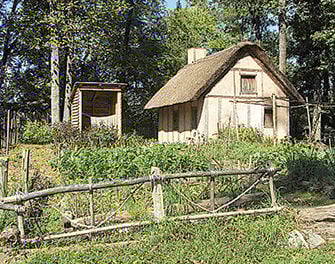
The Citie of Henricus as it might have been in 1611 is located near Richmond, Va. This living history museum contains 12 re-created English colonial structures. Interpreters in period dress tell colonists’ stories through “hands-on” demonstrations Visitors may be offered a chance to assist with cooking, blacksmithing, planting, harvesting or even joining the militia.
Henricus Historical Park also interprets the culture of the Arrohateck people of the Powhatan Indian chiefdom when the English colonists arrived in September 1611.
The village brings to life the daily occupations of the local Indians and demonstrates how these people were thriving at the time of contact with the English. More information is available at henricus.org.
The Colonial National Historical Park is a system that includes Cape Henry, Historic Jamestowne, Yorktown Battlefield and the Colonial Parkway. The Parkway connects Jamestown, Colonial Williamsburg and Yorktown. All these facilities are administered by the National Park Service.