

By Peggy Koch
A time of great economic turmoil began unfolding in the U.S. during 1929 and lasted until the beginning of World War II in 1941. For those who could not find work, it was a time of life-or-death decisions. By 1933, approximately 25 percent of all workers were without jobs.
Chapter 1 – The Parsonage on Central Avenue
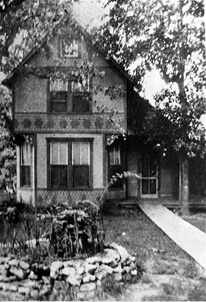
In early October of 1932, 13-year-old Clare eyed the white frame parsonage with both hope and suspicion.
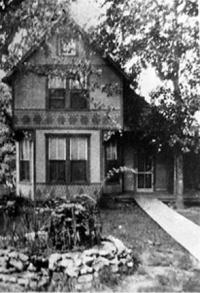
Clare, her mother and younger brother Ed were being given a tour of their new home by a smiling Elder Thomas. The family’s latest home-to-be was located next door to the sturdily built brick church in the town Eureka. Here, her father would be the new pastor.
On the east side of the parsonage stood a ramshackle cottage with a large chicken coop in the rear yard. On Virginia Avenue behind them stood a neglected two-story house complete with gingerbread trim and a sagging back porch.
Clare shivered.
“That house looks haunted,” she whispered to Ed.
“There’s no such thing as a ghosts,” he whispered back.
For the Milton family, moving was nothing new.
I’ve already attended seven different schools, Clare thought as they continued their tour. I guess I can handled one more change.
Then Clare turned her attention back to their new home.
“Does it have electricity?” she asked.
Her 11-year old brother snickered.
“Mind your manners, children,” their mother whispered.
“Yes, it does,” Elder Thomas answered in a cold voice. “It also has indoor plumbing.”
As he swung open the unlocked door, it squeaked loudly in protest.
“Have to oil the hinges,” the elder muttered.
Clare checked out the small parlor with one quick glance. She was pleasantly surprised to see two comfortable-looking chairs in it.
I’m glad someone realizes a preacher’s family likes to sit and read in the evening, she thought. In most places we’ve lived, they didn’t seem to think we should ever rest.
The tiny kitchen included a hand-pump at the sink, a wooden icebox, an elderly iron cooking stove and a table with just four chairs. Once again, Blanche was relieved that she had such a small family.
“Ice house is just down the street,” the elder added, motioning toward the icebox.
At that moment, the Rev. William Milton breezed in.
“Just noticed you’d arrived,” he announced as much to Elder Thomas as to his family. “I’ve been over in the pastor’s office writing my first sermon.”
Elder Thomas smiled.
“Fine place, isn’t it?” Rev. Milton boomed enthusiastically.
My husband could be comfortable in a cardboard box, Blanche thought, then tried to amend her thinking to be more charitable.
“Yes, just fine – so far,” she agreed.
“Sorry the house hasn’t been painted recently,” the elder said. “With the economy the way it is, well, you understand. The church board members are afraid to put out the money with donations so low.”
“Yes, seems no one wants to risk spending money to do repairs when no one is sure there will be more money coming in,” Blanche said. “But then that just makes matters worse, doesn’t it? More people out of work who could be painting houses and doing repairs.”
Clare watched as the elder’s face turned red.
Elder Thomas deftly changed the subject.
“Expect you’ll want the boy upstairs,” he said as they mounted a narrow staircase to an unfinished attic with windows at either end of the triangular roof.
“Room enough to stand in the middle,” the elder commented. But he was tall and had to bend forward a bit as he said it.
Clare looked out the back window. Behind it was the haunted-looking gingerbread house. Beyond, the vibrant colored ridgelines of early autumn were painted randomly in golden yellow and red.
“Please, I’d like to sleep up here, Mother,” Clare requested.
“But why?”
“I’ve missed the hills so much after living in the Bootheel for the last two years. If I could have a bed right by this window, I’d be so happy.”
The Rev. Milton smiled.
“Sure you can,” he said.
Downstairs, the elder led them back outside. While the others admired the large pumpkins in the garden, Clare studied the house next door. To the side of the lot, she could see dozens of chickens scratching for food in a fenced-in enclosure. Then she noticed a frowning face peeking out from behind tattered curtains.
Clare smiled. The face glared and shoved the curtains closed.
“Who was that?” Clare asked.
“Oh, That’s just the widow Henry. Don’t worry about that old witch. Her bark is worse than her bite,” the elder explained.
“Is she really a witch?” Ed questioned.
“Hush,” his mother whispered as she nudged him from behind.
LOOK IT UP
Parsonage: In times past, many churches provided housing for current ministers and their families. Some called the home a parsonage; others used the word manse. Some parsonages were furnished so that when a minister and his family were called to a new church, they only needed to pack clothing, books, linens and other personal items before moving.
Eureka: According to the Eureka Historical Society, the town of Eureka (then called Franklin) was established shortly after the Missouri Pacific Railroad opened a rail line to Pacific. The village was laid out in July 1853.
By 1890, the village had grown to contain approximately 100 homes. The town had a post office, three stores, a district school, two blacksmiths, a wagon maker, a saloon and two churches.
Most families supported themselves by farming and maintaining orchards. The town benefitted by being a crossroads to other settlements such as Glencoe and Allenton. Produce from all these locations could be shipped to shop owners and businesses in St. Louis by way of the trains that stopped regularly in Eureka.
Bootheel: The southeast corner of Missouri contains deep alluvial soil formed as part of a growing delta that reaches down the Mississippi River to the Gulf of Mexico. The land is unrelentingly flat and basement rocks are buried under deep soil.
Chapter 2 – Do you believe in ghosts?
“I’m afraid you offended Elder Thomas with your thoughts about the depressed economy,” Rev. Milton told his wife a few days later.
“Be that as it may,” Blanche replied, “when people who have money refuse to use it because they might need it later, they make matters worse. People who aren’t working don’t have money to contribute to the church or buy groceries. Buildings that need repairing get water damage and cost more to repair later. Everyone loses!”
“Look at this,” Rev. Milton said, changing the subject as he held up the newspaper. “Says here that another millionaire in New York City jumped to his death from a skyscraper. I guess he didn’t understand that God would see him through.”
“Why do people do that?” young Ed asked, wide-eyed.
“Some people are afraid of being poor,” Rev. Milton explained. “But we aren’t, are we?”
“Aren’t you worried, Daddy?” Clare asked.
“Everyone is concerned, daughter. But we won’t be bothered much living near so many farms. We have a roof over our heads and we are used to being paid in eggs and potatoes and canned vegetables when times get bad. Of course, I’m worried about how it will affect the church as a whole. It takes money to build new churches.”
“I’m worried about how it will affect my brother,” Blanche said. “Banks are closing all the time now. I wonder how Joel’s bank is doing. Small-town banks such as his are so vulnerable.”
“Who lives in that old haunted house behind us?” Ed interrupted.
“No one, son. And don’t call it haunted,” Blanche admonished.
“What should I call it then?”
“Elder Thomas calls it the Old Miller Place.
“Why doesn’t someone live there anymore?” Ed wondered.
“I think the elder said the owners had died.”
Ed smiled knowingly at his sister.
“Now, who could be knocking at the door at this time of the morning?” Blanche asked.
When Ed opened the door, he found himself face to face with a dirty little boy.
“I’m hungry,” the boy announced. “My momma didn’t feed me no breakfast and my daddy didn’t feed me nothin’ either.”
“Well, come on in and we’ll share,” Milton called from the table. “What’s your name, son?”
“Marvin.”
Blanche noted how well fed the child looked as she spooned out a bowl of oatmeal with cream.
“I’d rather have some of that bread and jelly, ma’am.”
“First you have to eat the oatmeal,” Blanche insisted.
Marvin picked up his bowl and began to lap it like a dog.
“Haven’t you heard of a spoon?” Ed asked, while carefully spooning his cereal into his mouth.
“This is faster,” Marvin explained, proud of his own logic.
“It’s hard enough attending different schools nearly every year,” Clare complained, “but even harder because we’ve already missed a month of instructions by moving here in October. “I’m not used to a big consolidated school district either. There are so many students. Some come from miles away. ”
“I know it isn’t easy,” Blanche comforted. “But that is how our life works. Your father doesn’t get his new assignment until early September. Then we have to be moved in three weeks. I was very sad when we found we had to move again after just two years.”
“The last place we lived, old Deacon Brown was in charge of keeping that Delco battery working so the town would have electric,” Ed explained to Marvin. “The lights were always going out. But he’d fix the church’s power first and we were next door, so we always got electric back right away.”
Marvin munched his toast, unimpressed.
“I think this is a nice town,” Clare mused. “I love hearing the sounds of the trains coming through in the valley and the growling of the ice plant, too.
“I got to go home now,” Marvin announced.
“Where is your home?” Blanche asked.
“There,” he pointed across the street.
Blanche wiped jelly off his mouth as he walked out the door.
As soon as her father had left for the church office, Clare cornered her mother.
“You know, since the leaves have begun to fall, I can see the Miller Place more clearly. Elder Thomas told us no one lives there but sometimes it seems the curtains sway. Then last night I noticed a dim light. Is it haunted?”
“It was probably a reflection,” her mother responded. “There are no such things as ghosts, child.”
LOOK IT UP
Great Depression: Economic problems first hit U. S. farmers in the early 1920s. During World War I, the price of grain skyrocketed because of the demand for grain to be shipped to war-torn Europe.
Seeking those greater profits, many U.S. farmers mortgaged their land to buy more land. By the mid-1920s, the shipping of grain to Europe had come to a near standstill as Europeans began to grow enough food for their needs. Unable to pay the mortgages, many farmers were forced to sell their land or lose everything to the banks.
Worse financing problems had surfaced by 1928. With few restrictions imposed on the stock market by the government, speculation and “buying on the margin” had became a common practice.
The risks had become obvious by February 1929, when the Federal Reserve announced a ban on bank loans to be used for margin trading. The ban came too late. By early September 1929, stock market prices peaked with the index at 452. Then came the crash. By November, the index had spiraled down to 224, half its peak value.
In consequence, at the end of 1930, 1,350 savings banks had suspended operations. Millions of small depositors lost everything.
Parsonage: In times past, many churches provided housing for current ministers and their families. Some called the home a parsonage; others used the word manse. Some parsonages were furnished so that when a minister and his family were called to a new church, they only needed to pack clothing, books, linens and other personal items before moving.
Eureka: According to the Eureka Historical Society, the town of Eureka (then called Franklin) was established shortly after the Missouri Pacific Railroad opened a rail line to Pacific. The village was laid out in July 1853.
By 1890, the village had grown to contain approximately 100 homes. The town had a post office, three stores, a district school, two blacksmiths, a wagon maker, a saloon and two churches.
Most families supported themselves by farming and maintaining orchards. The town benefitted by being a crossroads to other settlements such as Glencoe and Allenton. Produce from all these locations could be shipped to shop owners and businesses in St. Louis by way of the trains that stopped regularly in Eureka.
Chapter 3 – A feathered sermon
As usual, Blanche sat between Clare and Ed during worship on Sunday morning.
“Why do we have to move so often?” Clare whispered, just as the piano player began. “A girl in Sunday school told me the last minister stayed for three whole years.”
“That’s probably true,” Blanche explained in a whisper, “but your father is so good at keeping records that it seems they move us nearly every year. By the time we get them straightened out, it’s time to move again.
“Quiet now, youngsters, the music is beginning. And don’t fidget.”
All went well during the service until Clare’s father was halfway through his sermon. Then a commotion began outside the unscreened open windows of the church. First, there was a great flapping of wings as a rooster landed on a window sill. Congregants sitting on the nearest pew stood up to see what was going on.
Calmly, Rev. Milton continued presenting the second point of his three-point sermon, but not for long. Soon people began to laugh as a snowstorm of pin feathers drifted in. The word spread: The witch’s chickens have gotten out and she’s chasing them. Her dog is trying to help, but every time he gets near one, the chicken flies up out of reach.
That was too much for Ed and Clare.
Ignoring the stern warning look from their mother, both rushed to a crowded window. Outside, the widow Henry was awkwardly trying to throw a net over a protesting Rhode Island Red hen.
Seeing that he had lost his congregation’s attention, Rev. Milton climbed down from the pulpit and took off his coat. Going outside, he began to help the struggling woman. Still laughing, but looking a little guilty, several men from the congregation joined him.
Soon most of the flock was in the widow’s chicken yard. But instead of thanking them, the widow pointed at Clare and screamed, “She opened the gate and tried to steal my chickens.” Then she ran into her house muttering curses.
“What was that about?” her father asked Clare.
“I don’t know, I’ve never gone near the witch’s gate.”
“Her name is widow Henry,” Rev. Milton corrected his daughter. “Whatever her problems, we need to treat her with respect.”
“William, I don’t know when Clare would have had time to go outdoors this morning,” Blanche insisted later. “First she helped me with breakfast. Then I altered her dress for morning worship and she was in it. Perhaps our neighbor mistook another girl for Clare.”
“Perhaps,” Will repeated thoughtfully.
“May we walk down to the river?” Ed asked after lunch.
“You know we can’t, son. It’s Sunday, the Lord’s day. Get out your Bible.”
Ed’s face fell with disappointment.
Relenting, his father added, “Tomorrow we can eat by the river.
“Hooray,” Ed shouted.
Late Monday afternoon, the four Miltons headed toward the river bank.
“Cain I go too?” Marvin asked, out of breath as he caught up with them.
“I guess,” Blanche replied. “But go ask your mother first.”
“I cain’t. She ain’t home. Neither is my pa. They’re both working at the dairy.”
“Who watches you?” Rev. Milton asked.
“I watch myself,” Marvin boasted. “I’m a big boy.”
“How old are you?”
“Six.”
“Well, I’m 11,” Ed told him.
On a grassy area by a bluff, the family shared Dutch cheese sandwiches topped with chives spread on Blanche’s homemade whole wheat bread.
“You’ve got a piece of green on your front tooth,” Clare teased her brother. He wiped it off, then picked up a rock and tried to skip it. It topped the water twice before disappearing. Off went Ed and Marvin to find some flatter rocks.
“What Marvin told us about his parents is true,” Blanche confided. “Both work at the dairy. They’re saving every cent they can in case one or both lose their jobs. In the meantime, neighbors keep an eye on Marvin.”
“Why were you so nice to widow Henry Sunday?” Clare asked her father as they walked home. “She didn’t even say thank you when you helped her catch her chickens. And she lied about me.”
“We’re supposed to be kind to our neighbors, daughter.”
“Well, I don’t like her. Every time she sees me, she makes an ugly face.”
“Many people just need a kind word, Clare. People who have been hurt and are afraid of being hurt again often act as she does. We don’t know what others have gone through.”
LOOK IT UP
Many small dairy farms were established around Eureka and many homes had at least one cow. By the 1930s, a large commercial dairy located north of Eureka employed many local workers. Milk and butter were shipped by rail into St. Louis.
With poor or no refrigeration, milk often went sour. Dutch cheese was a good way to use the sour milk.
Dutch cheese can be made using 2 quarts of whole milk (sour) and 1 1/2 quarts of boiling water. The boiling water is poured into the milk and let stand for a few minutes. The mix is then turned into a cheesecloth bag and let drain overnight. The following morning it can be mixed with 2 tablespoons of butter and salt to taste, then formed into spreadable balls. Sage, dill weed or chives are sometimes added instead for extra flavor.
Chapter 4 – A thief in town
“I don’t know what this world is coming to,” Elder Thomas stated as he wiped snow from his boots and walked into the parsonage kitchen one wintery morning.
“Wanted to warn you. There’s been a sudden raft of thefts in town. Mr. Sutter is furious. Never heard so many complaints. Guess it’s those poor folks from over by Times Beach doing the stealing.
“What makes you think that?” Rev. Milton asked.
“Back in 1925, the Times newspaper bought some farmland out along the Meramec River. Sold tiny lots to readers real cheap. They could even pay for them by the month. Some buyers built shacks out there so they could stay by the river on weekends during the summer. But now, with money so tight, some of those buyers are living there all year-round because they lost their homes in St. Louis. Bet they’re the ones coming in to town and stealing from us.”
“It’s a sad time,” Blanche noted. “I suppose they are stealing food.”
“Yes, and even clothing and bedding.”
“Things they need,” Blanche commented.
“Most people want them run out or put in jail,” the elder replied with a scowl.
At few days later, Blanche laid down the newspaper near suppertime.
“Look at this headline, Will. Congress is talking about ending Prohibition. I want you to go down to the Post Office and get the postmaster to write a letter to our congressman telling him he should vote against it.”
“Why don’t you write it yourself, Blanche?”
“Because the postmaster has a government job. He writes letters for people all the time and our representatives tend to listen to him more than they listen to us.”
“I’ll go, Blanche, but I don’t think it will do any good. Ever since those gangsters were massacred in Chicago, even folks who don’t drink are saying something has to be done about the crimes the bootleggers are committing.”
“I don’t care. It is evil to drink even a drop of alcohol.”
“Speaking of crime,” Clare chimed in, “someone stole three outhouses and lined them up in front of the school building. Each outhouse had a teacher’s name cut into it.”
“I hope you didn’t laugh,” Blanche admonished. “No doubt it was some of the young men in the community. They should not be encouraged to pull such pranks. Teachers and principals should not show a sense of humor.”
“Sometimes they do, though,” Clare said. “One day last week our teacher had to leave early, so the principal was watching our study hall. I was done with my work, so I started reading quietly. But the story was so funny, I broke out laughing.
“The principal got up from his desk and walked over frowning. He picked up the book and I prepared to get a lecture. Instead, he smiled and said, ‘You’re reading Mark Twain. He’s an amusing fellow.’ Then he walked back to his desk.”
“I’m glad your principal felt that way,” Blanche replied, “but I’m not sure I would have been so charitable. Education is a great privilege, daughter. I graduated from Drury Teachers College 30 years ago when few women were allowed that opportunity. I don’t ever want you and Ed to underestimate the value of a good education.”
“I guess I understand,” Clare responded. “You were a math teacher for a dozen years before you married Daddy. You do take education very seriously, no less seriously than our father takes religion. And we surely don’t laugh about religion in this house.”
Blanche smiled.
“Where’s Ed anyhow?” Blanche asked. “It’s almost supper time. Just then Ed strutted in.
“I hope you boys are being careful at the railroad crossing on your way to school and back,” Blanche said, looking directly at him.
“Of course we are,” Ed replied, winking at his sister. He wrapped his hand tightly around the crossed nail “scissors” the boys had “made” on the way home by laying the nails on the railroad tracks. Soon a train had ran by, flattening them. The heat had fused them together.
Later that evening in Clare’s attic room, Ed showed off his “scissors.”
Then he added, “I walked home by way of the ghost house again today. There’s some kind of white cloth hanging at a front window that wasn’t there the day before.
LOOK IT UP
Silence in schools: It was enforced in most schools through the 1950s. Students used to the more relaxed environment of today’s schools may be surprised to learn how silent students were expected to be in the 1930s. To speak or laugh could cause the teacher to send a note home. For recurring offenses a child could be suspended from school. It was not uncommon for a principal to paddle a student for repeated offenses.
Post offices offered many services in the 1930s. In addition to handling mail, postmasters also sold stamps, savings bonds and defense stamps, answered questions about income taxes (after 1933) and wrote letters to congressmen for people.
Times Beach: The price of a Times Beach lot in 1925 was $67.50 for a 20-by-100 piece of ground near the Meramec River. An installment plan was available. Purchases could be made for as little as $10 down and $2.50 a month. Buyers also had to subscribe to the St. Louis Star-Times newspaper for at least six months. Membership in the community center was included as well as the use of parks, bathhouses and the mile of beachfront. Hundreds took up the offer at the time.
Prohibition: The ban on making and distributing alcoholic beverages had seemed like a good idea to many people in the early 1900s who noted the relationship between drinking and broken families. But with the elimination of the legal production of alcohol, illegal breweries and distilleries sprouted up nearly everywhere during the 1920s. In many locations, crime syndicates took over the distribution. Scandals erupted when some elected officials were found to be taking bribes to protect the bootleggers.
On Feb. 14, 1929, seven gangsters were murdered in a street war between two Chicago gangs. The newspapers called it “The St. Valentine’s Day Massacre.” Photos of the machine-gunned bodies brought the general public into awareness of how out of control the enforcement of Prohibition had become. The general public began to feel it was safer to tax alcohol than to try to stop its production. Prohibition officially ended on Dec. 5, 1933.
Chapter 5 – More troubles for Clare
“I don’t feel well,” Clare said when she came home from school one day in early December. “My eyes hurt and I have a sore throat.”
“I believe you are getting the measles,” Blanche said after inspecting behind her daughter’s ears. “You feel feverish and those red blotches and spots tell the story.”
“I can’t have the measles now,” Clare wailed. “I’m supposed to play the piano for the Christmas pageant in two weeks.”
“If you have the measles, so will many other students, Clare. Your father and I have already had them but it won’t surprise me if Ed breaks out soon.”
“Well, at least that old witch can’t blame me for her problems for a while,” Clare mumbled to Ed as she lay in his bedroom with the windows darkened to protect her eyes.
Soon Blanche’s prediction became a fact. So many students became ill that the Christmas pageant was canceled that year.
December passed quickly into snowy January. Clare and Ed finally got over their measles. All seemed normal in the Milton household until Elder Thomas dropped by one day.
“The widow Henry is bothering me again. She claims that Clare is stealing her food,” he said.
“I’ve seen no evidence of it,” Blanche stated, looking worried. “And Clare has been home sick until this week.”
“The widow insists that yesterday, she saw your daughter sneaking away from her house with a Mason jar of green beans in one hand and a can of tomatoes in the other.
“I don’t pay that old witch much mind, Mrs. Milton. We all think she is ‘tetched’ in the head. But she sure is convinced.”
“But why would Clare do that, Elder Thomas? We have jars of food right here on our shelves.” Blanche showed him.
“Well, Mrs. Milton, there’s got to be an explanation.”
When Rev. Milton talked with Clare after school, she was dismayed.
“Ever since the widow first accused me about the chickens, I haven’t gone anywhere near her house. But how can I prove it?”
“I don’t know.”
Clare began crying: “I don’t like living here, Daddy. The other girls tease me about being so big for my age. They’ve all been friends for years and no one tries to make friends with me. Today one of the girls in my English class asked if I was a thief. She said everyone thinks I am. And they don’t think you are a very good minister if your daughter steals.”
“Be patient,” her father counseled. “The truth always comes out eventually.”
Then he handed Clare his clean hanky so she could wipe her nose.
“Come up later,” Clare whispered to her brother after supper.
As the moon rose, he tiptoed upstairs.
“Ed, don’t say anything to Mother but I think a ghost really does live in the Miller house. Nearly every night I see dim lights or moving shadows behind the curtains.
“Maybe we should sneak over and see what’s going on,” Ed said. “Only I don’t think ghosts cast shadows.”
“We’d better not,” Clare decided. “Someone would probably accuse me of stealing from there, too. But keep your eyes open!”
The thefts continued over the following month. Word was spreading that Mrs. Blair had hung out a star-patterned quilt in the frigid air to dry overnight and it was gone the following morning. The owner of one local store complained that he was missing several cans of Sterno. Then Mrs. Kelly reported that she had set some pies out on her porch to cool and one had disappeared. Even during church services, Clare could see some townspeople pointing toward her and then talking behind their hands.
In early March, Clare finally made a friend.
Frieda’s family owned a farm in the valley. It was Frieda’s job to deliver milk locally. One day, she asked Clare to go along on her early-morning run. From then on, Clare would ride with her in the family’s horse-drawn wagon as Frieda made her deliveries.
“I’m glad you are my friend,” she told Frieda as she wrapped her woolen coat more tightly against the cold morning air.
“It’s nice to have company,” Frieda responded.
“I’m glad you don’t think I’m a thief.”
“No, I don’t. My parents say it’s probably someone from Times Beach or that hobo village by the railroad tracks. Maybe someone there looks like you.”
LOOK IT UP
Measles: Because there are now inoculations against measles, this once-dreaded disease rarely occurs. Measles symptoms begin appearing a week or two after exposure to the virus. Symptoms may include fever, sore throat, dry cough and runny nose. The person may have inflamed eyelids and be sensitive to light. After about three days a fine rash may appear on the face first, along the hairline and behind the ears. As the rash spreads, the temperature may rise quickly. Complications can include pneumonia, ear infection, bronchitis, laryngitis or croup. In Clare’s time, antibiotics such as penicillin were not available to treat such complications.
Sterno: It was first packaged around 1900. A seven-ounce can will burn for about two hours and produces enough heat to warm food. It can also be used in a small area as an emergency heat source. Lighted, the heat comes from a fuel made of denatured alcohol. Gel is added, as is methanol, which makes the liquid too toxic to drink.
Chapter 6 – Suspicion grows
A few days later, Ed again climbed the stairs to Clare’s room.
“Burr! It’s cold up here, Sis.”
“Yes, it is. I can see you shivering. I thought heat was supposed to rise, but with so many gaps around the window frames, a lot of cold air gets in.”
“So why did you come up?” she asked as she passed him a spare quilt to wrap around his shoulders.
“I wanted to tell you that I sneaked into the haunted house just now and looked around. I did hear a ghost.”
“You what?”
“ I heard a ghost. You know. Just like in books.”
“Mother doesn’t let you read those kinds of books.”
“Mother doesn’t know everything.”
“So what did the ghost do, Ed?”
“First I felt a rush of very cold air. Then I heard this tinny-sounding voice whisper, ‘Get out of my house.’ ”
“What did you do?”
“I got out!”
“When?”
“Just now.”
“So you’re not just shaking because it’s cold up here, Ed?”
“Not exactly.”
“Are you going to tell Mother?”
“Are you kidding? I could get into a lot of trouble.”
“What a place to live, Ed, with a witch next door and a ghost across the yard. And our parents won’t believe us about either one.”
“I’ve had some bad news, Will,” Blanche told her husband at suppertime a few days later, “Here’s the round-robin letter from my family. My brother Joel says that he has had to close the bank he started 15 years ago.” Blanche looked up with tears in her eyes.
“I’m sorry to hear that, Blanche. How are his depositors taking it?”
“Joel says that he was able to pay each one of them the funds they had deposited.”
“I’m surprised,” Rev. Milton said. “So many bank depositors have not gotten back a penny of their savings. How did he manage to do that?”
“He’s had to mortgage his own house and borrow on his life insurance policy. Joel doesn’t want to lose his neighbors’ trust. He felt he couldn’t fail them.”
“That trust may cost him years of trouble, Blanche. But I admire him for what he has done. His faith will get him through, I’m sure.”
The following Sunday morning, while Blanche and Ed were getting ready to go to Sunday school, someone pounded on the door. The widow Henry was standing on the porch with little Marvin.
“That wicked girl of yours stole some ham from my root cellar this morning,” she screeched at Blanche. “Marvin saw her, too.”
Marvin nodded soberly.
“Clare isn’t here.” Blanche countered. “She left with her father early Saturday evening so she could play the piano at the church at Pond. He often spends Saturday night with a local family so that he will be freshly rested for Sunday morning worship. They won’t be returning home until after the evening service.”
The widow searched Blanche’s face, her mouth still half open.
“All I know is that a hunk of my ham is gone and Marvin and I are hungry,” she finally replied. With that, she stormed away with Marvin in tow.
“Well, what do you know?” Blanche remarked to Ed. “Looks like the widow is kind to at least one person in town.
On Sunday night, Rev. Milton and Clare arrived home very late. Blanche spoke as they came in the door:.
“It’s well past midnight, husband. Rain cause you problems?”
“It was really slippery driving. Then one place I had to go up a high hill. At one point the wheels kept sliding and the Model A wouldn’t climb any higher. I finally had to turn around and back up the hill.”
“Why?”
“The mechanic says it’s because the reverse gear is stronger. All I understand is I made it.
“I’ve got to get used to these steep hills again. At least I don’t have to carry big rocks on the floor of the car any more for when I need to change a tire. I can find rocks to block the wheels all over the place.”
“By the way,” Blanche added, “there’s more trouble here. The widow Henry came by again yesterday accusing Clare of stealing. Clare couldn’t have done it, of course, since she was with you. But I’m at my wit’s end with all this suspicion.
“I’ll have a talk with Mrs. Henry,” Rev. Milton promised.
LOOK IT UP
Round-robin letter: In earlier years, people from larger families who lived in different parts of the state or country depended on the mail to share family tidings. In the case of the Milton family, Blanche would write a letter to her sister Gladys, who would add her family’s news, then send both letters to their brother Joel, who would add his news. When the letter came back to Blanche, she would remove her first letter and add one with more recent news and so would each of the others.
The Great Depression: By the end of 1931, the New York Bank of the United States had collapsed and 2,292 other U. S. banks had suspended operations.
By December 1932, an additional 1,493 banks had suspended operations during 1932.
There was no federal protection. Savers often received little or no part of their life savings as banks collapsed. As many as one in four workers who had held jobs in 1929 were out of work by the end of 1932, causing great hardships to themselves and the families that depended on them.
Chapter 7 – Inside the Miller House
The Rev. Milton came home from the widow Henry’s house looking perplexed.
“ Blanche, I talked with Elder Thomas first about the widow’s accusations. He explained that as far as anyone knows, she has always told the truth and dealt fairly with her neighbors. She just isn’t a very pleasant person.
He told me the widow Henry became bitter many years ago after her husband died. She hasn’t been to church since. Doesn’t have any real friends in town. Keeps to herself.
“Her house is falling down around her ears because she won’t let anyone help her. She makes a meager living selling eggs or trading them for food.
“She curses people if she thinks they’ve dealt unfairly with her. That’s why some say she’s a witch. I do feel sad for her.”
“Have any of her curses come to pass, Will?”
“Not that anyone can say.”
“So, did you tell her that Clare was out of town with you when she claimed the theft happened?”
“I tried. I knocked on her door just now. She came out screaming at me to leave her alone and make my daughter stop stealing her food. I’m not sure she even heard me.
“I don’t know what’s going on but she sure sounds like she believes Clare is guilty.”
From his bedroom, Ed overheard his parents talking. Late that night, he sneaked up to Clare’s attic room after their parents had gone to bed.
“We have to do something,” Ed whispered to Clare.
“Yes, we do.”
“I wonder if the ghost in the Miller house is the thief,” Ed said. “It’s closer to the witch’s house than our house and ... look!”
Quickly, Ed pulled the chain and switched off the single bare light bulb.
In the dark, Clare stood up and they both stared out the window. By the light of a full moon, they could see a shadow moving quickly toward the Miller house. Then it disappeared.
“That didn’t look like a ghost,” Clare whispered.
The following morning, Ed told his mother he had to be at school early. As usual, he walked up the hill. As soon as he was out of sight, he turned back to Virginia Street and headed toward the Miller house.
It had snowed a few days before, but a warming wind had melted most of it and left the ground soggy. Around the door, Ed could see footprints clearly etched into the grassy mud.
That afternoon, Elder Thomas paid another visit to the Milton family.
“Rev. Milton,” he said, “the widow Henry was back again today swearing that she saw your girl raiding her root cellar last night. Some members of the church board are complaining to me that you haven’t done anything to stop your girl from stealing.”
“I can’t stop what isn’t happening,” the pastor said. “Remember when the widow accused her, and she and I weren’t even in town?”
“It’s your word against the widow’s. People are starting to believe her. What are you going to do?”
“I haven’t even been near the widow’s house,” Clare repeated after she got home from school. “And I promise I never will,” she reassured her father.
“But I didn’t promise not to go see what’s happening at the Miller house,” she confided to Ed later that evening. He had just reported seeing the footprints.
Late that night, the two of them stole out of the parsonage and crossed the muddy field that separated the two houses. Ed carried the family’s flashlight.
“How are we going to get in?” Clare said.
“I don’t know. But let’s try some windows.”
Ed held up a flat butter knife.
First he tried the parlor windows, but they were stuck tight. When he slid the knife under the sill of the kitchen window, the unlocked frame opened. Ed raised up the window and the two of them slipped in.
Inside, the kitchen smelled of recently-cooked ham.
“Look, there’s still grease in the skillet,” Ed pointed out. “But they are using Sterno to heat food with, not the stove.”
“We’d better go home and get help,” Clare whispered.
“No, let’s look around some more.” Ed edged toward the front hall.
“What are you doing here?” a quavering voice demanded. It seemed to waft down from the ceiling.
“Who are you?” Ed questioned.
“I’m Edgar Miller. My body is buried in the church cemetery. Now get out!”
LOOK IT UP
Root cellar: In the days before refrigeration, root cellars were used for keeping food cool in the summer and protecting vegetables from freezing during the winter. Along with root vegetables such as potatoes, onions, carrots, beets and turnips, other vegetables that could be kept included cabbage and winter squash. Salted meats also did well.
Chapter 8 – Confronting the Miller Ghost
The disembodied voice had startled Ed and Clare as they stumbled through the dark Miller house.
“What do we do now?” Clare whispered.
“I don’t know,” Ed replied, “but I don’t think that voice is a ghost.”
“Why not?” Clare wondered.
“Because ghosts don’t eat ham.”
“Ohhwheeewhwooo,” came a spine-chilling wail.
“I don’t think you are a ghost,” Ed shouted, trying not to tremble. “Ghosts don’t steal food.”
He panned his flashlight as he slowly walked down the hall and into the parlor. On the floor, wrapped in a star-patterned quilt, lay a man.
“Who are you?” Clare demanded.
“Please don’t turn us in,” the man whispered.
Suddenly, they could hear loud footsteps rushing down the stairway.
A voice shot out of the dark: “Leave him alone,”
Ed moved his flashlight in the direction of the voice. In the beam he saw the image of a young woman. Not only did she have a short, bobbed haircut like his sister’s, she also was about the same size as Clare.
It would be easy for someone to confuse them, Ed thought.
“Have you been stealing food from the widow?” Ed demanded.
“You mean the woman with the chickens?” the girl asked. “Why would I do that?”
“Maybe because you were hungry,” Clare suggested softly.
Ed pointed the flashlight on the older man again. He looked sick. His face was flushed and his voice was weak as he pleaded, “Please don’t let anyone know we are here.”
In the dim light, they could hear the young woman begin to sob. “You mustn’t tell anyone.”
“Why not?” Ed demanded. “My sister is in a lot of trouble because of you.”
“She is? Why?”
“Because everyone thinks she’s been stealing the food. Our father is a minister. That makes him look bad, too.”
The girl hung her head.
“I’m sorry. But what else were we supposed to do? Dad lost his job a year ago just after Mother died. He used to deliver building supplies in St. Louis but no one is building anything now.”
“Didn’t he look for another job?” Ed asked.
“Yes, he did. He followed every lead. But no one was hiring. I cleaned house for a neighbor until she finally told me she had no more money to give me. Then the bank took away our home. We were evicted with nowhere to go.”
“Wouldn’t your family help you?” Clare asked.
“Dad doesn’t have any family and my mother came from Minnesota. Her family doesn’t even know us.”
The girl continued. “We hopped a freight train in St. Louis, with nothing but the clothes on our backs and the few things we could carry. Camped out by the Meramec River until it got too cold. Lived on fish and sometimes corn from a farmer’s field. I was scared the whole time. Hobos built a camp close to us. There are so many men riding the rails these days, looking for work wherever they can find it.
“Late this fall when it got too cold, we hitched another ride and got off nearby. Found this empty place right away.”
“That’s like stealing isn’t it?” Ed asked.
“Why shouldn’t we use it?” the girl challenged. “No one else was and we had nowhere else to go.”
“But haven’t you been cold here?” Clare asked. We’d have seen smoke from the chimney if you’d had any heat.”
“That’s right, it is cold in here. Believe me, though, it’s warmer in here than it is outdoors. Only now I don’t know what to do. Dad is so sick and we have no money for a doctor.”
“But you really need one!” Clare insisted.
“Dad was getting really sick when we came here,” the girl continued. “He’d cut his leg on a barbed wire fence. It didn’t bother him much at first but then the infection began to spread. Now, I don’t know what’s going to happen to him.”
“I know our father would help you,” Clare reassured the girl. “Let me go over and get him.”
“No,” the girl replied. “They’ll just put both of us in jail. Me, too, ’cause I’ve been stealing the things we’ve needed from all over town.”
“Look,” Clare responded, “your dad really needs a doctor’s care. I hope they won’t put you in jail, but I think you’d better let us find you some help in a hurry.”
LOOK IT UP
Route 66: The demand for better roads grew along with the popularity of Henry Ford’s mass-produced Model T and Model A automobiles. The efforts to complete the mostly-gravel highway segments that would be later be joined and called U.S. Route 66 were nearing completion in 1926. The road began in Chicago and was to extend to Los Angeles. The vast project was not completely paved until 1938. Even in the early 1950s, many smaller branch roads were still unpaved.
For many years, the town of Eureka has been associated with nationally-known Route 66 (now I-44). But the road did not run by Eureka in 1932. Most of the town’s people relied on the trains.
In 1930, Route 66 ran from Chicago through Illinois near what is now I-55.
From downtown St. Louis, Route 66 went down Market Street to Manchester Road (now Hwy. 100) to Grey Summit. In 1932, the route was scheduled to run down Watson Road (now Hwy. 366) as soon as Watson Road was completed. The route was again changed to pass Allenton (near Eureka) in 1936.
During the 1930s, many farmers, ruined by the drought and dust bowl conditions in Oklahoma and nearby states, eventually used Route 66 to reach California, hoping for a more prosperous life.
Chapter 9 – A risky decision
“I’m afraid your father will die if you don’t risk getting him some help,” Clare repeated.
The man on the floor of the Miller house groaned in pain.
“Are you sure your father will help?” the girl asked. “We’re not members of your church.”
“That’s not stopped my father from helping anyone,” Clare replied.
“But will he tell the sheriff?”
“Probably. He doesn’t believe in lying about anything.”
“What should I do, Daddy?” the girl questioned.
“Please get help,” he whispered.
“Ed, you’d better stay here while I find father,” Clare decided.
“What’s you name?” Ed asked the girl after Clare had left, not quite knowing what to say.
“I’m Amy Long. This is my father, Andrew.”
A few moments later, Clare returned with the Rev. Milton.
“The doctor will be here as quickly as possible,” the pastor told them. “He’s on his way home from treating a farmer with pneumonia. In the meantime, let’s get you both moved over to the parsonage. I put some logs on the stove so the kitchen will be warm. Blanche is heating up some tea.”
“I’ve cleaned the infection in his leg,” the doctor explained an hour later, “but this man needs better food and care.”
“And we can’t afford either,” Amy exploded.
“Well then people from the church will help you,” the Rev. Milton replied with quiet confidence.
Amy’s father was given Ed’s bedroom for the eight weeks it took him to recover. Ed, Amy and Clare shared the large attic.
“How long has it been since you went to school, Amy?” Blanche questioned.
“Since my father lost his job.”
“Well then, it’s time you went back.”
“But I don’t think I can do it,” Amy cried.
“We’ll all help you. Won’t we children?”
Clare and Ed nodded in agreement.
Soon Amy had been enrolled at the high school and Blanche was tutoring her to help her catch up.
“Don’t worry,” Blanche assured her, “I’ll take care of your father’s needs while you are attending class.”
“There’s so many like ’em, you can’t save ’em all,” Elder Thomas growled at the pastor. But he did so the day he brought the Miltons a sack of dried beans to help feed the extra guests.
The Rev. Milton smiled as he replied, “We all have to do what we can.”
The doctor had confided to the Rev. Milton and Blanche that at first he had expected Mr. Long to die. But as the green leaves of spring began to show, Mr. Long began to gain strength. Soon afterward, the Rev. Milton came home with some news for Amy.
“I’ve found a paying job for you if you want it, now that your father doesn’t need constant nursing.”
“Where’s that?”
“At the dairy in Crescent. You’ll have to start out by cleaning the barns but the manager says that if you are faithful in that, he’ll have someone teach you how to work in the greenhouse.”
Amy was overjoyed.
“That means I can begin to repay you for your kindness.”
“The best way you can repay us is to make restitution to the other people you’ve stolen from,” the Rev. Milton replied gently.
“I’ll start making a list,” Amy promised.
“Won’t she be punished?” Ed demanded.
“She’s already endured enough, son. The sheriff says he’ll be happy if she pays back what she’s stolen.”
“Amy, right now I want for you to go next door and apologize to the widow Henry,” the Rev. Milton said.
Amy began to cry. “I don’t think I can face her.”
Mr. Long had overheard the conversation.
“Is widow Henry’s first name is Zelda?” he asked.
“Yes, I think so,” the Rev. Milton answered.
“Then Amy mustn’t apologize...”
“Why not?”
“Because she might see Amy’s resemblance to me. I wouldn’t want to have Amy face that.”
“Face what?” the Rev. Milton asked.
Amy stopped cooking and stared at her father. Finally he spoke.
“Because she is my sister and she hates me. She’ll never forgive me. I was driving the wagon the day her husband died. I was going too fast and hit a large rock. Her husband flew out of the wagon and struck his head against another rock.”
Amy looked shocked.
“You told me you didn’t have any family, Father.”
“Zel’s the only one I have left. I knew she wouldn’t help us.”
“Perhaps you had better wait awhile Amy,” the Rev. Milton decided.
LOOK IT UP
Crescent: In addition to many smaller dairy farms, a branch of the Pevely Dairy operated in Crescent, a few miles northwest of Eureka. Dairy products were shipped to the Pevely Dairy facility in St. Louis.
The Crescent operation was begun by Martin Kerckhoff, one of 23 children of a German family that began dairy farming in Pevely before the turn of the century.
The Crescent operation also had a greenhouse where flowers were raised to be shipped to St. Louis for sale. In the early 1930s, eight to 10 boxes of flowers were shipped to St. Louis each Sunday morning.
Chapter 10 – A witch’s surprise
“How much longer do you think they will stay?” Ed whispered to his sister one day in late spring as they walked home from school. “I want my room back,”
“Amy and her father are really nice people but I’d like some privacy, too,” Clare said. “I think our parents would, also, but you can’t tell it by looking at them. Guess that’s what it takes to be a minister.”
“Or his wife,” Ed added.
Soon, the Rev. Milton made an announcement at the supper table.
“The elders and I have found out that a local banker owns the Miller house, Mr. Long. It was foreclosed two years ago. After we spoke with him, he told us that you and Amy may move back into the house if you will promise to look after it and do some repairs.”
“You got the banker to say that?” Blanche questioned.
“God works in mysterious ways,” the Rev. Milton responded, grinning. “So, do you think you are well enough?”
“I do. And I’m beholden to you. I’ve done a lot of carpentry around my house in the city. And yes, I’ve seen plenty of work that needs to be done at the Miller house. I’d be grateful for the chance.”
Before long, Amy and her father had moved back into the Miller house. Neighbors had donated bedding. They also helped to clean and polish the many furnishings that had been left by the previous owner.
Mr. Long was as good as his word. He and Amy quickly began repairing the rotting structures of the house.
It was two weeks later when the Rev. Milton dropped by and asked to speak with Amy as she was holding boards steady for her father to cut with a saw.
“I think you should apologize to widow Henry,” he told her, “even if she is unpleasant.”
Amy hung her head.
“I never meant it to hurt anyone. And the widow seemed to have way more food that she could eat. But my father still says I shouldn’t face her.”
“That’s right,” Mr. Long agreed. “Zel never forgives.”
But he was wrong.
As Mr. Long was working on the Miller house one morning in late June, replacing some rotted floorboards on the porch, he looked up to see the widow Henry staring at him from a distance. He turned his back to her, then picked up his hammer and began pounding nails into the new boards.
I’m older and I’ve grown a beard. I don’t see how she could recognize me, he thought.
When he finally looked up again, she had edged a bit closer and was frowning.
“Andrew, is that you?” she finally called out, adjusting her glasses as she stared at him.
Mr. Long froze. What should I do now, he wondered.
“Andrew!” Her voice was sharper.
“Good morning, Zel,” he finally blurted out.
She flew at him like one of her offended chickens.
He covered his eyes, then realized that she was not attacking, she was hugging him tightly.
“What are you doing here?” Zel demanded when she finally let go.
Slowly he told her the story of how he and Amy had come back to Eureka.
“You mean that Amy girl is your daughter?” She was astounded.
“Yes.”
“Well, you should be proud. She’s a good, responsible person. Amy sent the parson’s girl over to explain and pay me for what she’d stolen. But why did she steal my food, Andy? If I had known you two needed help, I would have given you anything I had.”
“I just couldn’t face you after your husband died.”
“You don’t understand, my brother. How do you think I’ve felt? My husband was dead. My only brother ran away. Suddenly I was alone in the world.”
“But the neighbors say you were angry with everyone. Cursed people even when they tried to help.”
“Can you blame me?” She looked into his eyes and he saw tears rolling down her cheeks.
“Now Andrew, what are you doing over here fixing up that banker’s property? You come home and fix up my place. It can be your home, too.”
Ed and Clare cheered and hugged each other when they heard what had happened. Blanche smiled as Mr. Long told them the story. The Rev. Milton raised one hand as if in benediction: “The Lord has provided again,” he said in gratitude.
Epilogue: Many years later, Clare, told the author: “We didn’t know we were poor because almost everyone else we knew was poor, too. But we lived close to the land so we had enough to eat and a room over our heads. Best of all, we had loving parents who handled their struggles with faith and grace.