


Paul Kopp of Crystal City vividly recalls the day in January 1991 when he handed out 150 pink slips at PPG, the glass factory that had been at the center of his community for a century.
While operations had been scaling back since 1984 – when PPG bigwigs in Pennsylvania announced that the Crystal City plant would close – the layoff in 1991 was the real “beginning of the end.”
As a last assignment before operations ceased, Kopp recalls, the workers did a “special run” of aircraft glass. It was a suicide job for the 16-year-old furnace, because the heat had to be cranked up so high, the furnace wouldn’t be good for anything afterward.
Sadly, that was OK.
A few dozen employees stayed on to prepare the plant for demolition, but by year’s end, they, too, got the ax.
The plug was finally pulled, literally, on Jan. 1, 1992.
As acting plant manager, Kopp, then 54, could have asked the crew’s immediate supervisor to handle the unpleasant task of officially dismissing all those employees, but he didn’t.
“I wasn’t going to dump that off on somebody else,” Kopp said.
He went from employee to employee, shaking hands and sharing hugs. Were there tears?
“Yes, definitely,” Kopp said. “Those were some great people we turned loose, under very difficult circumstances. A lot of those people were very high on my list.”
At 81, Kopp acknowledges that some memories are hard to summon these days. But not the ones involving the shutdown of PPG.
“Those are like a branding iron on my brain,” Kopp said. “I’ll never forget.”
An engineer from Wisconsin, Kopp was brought into PPG’s management program in his 20s and started at the Crystal City plant in 1964. He worked his way up the ladder to eventually become the boss.
In November 1991, Kopp and his wife moved to China, finishing his PPG career with a seven-year stint there.
During that sojourn, he talked with a visiting PPG decision-maker who inadvertently rubbed salt into the wound.
“He told me, ‘We made a big mistake shutting Crystal City down. We should never have done it.’”
Kopp believed that then and still does. Back in the 1970s, PPG had a choice: upgrade its plant in Mt. Zion, Ill., or the Crystal City plant. To their rue, they chose Mt. Zion, and spent $200 million in the retrofit.
A new glass-coating process installed there never developed properly, Kopp said, and the workforce was not the equal of the one in Crystal City. In fact, problems at Mt. Zion kept the Crystal City plant open for seven extra years after the company wrote its obituary.
Kopp said a 1990 proposal almost saved “Works 9,” so named because it was the ninth factory for PPG, founded in 1883 as the Pittsburgh Plate Glass Co.
“We made a proposal for a $24 million investment that would make us more competitive,” he said.
Company officials reviewed the plan and upped the amount to $37 million. It sailed through the approval process all the way up to the board of directors, but there, it failed. The price of glass at the time had sunk to a 20-year low, and the board wasn’t in the mood to spend money.
Farewell to the plant that gave birth to Crystal City – providing its first bank, its first hospital, its first school, its core identity. And with a payroll that peaked at 6,000 workers, it’s hard to overstate the factory’s impact on neighboring towns, too, and throughout the region.
Kopp took a vacation from his job in China to celebrate Christmas 1991 stateside. He made the familiar trip over to the plant on New Year’s Day.
“We had a little ceremony,” he said. “A couple of us got to push the buttons to throw the switches and terminate the power.”
One last job for the quintessential company man in the quintessential company town.
“It was sad, certainly, to see it go down after being operated for so many years,” Kopp said. “PPG purchased it in 1895, then shut it down in 1900 for a rebuild. They started a new process in 1905, and it had been operating continuously since then.”
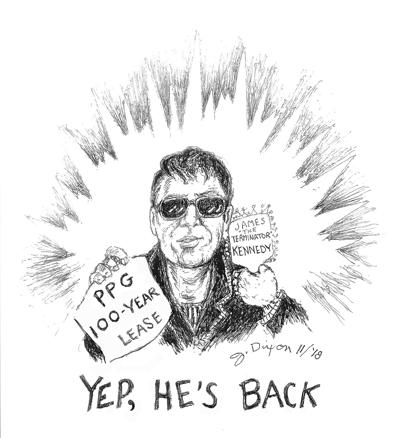
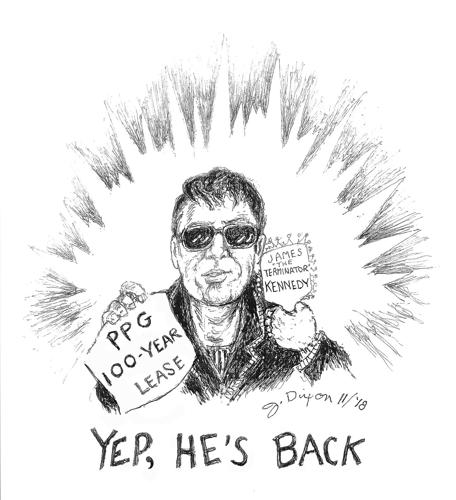
Kopp retired in 1998 and he and his wife returned to their Crystal City home. He said he watched “at arms’ length” the drama over Crystal City’s 2007 lease deal with Jim Kennedy, who paid the city $2.2 million for the opportunity to build and operate an iron-ore smelter on the old glass plant property.
Kopp wasn’t shocked when the smelter never materialized. He said details of the plan always seemed dubious to him, although he agrees with others that the property really is only suited for industrial use.
Demolition of the glass plant started in summer 1991, he recalls.
“They went through and jack-hammered the foundations, poking holes, but they left the foundations there and covered the area with 12 inches of backfill,” Kopp said. “If you took a shovel and dug down 12 inches, you’d hit concrete in many areas.”
His suggested business use takes that into account.
“I could envision it being a nice industrial park,” Kopp said. “You could have small businesses, the type where there would not be a great need for basements, that could be built on a slab.”
Bingo. That’s one possibility Crystal City officials would like to investigate, if they can get a judge to legally return the property’s lease to the city.
Standing in their way? That would be Kennedy, who ceded his interest in the lease in 2011, but has already obtained a court ruling that gives him a path to possibly getting it back.
He’s not gone, and he’s definitely not forgotten – not by Crystal City residents who ardently opposed the smelter or by those who supported it, but are irked that the old PPG property is just as barren and desolate today as it was 11 years ago, when the city signed with Kennedy.
Check out reporter Steve Taylor’s excellent package, starting on Page 1, that tells of the PPG tract’s past, present and potential future.
It’s a good read, although you’ll have to be patient to find out how it ends.
We’ll keep you posted.