
Youngsters who grow up to become a nurse, a teacher, a plumber or a bug exterminator can often tell you, later in life, what set them on their course – especially if they love their work and see it as a calling.
My own moment dates back to age 15. My cornet and I had earned a seat in the all-district band that rehearsed in the practically brand-new Field House at Jefferson College in Hillsboro.
The Publications class at Festus High School had just been invited to submit stories to the Daily News Democrat and I saw an opportunity. Nervously, I approached the band’s guest conductor, well known in the field, and asked him what he was enjoying about the experience. For some reason, I had a green felt-tip pen with me, and I took down his words on a scrap of paper.
It was my first interview, and a few days later, my first byline in my hometown paper. The piece of paper, pretty tattered now, still resides in my jewelry box.
I was a shy girl who found even phone calls intimidating. That moment of stepping over my fears to pursue a goal put me on my path. I would be a journalist. I went on to earn a bachelor of journalism at the University of Missouri in Columbia, eventually becoming a reporter and editor here in my home county.
Along the way, the ethic of what a newspaper should provide its readers came into sharp focus for me – factual, unafraid reporting on the news pages and a wide-ranging expression of opinions on the pages marked “editorial.”
I know I’m not the only one who holds those views of a newspaper’s mission. Good papers and magazines worldwide strive to follow the same core principles. We don’t truck in “fake news” and we don’t squelch opinions that differ from our own. We were taught differently.
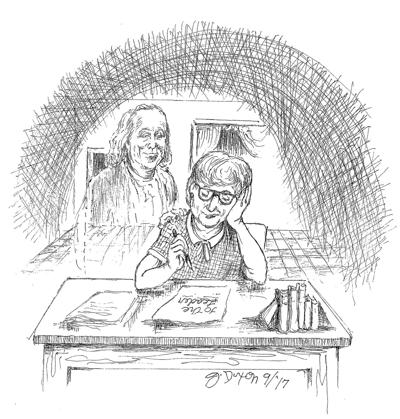
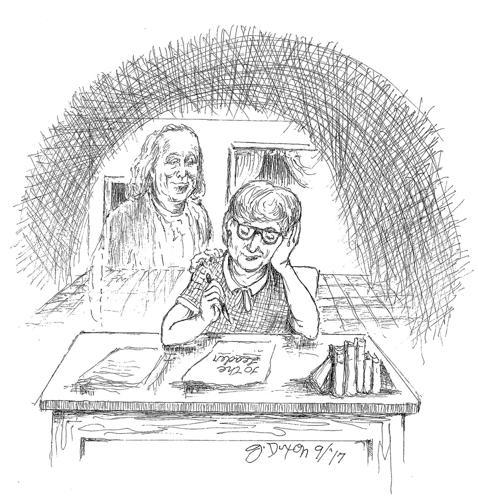
If you’d asked me a month ago where those bedrock journalistic values come from, I might have fumbled the answer. Now, I nominate Benjamin Franklin.
I’m reading “Benjamin Franklin: an American Life,” the Walter Isaacson biography of one of our country’s founders, among our best writers and most creative minds.
Turns out Franklin wrote an incisive defense of free speech in 1731, published in his Pennsylvania Gazette and called “Apology for Printers.” (In those days, journalists called themselves “printers,” and despite his many achievements, it was the primary identity Franklin claimed for himself.)
In his essay, Franklin declared that (people’s) “opinions are almost as various as their faces.”
“Printers are educated in the belief that when men differ in opinion, both sides ought equally to have the advantage of being heard by the public; and that when Truth and Error have fair play, the former is always an overmatch for the latter.”
Printers, he said, should publish an array of opinions, not just those they agree with. That being said, he left room for standards, and noted that submissions to his paper could not defame others or promote immorality.
Not everyone held with free-speech notions back then. Benjamin’s first job was as an apprentice for his brother, James, who published a newspaper in Boston and was jailed briefly because he dared to criticize Boston officials’ handling of a pirate crisis. (It’s been a while since we had a pirate problem in Jefferson County, but believe it or not, the Leader sometimes makes officials mad.)
Franklin’s 286-year-old advice on how to run a newspaper works for me and for the Leader.
I love reading the letters that people submit for our Opinions page, although it’s hard sometimes to decide which ones to include in our limited space.
I try to feature local writers (we have four zoned editions, so geography matters in the selection process), and an assortment of ideas, balanced as fairly as possible. If there’s a Trump supporter, we need to make room for a Trump detractor, if we’ve got both views in the hopper. Sometimes we don’t, but that doesn’t mean the paper is one-sided, it just means that’s the way the wind blew in a particular week.
I guess I’ve always known that people take the forum the Leader provides seriously, but I got two reminders last week.
Retired schoolteacher Edith Jenkins of Imperial was first. I called her to check a point she made in her letter that decried poor grammar. She revealed that she wrote four versions of her letter to the paper and weighed them, side by side, before selecting her best one to send in.
Then, I talked to L.J. McCabe of Festus, who sent a handwritten piece praising Donald Trump. Ms. McCabe said her arthritis prevents her from typing and because of her pain, it took the better part of two days to prepare the 300 or so words she sent us.
Those conversations were humbling to me and made me proud to be a “printer,” like old Ben.
In the two months since I started my new job at Leader World Headquarters our letter writers have impressed me with their effort, their word skills, their quirkiness and their passion.
Keep those opinions coming. You take them seriously, and so do we.