
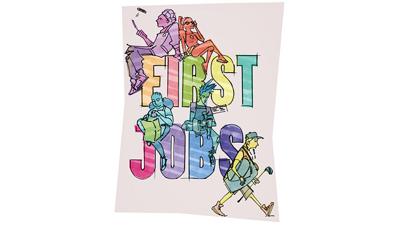
In honor of the upcoming Labor Day weekend, the Leader asked government and school officials and the leaders of first responder agencies to tell us about their first jobs.
And because we couldn’t let everyone else have all the fun, Leader staff members also shared their first job stories.
As you take some time to enjoy the holiday created to recognize the many contributions workers have made to America’s strength, prosperity and well-being, you might want to spend a little of it reading about how some of your neighbors began their working careers.
Dave Marshak, Jefferson County sheriff
At 16, I worked at a Maryland Heights apartment complex that used teenagers to perform landscaping and light maintenance. On weekends, I changed outdoor lightbulbs, trimmed bushes, picked up trash, spread mulch or just about anything else that needed to be done.
In the summer, I worked full time with college kids returning home for the break. With more staff, management designated each of us three apartment buildings to maintain. I worked hard to exceed expectations, and my apartments were the best maintained on the property.
One hot summer day, however, my senior co-workers invited me to “Area 5.” Unbeknownst to me, building No. 5 had a storage area that held discarded furniture with couches, loungers and chairs from previous tenants. It became the unofficial and unapproved break area for workers recharging from the rigors of working in the summer heat. We would cool down inside while playing cards, and my co-workers shared stories of their college experiences. The team worked hard but at the same time, managed to make the job enjoyable.
One night, a late-night thunderstorm pushed mud through an old railroad tie retaining wall onto a parking lot I was responsible for. The next morning, an inspection by a visiting manager resulted in criticism of my performance. I realized that in work, just like in life, some things are outside of your control, and you just roll with it.
My first job gave me valuable insight into relationships with supervisors, peers and my own expectations. Most significantly, though, as a 16-year-old listening to older college kids in Area 5, I learned about things they didn’t teach in school.
Jerry Appleton, Rock Township Ambulance District chief
My first real job was working at Arnold Bowl when I was 16. My job was to clean up the lanes and common areas of trash; sweep and mop the floors; and wipe surfaces, floors and counters from all the beer spills. Bowlers are messy people.
Another duty was to work with the ball returns and pin setters (mechanical ones – I am not that old) when problems occurred. I recall a time that a pin and ball got stuck in the middle of the ball return track about halfway down the lane. A co-worker and I removed the center cover, and my co-worker stuck his head in there with a flashlight to see where the pin was located. We located the ball and pin, but his ears got stuck between the two gutters and a few bowlers had to sit on the lanes and spread the opening with their feet to get his head out. I was laughing way too hard to help. We had shut down the power to that lane so no one could bowl and risk having another ball coming down the return. I’m smiling now thinking about it.
I met a lot of great people and great bowlers while working there. Tracy Hittler, Dave Reprogle, Porky Brutcher, Terry Rowen and others, too many to recall from nearly 40 years ago.
One of the best benefits was being able to bowl after work for 25 cents per game. I bought my first bowling ball from the pro shop there and became a decent bowler at a very young age, bowling four games a night for well over a year. It was a great first job.
Paul Fregeau, Fox C-6 School District superintendent
The first job where I earned an actual paycheck was at a place called Buns and Burgers, a fast-food joint where I had to work the counter as well as prepare the food.
My most vivid memory of that job was the task of cleaning the deep fryer. We used it to cook fries, fish, chicken, tenderloins and other things. When it came time to clean out the amalgamation at the bottom of the fryer, the job was not pleasant.
On the other hand, it was a neat place to work because being in a small town, it was about the only place for your friends from high school to stop in for a quick meal. That really helped pass the time, as the constant flow of friends throughout your shift made the time go quickly. However, forever looming at the end of the shift was the dreaded deep fryer. I really appreciated the job reinforcing the values my family taught me about being on time, working hard and being dependable.
Bryan Richison, Arnold city administrator
When I was 17, I worked a summer job at the Thomas Hill coal mine in north central Missouri. It was a strip mine with three massive coal pits.
I mostly worked in the office area doing a wide variety of jobs like moving record storage boxes, hauling aluminum cans to a recycling facility and building shelves.
My biggest project was inspecting every fire extinguisher in the mine, which sprawled over hundreds of acres and included a massive amount of equipment.
The spookiest parts were an underground conveyor belt system where the coal was dumped and a dark building full of vats where the coal was washed. It was an eerie feeling walking across a catwalk suspended over the vats knowing that if I fell in no one would know.
The biggest lesson I learned was that I did not want to work at a coal mine full time, so I needed to graduate high school and get into college.
Jennifer Hecktor, Northwest School District superintendent
The uniform consisted of brown pants and a bright orange shirt. Every night, I left with flour caked under my fingernails, sometimes in my eyelashes, dough all over my clothes and inside of my shoes and with a smile on my face.
At 15 years old, I was working my dream job – making pizzas at Little Caesars.
Having been a child who believed pizza represented all food groups, I had eaten pizza for breakfast, lunch and dinner. How could this not be the perfect job for me?
My heart was full of “Pizza! Pizza!” pride, and my stomach was full of the leftover pizza that people didn’t pick up or that we had made incorrectly.
My co-workers were two boys who lived in my neighborhood, and when we worked evenings together, they preferred “back of the house” work – dishwashing, pizza making, cooking, cutting, and boxing. Usually, I was the “front-of-the house” – making dough and working with customers.
Through my first job, I learned to extend excellent customer service to everyone. I developed the ability to make upset customers happy and smooth over any frustrations. I learned about inventory and ordering, as well as daily cash reconciliation.
The funniest part of the job was the disastrous mess I would leave in anyone’s car who came to pick me up. Flour doesn’t come out of anything easily, and my friends learned to bring a towel to cover their seats when they came to get me from work.
Working at Little Caesars was a fun job and an excellent first work experience. In my 34th year working, I still love working with the public, my colleagues and eating pizza three meals a day.
Josh Isaacson, De Soto School District superintendent
According to the Social Security Administration, my first job was in summer 1992 when I was 13 years old, working at my father’s sawmill. Generations of my family worked in the industry.
My grandfather’s brother, Clinton D. Jackson, created the Jackson Lumber Harvester – a portable sawmill – in 1935 at his blacksmith shop in Mondovi, Wis. My grandfather, Gordon Isaacson, purchased Jackson Sawmill and traveled to farms throughout Wisconsin and other states during the second half of the 20th century. My father, George Isaacson, worked at Jackson Lumber Harvester after college in the 1960s and bought a Jackson Sawmill and began commercial custom sawing in one location.
My duties at the sawmill were to run an edger, put slabs into a chipper and pile boards and railroad ties.
When running the edger machine, I stood a few feet away from the circular saw cutting the trees into lumber and grabbed any boards that still had bark on the edges. I would then have a few seconds to determine the width of the board and move a lever manually to the set width on the machine and push it through the edger, which would trim the remaining bark off one or both sides of the board. If you did not take off enough, the board was brought back around to be run through the edger during my break, and if I took off too much of the board with the bark, I would be wasting a good deal of wood and money over the course of a 10-hour day. I had to get it right and fast.
I learned quickly to determine the correct width by looking at the board as it was being cut on the head saw before dropping it on the conveyor belt where I would grab the board and move it to the edger machine. Although I discovered early that I would not want to be working behind a sawmill for a career, it taught me a good deal about the value of a dollar and the rewards gained from a hard day’s work.
Chief Frank T. Selvaggio, Byrnes Mill Police chief
My first job was working at the Burger Chef fast food restaurant on Weber Road near Bayless High School in south St. Louis County. I was 15 and needed to make money to pay for my car insurance for my upcoming 16th birthday.
It was a busy job, and I worked as many hours as I could making $1.91 an hour. I probably cooked a million hamburgers there.
Besides cooking, I also did a lot of cleaning and stocking of items after we got deliveries. We had to clean the broiler every night and soak the parts in lye. The fryers had to be cleaned every two days.
Both of those jobs were very hot and caused many burns on my hands and arms. Some of the scars lasted for years.
The absolute worst part of the job was cleaning out the grease pit. I mean it was gross, and I still gag just thinking about it 50 years later.
Because of the number of customers that we would have on Friday and Saturday nights, the restaurant hired off-duty St. Louis County Police Officers to work security. These guys were bigger than life, and I loved talking to them and listening to their war stories.
I still remember some of their names; Bob Bauer, Ed Sallenbauch, and brothers Ed and Ken Wilds. They are the main reason that I became a police officer myself when I turned 22.
Now, in my 42nd year as a police officer, I know that I have been the reason at least three young men I knew as teenagers eventually became police officers themselves. I hope that they can remember my name for 50 years.
Curtis Cain, Rockwood School District superintendent
I was in high school when I got my first job with an actual paycheck.
My dad worked with the Milwaukee County Transit System as a bus driver. I got a job working in the warehouse at one of their regional depots. It was a summer job and paid minimum wage.
I was responsible for organizing parts and getting equipment logistically prepared to be shipped out to different bus barns across the county. The importance of being punctual, showing up for work and being responsible had been instilled in me by my dad.
This job reinforced a couple important life lessons for me.
I learned the importance of being able to effectively interact and coexist with people who don’t necessarily come from your walk, neighborhood or perspective. It was one of those first opportunities to interact with co-workers from different sides of the city and the county.
Everyone has their own walk and story. That’s not only OK but should be celebrated. We still have to work together because we have jobs to do.
I found something to be true then that I still find to be true today, and that is the simple fact that although different and unique, by and large, people are just people. It was a fact then and still is to this very day.
Michael Werges, Eureka Police captain
I started working when I was 15 years old at Jellystone Park, 5300 Fox Creek Road, just outside of Eureka’s city limits. I enjoy being outside and doing physical work.
During my time at Jellystone, I did all types of maintenance work, including cutting grass, maintaining the pool and cleaning cabins and public restrooms. The job was hot but rewarding as I met people from all over the country.
I also learned how to fix problems with electrical, plumbing, and mechanical.
The owners, Scott and Kathy Jones, are first-class people. They, along with general manager Jeff Borcherding, helped shape who I am today. Thank you, Scott and Kathy, for giving me a job.
Fun fact, I also played Yogi Bear.
Kevin Carbery, Leader reporter
My first job, where I was supposed to be somewhere at a certain time and perform specified tasks to earn money, was as a caddy at Sunset Hills Country Club in St. Louis County. I think I did it in the summer after sixth grade, but it could have been a year later. So, this would have been around 1974 or 1975, when I was 12 or 13.
I did not have the exciting experience as a caddy later depicted in the film “Caddyshack,” which came out in 1980.
My folks had to drop me off at the country club. I remember getting minimal training. I was always big for my age, so carrying the bags around was not a problem.
At least at the time, Sunset Hills Country Club golfers were required to use a caddy, or if they drove around the course in a cart, they had to take a kid along to be a spotter. The spotter’s job was to watch the golfers’ shots and make sure they located their golf balls.
This is where I had trouble. Several years later, I learned I needed glasses for my long-distance vision. I remember that when I had to serve as a spotter, I had as much trouble following the flight of the shots as the 50- and 60-year-old people I had to tag along with on the golf course.
Among the things I learned was that golfers were not particularly generous people. After lugging someone’s golf bag for 18 holes, I usually got the minimum they were required to pay me.
I learned quickly I could make much more money mowing lawns and shoveling snow around my neighborhood. So, I only caddied that one summer, sticking to cutting grass and removing snow for the next several years.
Teresa Inserra, Leader reporter
I started working at A&W on North Kingshighway in Cape Girardeau when I was 17.
I was a shy kid, so working there brought me out of my shell. I made a lot of new friends and even renewed a friendship.
I mostly worked the cash register and drive-thru, but I occasionally prepped and cooked food or washed dishes.
We weren’t your typical A&W. We had delivery (and the best potato skins and chili cheese fries), so I also was a delivery driver whenever we got behind.
Some of the most memorable times for me were the deliveries. I witnessed a fight at a strip club while waiting for one of the workers to pay, and once I locked my keys in my car, stranding myself in a bad neighborhood.
I was crushed when the owner decided to close the restaurant after I’d been there about a year. A year or so later, someone else reopened it and many of the former workers returned. I worked there two more times – the last time as a shift manager, but the first time around was definitely the best time.
It is long closed and the building now houses a title loan business.
Laura Marlow, Leader staff writer
My first real, official, paying job didn’t happen until I was married and the mother of two. As a youngster, I babysat, ran errands and cleaned houses. In college, I tutored and wrote term papers. But it wasn’t until 1981 that I received my first bona fide paycheck, in a field that had formerly been a hobby.
I was 23 and my daughters were 3 and 4 when I took a part-time job at Aunt Heidi’s Corner in Westport Plaza teaching a class on building dollhouses.
Some of the time I worked in the store, stocking shelves, organizing supplies, waiting on customers and creating displays. For the classes, I guided a small group of enthusiasts through the process of designing, building and furnishing a miniature abode.
The “classroom” they assigned us was a small, rather dank room in the basement labyrinth beneath the shopping plaza. We joked about needing to leave breadcrumbs to mark our way to and from class.
We had a lot of fun, and all my students ended up completing their dollhouses. I gained a lot of confidence in my leadership skills and teaching abilities, and I have great memories of the time we spent measuring, cutting, assembling and decorating.
I haven’t done much miniatures work over the past few decades, but I’m looking forward to resurrecting that hobby during my retirement. I just hope to do it in an airy, light-filled space rather than feeling like a troll toiling away in a dungeon.
Abby Stetina, Leader reporter
I was 16 when I started my first job as a cashier at the Walgreens store in Barnhart. I wanted a job because all my friends had one. Plus, I had my sights on a set of wheels.
Three days a week after school, I staffed a register until close, usually 10 p.m., but that time was pushed back to midnight around the holidays. My mother was not happy about that.
I met new people every day at that register, most of them very nice, but others – not so much. One time a “crazy coupon lady” (what we called someone who spent a lengthy time clipping coupons to buy stuff cheap) spent more than an hour with me, attempting to buy two cartloads of laundry detergent for pennies on the dollar.
Another time, a man obviously under the influence of some illegal substance tried to rob me with a paper towel tube. He was promptly escorted from the building and threw up in the parking lot.
Despite the occasional negative experience, I developed a love for hearing other people’s stories, even as brief as they were in the Walgreens checkout line.
I loved helping people with the little choices they had to make in life, like which candy bar to take to the movies or what was the best way to get to the Post Office.
Working in customer service, I learned to appreciate that everyone lives a separate life from me that’s just as important and interesting as my own, maybe even more so.
Kim Robertson, Leader editor
My parents spent most of their lives working in the grocery store business and eventually owned and operated their own stores before retiring. So, it only made sense that my first real job was at a grocery store.
I spent a good portion of my younger years babysitting for several families who lived in the Arnold-area subdivision where I grew up, but at 16, I left the babysitting gigs behind and took a job as a bagger at the former Schnucks store in the Arnold Mall on Jeffco Boulevard near Hwy. 141 where a Hobby Lobby is now housed. I started working there before it opened for business in the late 1970s and helped get it clean and ready for customers. I stayed for about a year before leaving for a cashier job at a smaller grocery store on northern Jeffco.
In addition to bagging groceries as part of my first job, I helped people to their cars with their cartloads of groceries and gathered grocery carts on the parking lot and returned them to the store, among other duties. The worst task was being stuck in a room cluttered with what seemed like zillions of glass soda bottles people used to return for a little cash back in those days, which had to be sorted by brand and type to be sent off somewhere else.
Despite that tedious task, I enjoyed my first job and have many fond memories from those days. The job taught me about the importance of working hard and providing good customer service.
Tony Krausz, Leader reporter and Eureka Leader editor
I started working when I was 15 1/2 years old at the concession stand at what was then called the South County Recreation Center and now the Kennedy Recreation Complex.
At the concession stand, I learned how to prepare food for people using an outdoor pool in the summer and an ice rink in the winter. I learned the importance of making sure the cash register receipts matched the money in the cash register and being on time, as well as how to properly clean an area where food is prepared and stored and how to work well with my co-workers.
I also learned how to interact with customers. As my boss, who we affectionately referred to as Chief, said, be nice, until they are not nice. Then end the conversation politely and walk away.
Finally, I also got pretty good at pinball as we were allowed to play the machine next to the stand during slow times.