




“Moving in silent desperation
Keeping an eye on the Holy Land
A hypothetical destination
Say, who is this walking man?”
-- James Taylor, “Walking Man” (1974)
Movement is life, and walking divine.
I have reached this surprising revelation the hard way, after nearly dying from runaway heart arrhythmia 14 months ago.
As I’ve written about previously in this space, I was a hardcore runner for more than 50 years and trusted my fitness and training regimen as an insurance policy against chronic illnesses of all kinds.
Then I was stricken with arrhythmia and cardiac myopathy (a weakened heart) that made even short walks difficult. My lifelong fitness was gone. I was, as James Taylor sang, “moving in silent desperation.”
I completed a cardiac rehab program at Mercy Hospital Jefferson last year – with truly heartfelt thanks for the professional staff there – and slowly regained strength by daily walks, starting at a half-mile, then a mile, then a stretch for 1.5 miles, all at a moderate pace.
My doctors said it was OK to do some strength exercises, too, such as push-ups, sit-ups and light weightlifting; I think those are important for restoring basic physical capabilities like lifting boxes, holding grandchildren or getting up from sitting on the floor.
Now I walk six, sometimes seven days a week, averaging about three miles a day, plus the exercises four times a week. I’ve tried a little jogging but, with an Apple Watch to monitor my heart rate, my body is saying “nope,” at least for now.
Which is OK because I have discovered walking is more healthy, at a fundamental level, than running ever could be, especially for seniors. I never thought I would say that, as someone who has run more than 50,000 miles. Walking gives you the cardiovascular benefits without the pounding stress running puts on hips, knees and ankles.
“Physical activity can reduce illness from chronic diseases and premature death,” notes the federal Centers for Disease Control and Prevention. “Regular physical activity helps prevent risk factors for disease (such as high blood pressure and weight gain) and protects against multiple chronic diseases, such as heart disease, stroke, some cancers, type 2 diabetes and depression.”
The CDC is saying any physical activity is beneficial, and the federal “Physical Activity Guidelines for Americans” (established in 2008) calls for adults to get at least 150 minutes of moderate-intensity aerobic physical activity, or 75 minutes of vigorous activity, per week.
I’d call that a good place to start, but a bad place to end. With your doctor’s advance OK, I recommend building your daily routine around “the intentional walk” (not the baseball kind but the holistic-health kind) and go see the world.
My wife and I recently spent several weeks in Kansas City visiting our children and grandchildren. We stayed in an apartment just off the famous Country Club Plaza, noted for its shops and great restaurants. I got out to walk every day, although a few times on really hot days I walked indoors at two different YMCAs.
Out in the neighborhoods I saw new homes rising up amid old-style bungalows, and apartment complexes from which many people emerged to walk their dogs. Kansas City’s “antiques district” was just a few blocks up the hill from us. I also hoofed it in two popular nearby parks, Jacob Loose Memorial and Westwood.
I got a great taste of life in KC, all from the public sidewalk.
But that’s nothing compared to my friend Chris Kelly of Richmond, Va. We were teammates in cross country and track at Mizzou and shared a dorm room for three years. Chris helps lead a walking club that is doing walks at all 50 state capitals.
Don’t overlook the practical benefits of walking, either. The aforementioned dog walkers can get a good workout, as our Leader sports editor Russell Korando recently wrote about, with his new dog, Ranger, tugging hard on the leash.
It paid off for my dad, too. He had double-bypass heart surgery at age 57 in 1978 (it was a brand-new procedure then) and was ordered by his doctor to get regular exercise. So, he walked his dog, Mona, who kept a really fast pace (I know, I joined him a few times!) and he lived another 15 years.
And then there’s walking to actually get someplace. We live about a mile from Leader World Headquarters and I love keeping the car in the garage and just hoofing it over there when I have work to do or need to see somebody.
Some municipalities in Jefferson County offer good walking sites (like Arnold Park, or Crites Memorial Park in Festus, or Walther Park in De Soto) and, depending where you live in these cities, walk-up access to stores, restaurants, banks and offices.
Rural areas are, of course, a different story but as development continues in the county, “walkability” should be taken into consideration where practical.
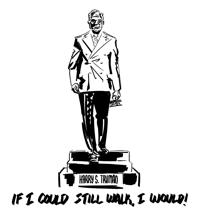
Two great Missouri champions of walking also inspire me these days. Harry Truman, 33rd president of the U.S., started walking daily as a U.S. senator in 1935 and continued the practice to his death, going up to two miles every morning in his Independence neighborhood. The new statue of Truman at the U.S. Capitol has him stepping forward.
I also remember Larry Young of Columbia, the only American ever to win an Olympic medal in racewalking (twice, in 1968 and 1972). I wrote a feature story on him for the Columbia Missourian in 1976.
James Taylor’s “hypothetical destination” is actually a very real place. Get walking and you will arrive at better health and a better life.