


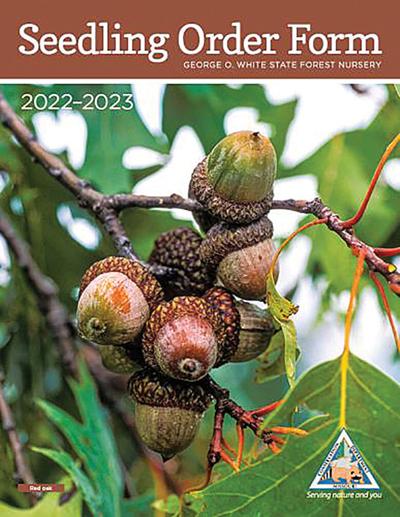
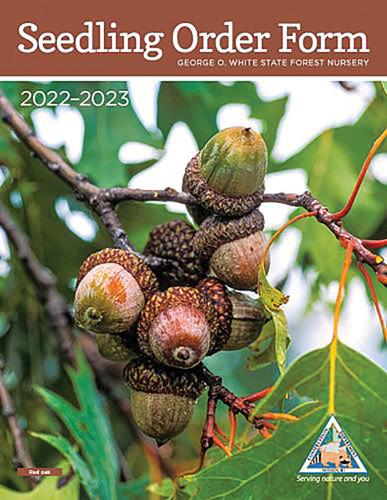
The race is on. At 8 a.m. today (Sept. 1) the state Department of Conservation activated its online order forms for the George O. White State Forest Nursery. Last year, nearly half of the tree species were sold out within the first few days.
I know this because for the past couple of years I have been trying to order some flowering dogwood seedlings. But because I usually don’t think about it when the site goes live, I miss my chance at buying the natives for the mini-reforestation project in my back yard.
I could choose from the 60-plus other options that are available, but I have my heart set on the state tree. Our forest-edge backyard has one dogwood tree that planted itself dozens of years ago, but is starting to show its age. Most of the 40-foot trunk is more deadwood than dogwood. One large arching branch reaches out into the yard with a smattering of flowers each spring and bright green leaves throughout the year. It needs some company.
The bare-root, native tree seedlings from the conservation department are a tremendous bargain with prices per tree no more than $1. For the first time in the nursery’s 80-plus-year history, state residents will have to pay shipping charges. A $9 handling fee and 6.1 percent sales tax is also added to each order.
Residents with a Conservation Heritage Card, Permit Card or Conservation ID Number receive a 15 percent discount up to $20 off seedling orders. Seedlings are ordered by the bundle in lots of 10 or 25 depending on the size of the planting project.
In addition to reforestation, trees may be planted to provide windbreaks, food and habitat for wildlife or erosion control.
More than a dozen different species of oak seedlings are offered at the nursery, with common varieties like black, white, red, pin and bur oak trees available. Other more esoteric oaks the nursery can provide include chinkapin, concordia, nuttall, shumard and overcup oaks.
Bushes and shrubs that grow fruit and nuts for human consumption are also available, including blackberries, elderberries and hazelnuts. Trees that offer edibles and potential pie filling include pecan, persimmon, pawpaw, black cherry, wild plum, walnut and hickory.
Evergreen seedlings can be ordered too, and some of them are the least expensive trees available. Bundles of 100 trees are as little as $34 per package. Among the selections are loblolly, shortleaf and white pines and Norway spruce or eastern red cedar trees.
“The nursery grows millions of seedlings each year, but some species are very popular and sell out quickly,” said Forest Nursery Supervisor Mike Fiaoni. “And some seedlings occasionally succumb to harsh weather or hungry wildlife, despite the nursery staff’s best efforts.”
Even if a species is listed as sold out, Fiaoni said, customers can still place an order for those seedlings because other orders may get canceled, freeing up inventory. Customers won’t be charged for seedlings unless they are available to ship.
Orders are processed Sept. 1 through April 15, and are shipped from February to May depending on the best time for planting. An order form also is published in the September issue of the Missouri Conservationist magazine each year. For more information, call the nursery at 573-674-3229, or send an email to StateForestNursery@mdc.mo.gov.
John Winkelman has been writing about outdoors news and issues in Jefferson County for more than 30 years and is the Associate Editor for Outdoor Guide Magazine. If you have story ideas for the Leader outdoor news page, e-mail ogmjohnw@aol.com, and you can find more outdoor news and updates at johnjwink.com.